
Mossey Cove Townhomes Destin: Ownership, Rules, and Buyer
Explore Mossey Cove Townhomes Destin with verified facts on ownership, HOA duties, flood insurance, amenities, and the exact due-diligence steps buyers need

You're touring Mossey Cove Townhomes in Destin because the setting feels different from a typical inland townhome search. Indian Trail puts the community in a harbor-adjacent, waterfront-oriented environment with shared features reported to include boat launch or dock access, a pool, and tennis courts. The tradeoff is equally clear: this is an established coastal community where ownership depends on more than the unit's interior, view, or asking price.
Mossey Cove is a small, tightly defined market with roots in the 1970s. Buyers comparing Destin, Miramar Beach, Santa Rosa Beach, Inlet Beach, Fort Walton Beach, or nearby 30A communities should treat it as a niche waterfront ownership decision, not a high-volume resort purchase. The association structure, maintenance boundaries, flood insurance, reserves, and leasing rules deserve the same attention as the property itself.
Table of Contents
- A Waterfront Enclave With Five Decades of History
- Understanding the Legal Ownership Structure
- Unit Specifications and Pricing Dynamics
- HOA Obligations and Maintenance Boundaries
- Flood Insurance and Coastal Risk Realities
- Rental Eligibility and Investment Considerations
- Your Mossey Cove Due-Diligence Checklist
A Waterfront Enclave With Five Decades of History
A buyer arriving at Mossey Cove may notice the physical character first. The community's attached townhomes sit along Indian Trail in Destin, near sheltered-water recreation and shared amenities that can matter more than an extra bedroom in an inland property. The reported amenity mix includes a boat launch or dock, pool, and tennis courts, creating a distinct ownership proposition for someone who values access to the harbor environment and common facilities.
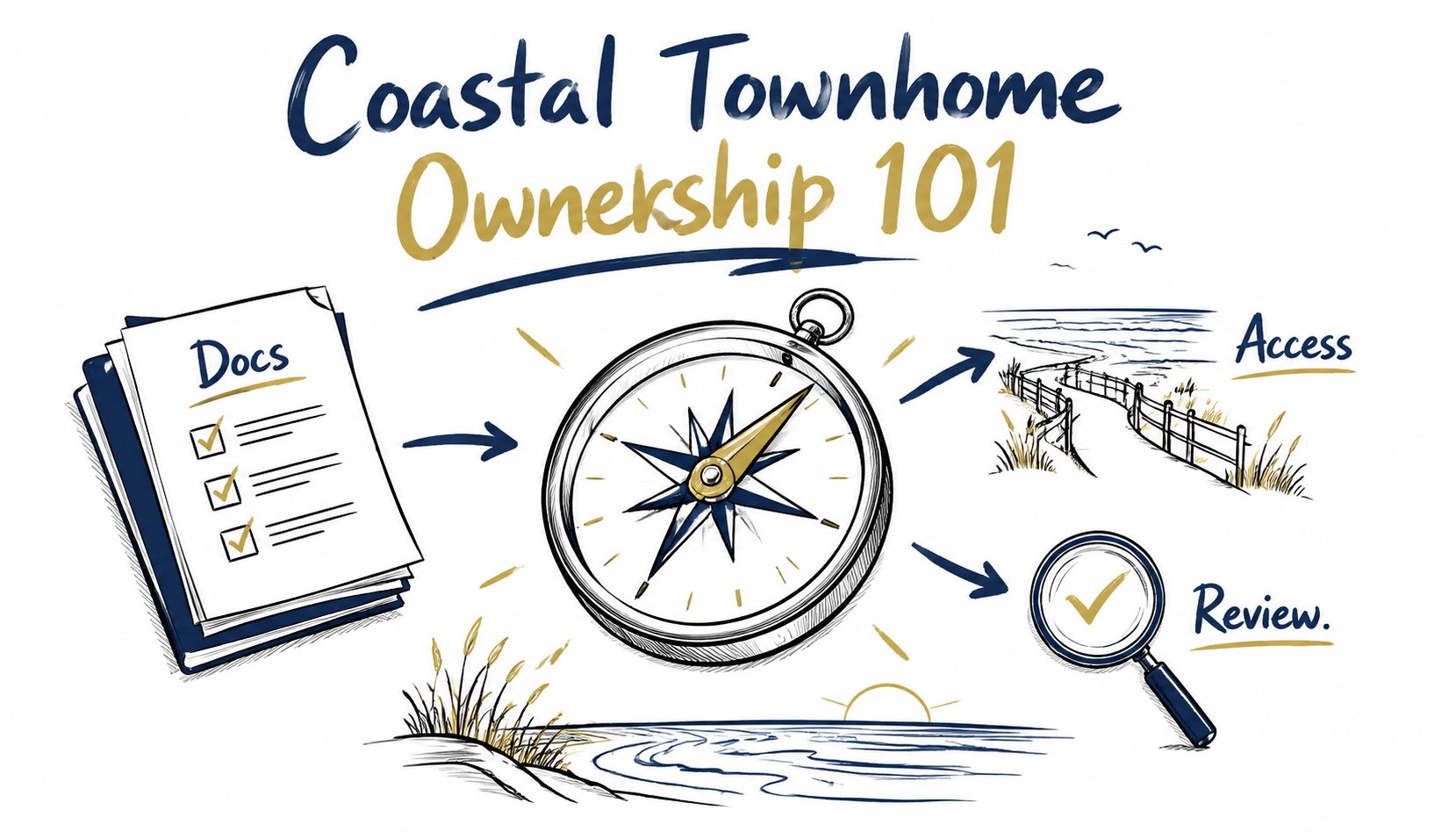
Mossey Cove Townhouse Owners' Association, Inc. was formed in Florida on May 30, 1975, and its principal address is listed at 3871 Indian Trail in Destin in the association's public corporate record. A later name-change amendment dated July 22, 1975 further anchors the community's organization in the mid-1970s. Public property records also identify multiple Indian Trail townhome units as built in 1977, according to the Florida corporate history for Mossey Cove Townhouse Owners' Association.
That history gives Mossey Cove a character newer developments can't replicate, but it also changes the buyer's questions. A 1970s coastal property may have experienced multiple rounds of repairs, insurance changes, exterior work, and governing-document amendments. The buyer who focuses only on finishes risks missing the association obligations that shape ownership over time.
Why the community attracts a specific buyer
Mossey Cove appeals most strongly to buyers who want a smaller waterfront-oriented enclave rather than a large-scale condominium complex. Shared access to boating-related facilities, a pool, and tennis courts can support a lifestyle centered on the property and harbor setting, but those features also require careful review of ownership rights, maintenance duties, and association funding.
The community's limited inventory means buyers may wait for the right unit instead of treating every listing as interchangeable. A unit's position, condition, access rights, and association history can have more influence than a broad Destin average.
Practical rule: Treat the waterfront setting as part of the ownership structure, not just part of the marketing description.
Understanding the Legal Ownership Structure
The first document to identify is the exact legal regime governing the unit. The current Florida corporate record lists MOSSEY COVE TOWNHOUSE OWNERS' ASSOCIATION, INC., document 732891, as active, with a Destin address shown in the state record. The current Florida Division of Corporations record for Mossey Cove Townhouse Owners' Association, Inc. confirms the entity's identity, but the corporate filing alone doesn't establish every ownership right attached to a particular townhome.
A townhome can involve fee-simple ownership, condominium ownership, or a structure that combines individual unit ownership with association-controlled common elements. The word “townhome” describes the physical form, not necessarily the legal form. Buyers need the recorded declaration, plats, amendments, articles, bylaws, rules, and current association disclosures before deciding what they own and what the association maintains.
What the recorded documents should answer
Ask for documents that identify:
- The legal parcel or unit: Confirm the exact unit designation, legal description, phase, and recorded plat.
- Common elements: Determine whether roofs, exterior walls, foundations, landscaping, docks, pool areas, tennis courts, driveways, and utility systems fall under association control.
- Voting and assessments: Review voting rights, assessment authority, lien procedures, and any limits or procedures governing additional charges.
- Use restrictions: Look for leasing terms, pet rules, parking provisions, architectural controls, and occupancy language.
- Insurance duties: Separate association master coverage from unit-owner coverage and identify responsibility for deductibles and interior components.
The association's 1975 formation shows mature governance, not necessarily healthy finances or clear current rules. Amendments may have changed responsibilities since the original documents were recorded. Buyers who need a broader process for confirming title and ownership can consult these county records for property investors, then have a Florida real estate attorney or title professional reconcile those records with the Mossey Cove declaration.
For comparison, buyers evaluating other Destin attached communities can review Club Destin Condos ownership details. The comparison is useful only if it highlights the documents that control ownership, not if it encourages assumptions that one community's rules apply to another.
Unit Specifications and Pricing Dynamics
Mossey Cove is small enough that a few transactions can shape the visible market. A recent snapshot reported 3 closed sales in the 12 months ending July 25, 2026, with a median sale price of about $225,000 and a median of 130 days on market. The same snapshot reported a 10-year average of about 2 sales per year, reinforcing the point that buyers shouldn't treat the community like a high-turnover subdivision. These figures come from the Mossey Cove market snapshot and property details.
Typical public property records describe units around 1,300 square feet, with 2 bedrooms and construction dates around 1977. Recent MLS-derived listing data places observed unit sizes from 1,300 to 1,392 square feet, with pricing from roughly $321,499 to $435,000, or about $247 to $313 per square foot, as shown in the recent Mossey Cove listing data.
| Characteristic | Typical value or range |
|---|---|
| Community type | Established waterfront-oriented townhome community |
| Typical construction period | Around 1977 |
| Typical unit size | About 1,300 square feet |
| Observed unit size range | 1,300 to 1,392 square feet |
| Typical bedroom count | 2 bedrooms |
| Recent reported closed sales | 3 in the 12 months ending July 25, 2026 |
| Reported median sale price | About $225,000 |
| Reported median days on market | 130 days |
| Observed listing price range | Roughly $321,499 to $435,000 |
| Observed price per square foot | About $247 to $313 |
The spread between the recent closed-sale snapshot and observed listing data should prompt questions, not confusion. Asking prices, closed prices, timing, renovation quality, waterfront orientation, and unit-specific obligations aren't interchangeable. A renovated unit with stronger orientation or more desirable access may command a different price than an interior unit needing substantial work.
How to compare two Mossey Cove units
Start with condition, then examine position and ownership costs. Review roof and exterior history, windows, plumbing, electrical systems, moisture evidence, storm damage, and any permits. Next, confirm whether the unit has the same access rights, parking rights, fee structure, and assessment history as the comparable property.
A simple price-per-square-foot calculation can identify an outlier, but it can't explain every difference in an older waterfront community. Use Search Destin waterfront properties to compare current alternatives, then adjust the analysis for verified differences in condition, orientation, association obligations, and insurance.
HOA Obligations and Maintenance Boundaries
Before you judge the monthly association charge, identify the maintenance boundaries that determine your real cost of ownership. Recent listing information has placed Mossey Cove association dues in the mid-$300s, but verify the current amount for the specific unit and document what it covers. Public listing pages can show inconsistent fee and tax entries, so the association's budget, owner ledger, and disclosure package should control your review.
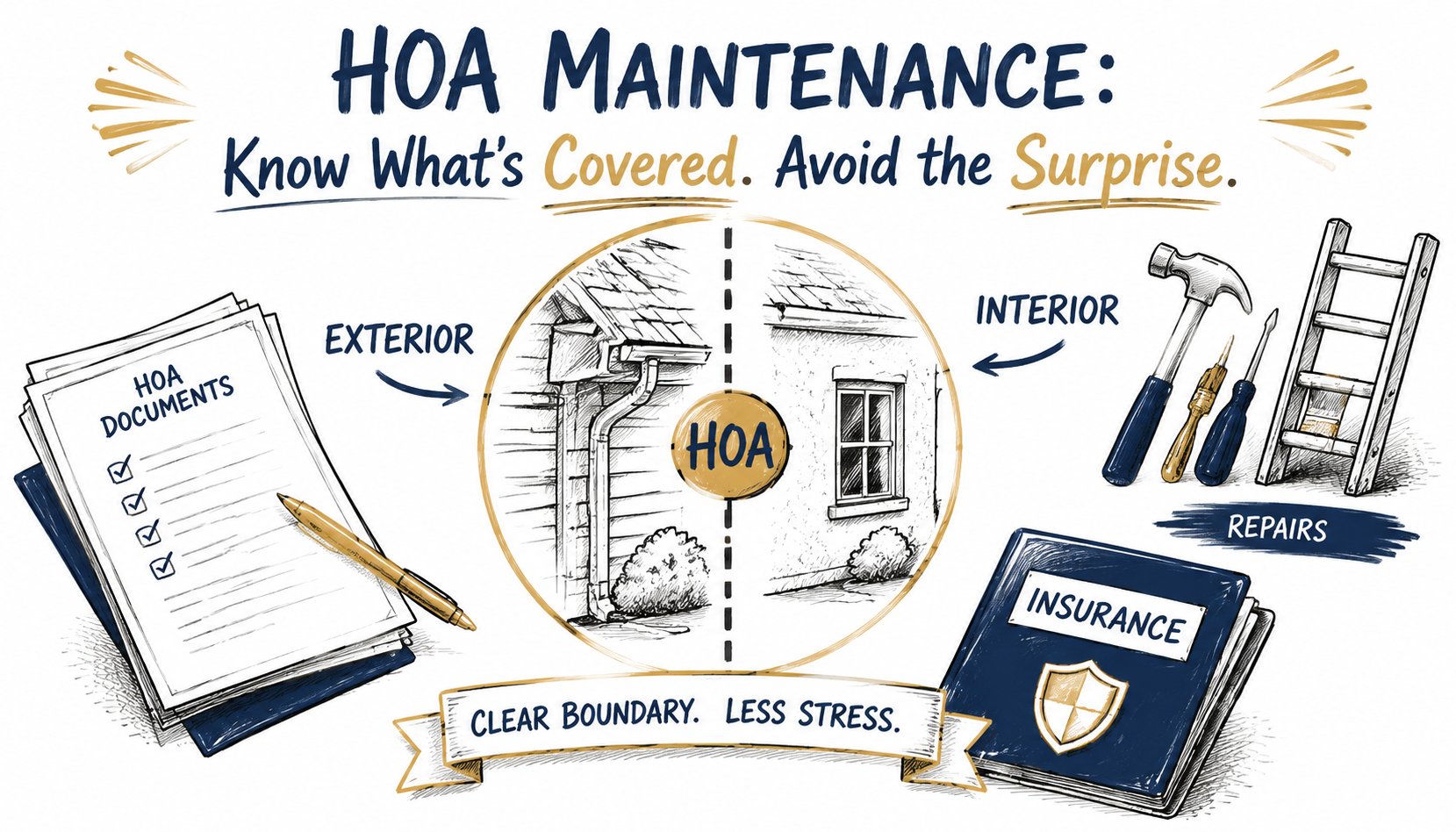
The declaration may assign responsibility differently for roofs, siding, foundations, balconies, patios, windows, doors, plumbing lines, landscaping, docks, pools, and shared pavement. A clean interior does not answer who pays when an exterior component fails. Get each boundary in writing, then match it against the association's repair history, insurance documents, and any pending assessment.
Ask for the association's financial picture
Request the current budget, financial statements, reserve information, meeting minutes, insurance declarations, pending assessment notices, litigation disclosures, and repair records. Meeting minutes can expose recurring water intrusion, insurance renewal problems, drainage work, dock repairs, or deferred maintenance before those issues appear in listing remarks.
Focus on these questions:
- Are reserves adequate for known common-area components? Ask how major repairs are funded and whether reserve contributions reflect the property's age and coastal exposure.
- Are assessments pending or recently imposed? A modest monthly charge can become expensive when owners defer necessary work.
- What does the master policy cover? Confirm insured property, deductibles, exclusions, wind coverage, flood treatment, and owner obligations.
- Who maintains the exterior? Use the declaration and current written association guidance, not a verbal assumption.
- Will the association satisfy the buyer's lender? Financing may depend on project documents, insurance, financial condition, and litigation disclosures.
Tie the HOA review to the rest of the purchase decision. A maintenance obligation can affect insurance requirements, financing, resale value, and rental feasibility at the same time. For comparison, Villages of Crystal Beach homes for sale offers another Destin ownership setting, but compare governing documents and maintenance boundaries rather than monthly charges or amenity lists.
Flood Insurance and Coastal Risk Realities
Flood coverage is separate from a standard homeowners policy. The City of Destin's flood insurance guidance explains basic flood-policy considerations and directs property owners toward federal mapping assistance. For a coastal townhome, the correct question isn't merely whether flood insurance is “required.” The buyer needs to know what the lender requires, what the association master policy covers, what the unit policy covers, and what coverage is obtainable at an acceptable cost.
High-risk coastal zones often trigger flood insurance requirements for financed purchases, but the exact answer depends on the property's flood zone, lender, loan structure, elevation, and insurance documents. Listing remarks that flag flood-related features can identify an issue for review, but they don't replace an insurance quote, elevation information, or written lender determination.

Build the coverage stack before the inspection period ends
Ask the association for the master insurance declarations and certificate, then send them to an insurance professional and the lender. Request unit-specific guidance on building coverage, contents, personal liability, loss assessment, wind, named-storm deductibles, and flood. The declaration should clarify whether the association or owner handles portions of the structure, while the insurer determines what policy responds to a covered loss.
Unit elevation and exact flood-zone designation can materially change the coverage analysis. Two attached units in the same community may still require separate underwriting review because lenders and insurers evaluate the exact property and loan.
Recent Florida insurance conditions have made verification more urgent, particularly in high-risk coastal areas. Buyers should distinguish among three separate questions:
- Required: Is coverage mandated by the lender, association documents, or applicable rules?
- Recommended: Would a prudent owner choose coverage even if a lender doesn't require it?
- Obtainable: Can the buyer secure the needed coverage with acceptable limits, deductibles, exclusions, and terms?
A policy quote should arrive before the buyer becomes financially committed. Review the association deductible allocation and ask how an assessment could affect the unit owner after a major storm or common-area loss. Other Destin buyers reviewing insurance documentation can use St. Lucia association records Destin as a reminder that association records matter, although Mossey Cove's own documents must control.
Rental Eligibility and Investment Considerations
Mossey Cove may attract buyers who are thinking about second-home use, long-term leasing, or short-term rental possibilities. The investment decision starts with permission, not projections. Current property-specific governing documents and association leasing rules must clearly permit the intended rental duration, and buyers should obtain written confirmation when the documents are unclear or the rules vary by unit.
City requirements add a separate layer. Current Destin regulatory guidance states that short-term rentals require annual registration, a state DBPR license, and a local tax account. Eligible property types include single-family homes, condominiums, townhouses, and duplexes, but eligibility of the property type doesn't establish permission for a specific Mossey Cove unit. The same guidance states that occupancy is limited by 2 persons per bedroom plus 4 additional guests, a rule that must be applied and verified for the exact unit and intended operation. Review the Destin short-term rental requirements before treating rental use as part of the purchase plan.
The rental decision path
A serious buyer should proceed in this order:
- Declaration and amendments: Confirm whether the recorded regime allows leasing and whether any minimum-stay, maximum-use, registration, or owner-occupancy provisions apply.
- Association rules: Obtain the current rules and written confirmation from the association or management company for the intended rental duration.
- Unit-specific restrictions: Confirm that the exact unit isn't subject to a separate restriction, grandfathering provision, pending violation, or use limitation.
- Government approvals: Verify zoning, registration, licensing, tax accounts, occupancy, and any applicable local requirements.
- Operating costs: Only after permission is documented should you evaluate insurance, management, maintenance, utilities, taxes, and furnishings.
Rental advertisements, past rental history, MLS remarks, and market benchmarks don't prove that a buyer may continue the same use after closing. A property can have operated under older rules, or a listing can describe a permitted use without proving current compliance.
For broader regional context, buyers can review top resorts and rental opportunities on Okaloosa, but that material should remain general background. It shouldn't be used to estimate Mossey Cove revenue, occupancy, cash flow, cap rate, ROI, or investment performance. If the association won't provide clear written permission, underwrite Mossey Cove as a personal-use or long-term ownership purchase until the restriction is resolved.
Your Mossey Cove Due-Diligence Checklist
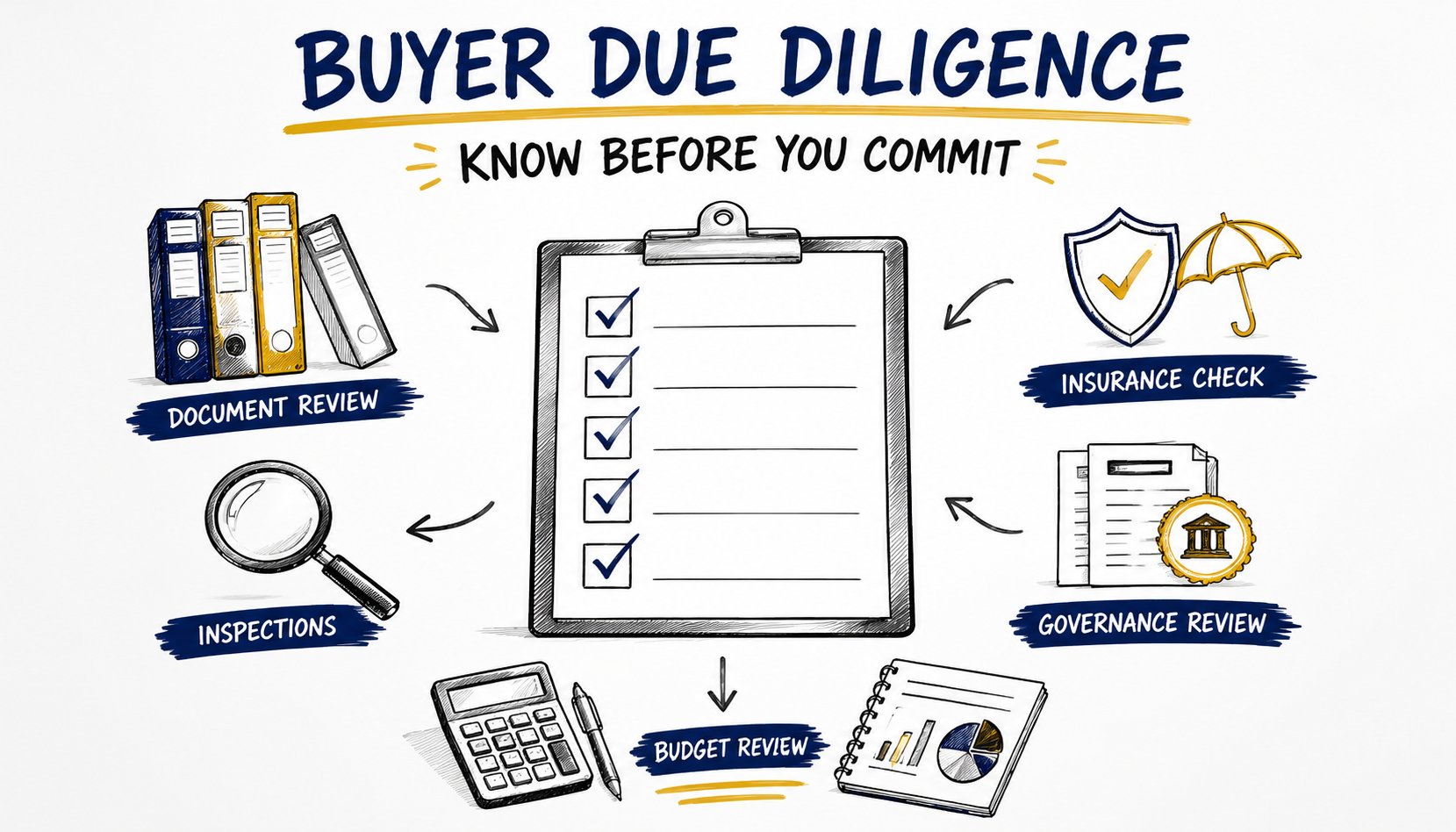
Before committing to a Mossey Cove unit, your file should match the exact legal unit, not just the community name. Assemble five categories of documents and checks, then compare them before closing.
Documents to obtain
- Recorded ownership documents: Obtain the declaration, amendments, plat, bylaws, articles, rules, and documents identifying the exact phase or building.
- Association finances: Review the current budget, recent financial statements, reserve information, assessment history, meeting minutes, delinquency information, and pending capital projects. These records show whether deferred work or assessments could reach the unit owner.
- Insurance records: Request master-policy declarations, deductibles, exclusions, flood treatment, wind coverage, and the allocation of owner responsibility.
- Use rules: Confirm leasing terms, minimum stays, pets, parking, guests, occupancy, boats, docks, pools, tennis facilities, and architectural restrictions in writing.
- Legal disclosures: Ask about litigation, violations, insurance claims, unresolved repairs, and notices affecting the unit or common elements.
Property and closing checks
Hire an independent inspector familiar with older coastal construction. Request an evaluation of moisture intrusion, roof systems, exterior cladding, windows, doors, foundations, electrical, plumbing, drainage, HVAC, and storm-related vulnerabilities. Confirm permits for visible renovations, then reconcile the inspection findings with the association's maintenance obligations. That comparison often identifies responsibility disputes before they become closing problems.
Get insurance and lender feedback early enough to act on the results. Verify the exact flood zone, available unit-elevation information for underwriting, association coverage, owner-policy requirements, deductibles, and lender project-review conditions. A favorable inspection does not resolve an insurance gap or an association obligation.
Keep the file organized by unit, building, and association record. Compare the listing, recorded documents, inspection report, insurance terms, financial statements, and closing disclosures for conflicts. Resolve discrepancies before signing.
For additional local buying context, read the new blog posts from Dream Destin, then review the Mossey Cove townhomes currently available in Destin against the verified documents, insurance terms, inspection results, and ownership costs. Choose the unit whose rights, restrictions, and repair responsibilities you can document.
Dream Destin Realty helps buyers compare current Mossey Cove listings, association documents, insurance requirements, inspections, financing considerations, and unit-specific ownership details across Destin and the Emerald Coast. Visit Dream Destin Realty to review available properties and request a buyer consultation before closing.


