
1031 Exchange vs Reverse 1031 Exchange Guide
1031 exchange vs reverse 1031 exchange compared on sequence, 45 and 180 day deadlines, intermediary control, and reverse exchange funding.

On this page
On this page
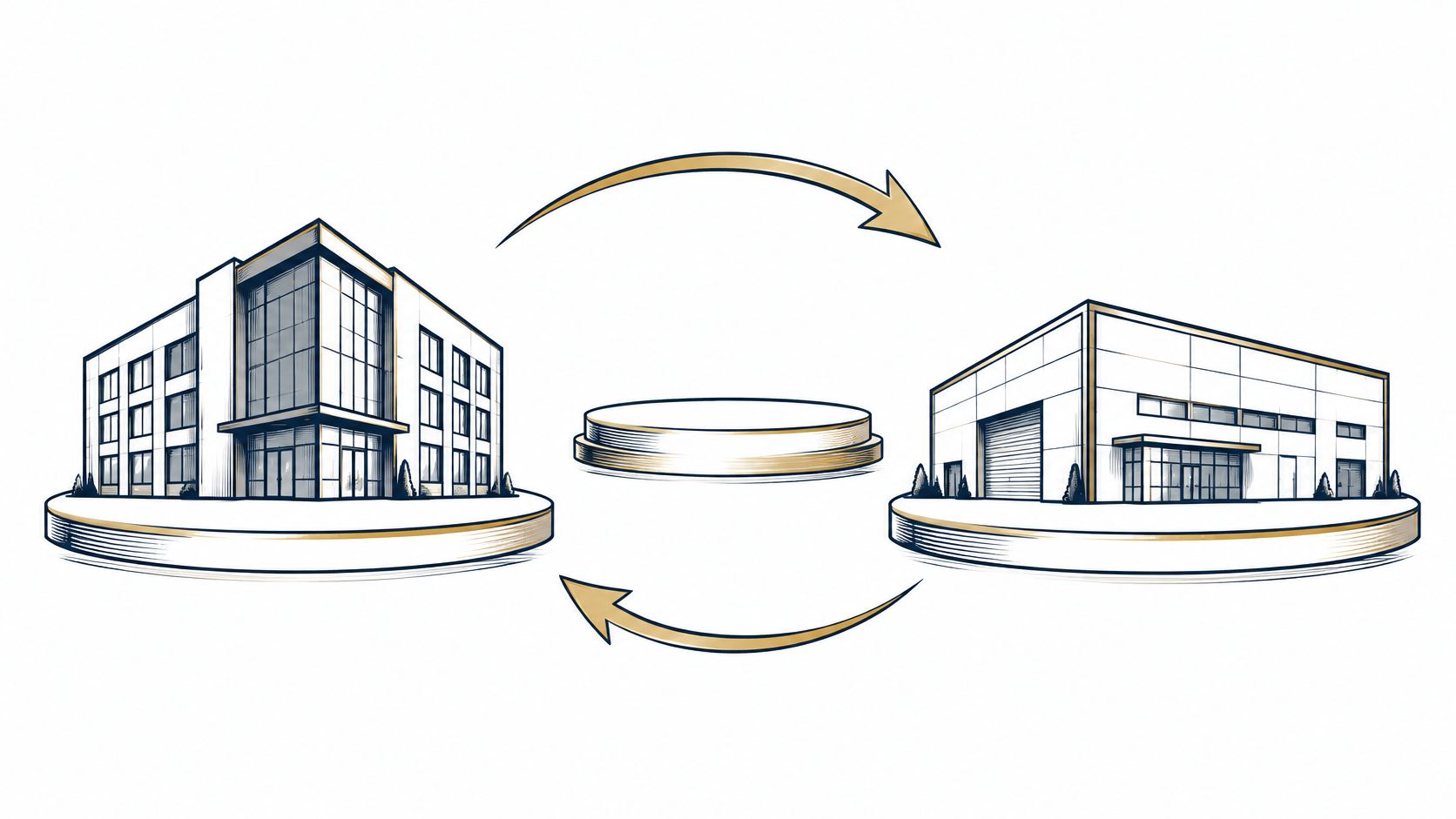
A deferred 1031 exchange transfers the old property before the replacement is received. A reverse exchange can place the replacement with an exchange accommodation titleholder before the old property transfers. The difference is closing order and the applicable arrangement, not a promise of tax savings. The IRS describes these structures in its Form 8824 instructions, checked November 3, 2026.
For an Emerald Coast purchase, compare the proposed closing sequence with the property search, funding and ownership documents. This is general educational information, not tax, legal, investment or financial advice. Dream Destin Realty provides real estate representation, not a determination that an exchange qualifies or a recommendation about your tax strategy. A qualified tax adviser should evaluate your circumstances before you act.
Table of Contents
- Standard and Reverse Exchanges on the Emerald Coast
- Sequence, Deadlines, and Who Holds the Money
- Funding and Control During a Reverse Exchange
- Questions to Compare With Your Advisers
- Risks to Resolve With a Tax Professional
- Confirm the Order Before You Make an Offer
- Frequently Asked Questions
- How does the order of sale and acquisition differ between a deferred and reverse exchange?
- What do the qualified intermediary and accommodation titleholder do, and when must they be engaged?
- Which current qualification, timing and proceeds-control rules should the taxpayer confirm with their tax adviser?
- How do financing, title, insurance and contract contingencies change when replacement property is acquired first?
Standard and Reverse Exchanges on the Emerald Coast
Compare a proposed exchange of business or investment real estate separately from the appeal of the replacement property. A location in Destin, Miramar Beach or along 30A does not itself establish the tax treatment. This comparison explains the questions to take to your advisers, rather than selecting a structure for you.
The IRS like-kind real estate tax tips, checked November 3, 2026, explain that qualifying business or investment real-property exchanges generally defer recognition of gain or loss. Current Section 1031 treatment is limited to real property; property held primarily for sale does not qualify. Neither purchasing another property nor describing it as an investment establishes every requirement.
Deferral isn't automatic eligibility
Business or investment use is a threshold issue, not the complete analysis. The IRS explains that property used solely as a personal residence does not receive Section 1031 treatment; mixed-use facts require separate analysis. See the 2025 Form 8824 instructions, Property Used as Home, the version displayed when checked November 3, 2026.
Receiving cash or other non-like-kind property can produce recognized gain even when part of an exchange qualifies. The IRS tax-tips page linked above explains this distinction; it does not establish an individual taxpayer's result. Ask your tax adviser to evaluate the actual proceeds, liabilities and basis rather than assuming a purchase-price comparison is a tax calculation.
Our Emerald Coast investment properties for sale can support the property search. Browsing availability does not establish qualifying use, tax treatment or an executable exchange schedule.
Sequence, Deadlines, and Who Holds the Money
Standard and reverse exchange decisions
The linked IRS deferred-exchange guidance is expressly marked historical. For current reporting guidance, use the 2025 Form 8824 instructions, Deferred Exchanges, checked November 3, 2026. They explain identification within 45 days after the relinquished transfer and receipt by the earlier of 180 days or the applicable tax-return due date, including extensions.
The Revenue Procedure 2000-37 collection notice is a paperwork notice, not the text establishing the reverse safe harbor. The controlling conditions appear in Revenue Procedure 2000-37, section 4.02, published in Internal Revenue Bulletin 2000-40, printed pages 308 to 310, as modified by Revenue Procedure 2004-51. Both were checked November 3, 2026.
| Decision | Deferred exchange | Reverse safe-harbor arrangement |
|---|---|---|
| Sequence | Relinquished property transfers before replacement is received | Replacement can be parked with the accommodation titleholder first |
| Identification | Replacement identified within 45 days after the relinquished transfer | Relinquished property identified within 45 days after replacement ownership indicia transfer to the titleholder |
| Completion | Earlier of 180 days or the applicable return due date, including extensions | Required transfer out of the arrangement within 180 days after qualified ownership indicia transfer to the EAT; combined parking periods cannot exceed 180 days |
| Written arrangement | If using the QI safe harbor: written exchange agreement and applicable proceeds restrictions | Written accommodation agreement within five business days after ownership indicia transfer to the titleholder |
The deferred periods are from the Form 8824 instructions; the reverse periods are from Revenue Procedure 2000-37, section 4.02(3) to (6). These are ordinary-rule summaries, not a personalized deadline calendar. Ask your tax adviser whether any specifically applicable IRS relief changes a period; do not assume an extension.
Build the forward schedule backward from closing
A practical planning worksheet can separate the proposed transfer dates, responsible parties and unresolved transaction conditions. List lender underwriting, title review, insurance arrangements, inspections and any applicable association transfer process. These are coordination questions, not a claim that every property has the same approvals or that completing a worksheet establishes exchange eligibility.
For each item, record the professional responsible, the document requested and the question still unanswered. Keep a proposed purchase-contract closing date distinct from the statutory exchange periods your tax adviser confirms. Ask the closing team what remains outstanding instead of treating an accepted offer as proof that receipt will occur on time.
Make identification a documented decision
Written identification has requirements beyond selecting a property informally. The Form 8824 instructions, Line 5, checked November 3, 2026, address a signed designation, recognizable property description and delivery or agreement requirements; disqualified-person rules also matter. Ask the intermediary to confirm the appropriate recipient and delivery method for the actual transaction.
For a condo or townhome purchase, organize a separate property file: recorded declaration and amendments, current association documents, available inspection reports, proposed insurance terms and intended-use questions. This is a suggested buyer-review checklist, not a statement that any property is compliant, available for rental use or suitable for your plans.
Keep the proceeds inside the exchange arrangement
A qualified intermediary, or QI, has a defined role under Treasury Regulation 1.1031(k)-1(g)(4), checked November 3, 2026. The QI safe harbor requires a written exchange agreement and specified limits on the taxpayer's rights to money or other property; merely naming a party an intermediary is insufficient. The IRS Publication 544 discussion of qualified intermediaries, displayed as the 2025 edition when checked November 3, 2026, also explains these requirements. Have the QI and tax adviser establish the intended arrangement before the relinquished transfer.
Dream Destin Realty's 1031 exchange guide offers related property-search context. It is not a substitute for the current official rules or a transaction-specific tax opinion.
Funding and Control During a Reverse Exchange
An exchange accommodation titleholder, or EAT, holds the qualified ownership interest under the reverse safe harbor. The QI and EAT roles are distinct, although Revenue Procedure 2000-37, section 4.03(1), permits an eligible EAT also to serve as QI. The published revenue procedure, checked November 3, 2026, sets the applicable conditions; separate companies are not universally required.
Establish the accommodation arrangement before relying on it
The IRS written determination discussing exchange accommodation arrangements is a private letter ruling for the taxpayer who requested it. Its concluding limitation says it cannot be used or cited as precedent. Use the published revenue procedures, not that taxpayer's outcome, to identify the general safe-harbor framework.
One important limit is specific: Revenue Procedure 2004-51, section 4.03, checked November 3, 2026, excludes replacement property from this safe harbor if the taxpayer owned it within the 180-day period ending when qualified ownership indicia transfer to the EAT. That is not an unlimited prohibition based on any historical ownership. Nor does falling outside this safe harbor, by itself, decide every possible tax treatment; Revenue Procedure 2000-37, section 3.02, expressly avoids that inference.

Put operating control and financial responsibility in writing
For a proposed parked acquisition, ask the transaction team to identify the funding source, borrower, titleholder, carrying expenses, insurance arrangements, property management and plan if the old sale is delayed. Those questions help expose assumptions; they are not a recommendation to borrow, guarantee debt or choose a particular structure.
Community research, including the Silver Shells condo investment guide, can organize property questions. A building guide does not establish lender acceptance, insurance coverage, association approval or tax qualification for a proposed transaction.
Questions to Compare With Your Advisers
Questions for each purchase situation
| Proposed situation | Question to investigate, not a recommendation |
|---|---|
| Replacement would close after the old sale | Can the proposed deferred exchange meet the confirmed identification, proceeds-control and receipt requirements? |
| Replacement would close before the old sale | Will the proposed EAT arrangement, funding and transfer documents meet the applicable safe-harbor requirements? |
| Taxpayer previously owned the replacement | How does the specific prior-ownership limitation apply to the actual ownership dates? |
| A loan or approval remains conditional | What remains unresolved, who decides it and how does it affect the proposed closing sequence? |
The CPA Journal discussion of reverse exchanges is historical secondary reading. It predates the later prior-ownership modification and is not a current, individualized tax recommendation.
Acquisition urgency isn't financing readiness
For buyers evaluating luxury condo investing in Destin, Florida, separate property preferences from unresolved financing, title and tax questions. A neutral comparison records what each professional has reviewed and what remains conditional. It does not identify a universally better exchange or promise a lower tax bill.
Risks to Resolve With a Tax Professional
Questions that need property-specific answers
Ask your tax adviser to review qualifying use, ownership history, related parties, proceeds, liabilities, basis, timing and reporting. The Form 8824 instructions, checked November 3, 2026, address reporting and specialized rules; the displayed instructions are for 2025, not a claim that final 2026 filing instructions have been issued. Your preparer should use the version and later guidance applicable to your return.
Review the property and the tax plan separately
Our Destin vacation rental buying FAQs can help frame separate property questions. This guide does not establish any property's rental permission, private rights, coverage or condition, and contains no rental figures or performance forecast.
Confirm the Order Before You Make an Offer
Assemble a transaction-ready file
Use the Destin homes and neighborhoods guide for broader local orientation. Keep the proposed contract, exchange documents and property records together so your tax adviser, intermediary, lender and closing team can evaluate the same facts.
Arrange a buyer consultation for real estate representation and property research. Tax qualification, financing, legal rights and insurance decisions require the appropriate professionals' review; no exchange outcome or tax saving is guaranteed.
Frequently Asked Questions
How does the order of sale and acquisition differ between a deferred and reverse exchange?
A deferred exchange transfers the relinquished property before replacement receipt; a reverse arrangement can park the replacement with an EAT first. The IRS Form 8824 instructions, checked November 3, 2026, describe both, but neither closing sequence alone establishes qualification.
What do the qualified intermediary and accommodation titleholder do, and when must they be engaged?
The QI performs the exchange role under a written agreement, while the EAT holds the qualified ownership interest in the parking arrangement. Where those roles are used, coordinate them before the relevant transfers, subject to the QI regulation and Revenue Procedure 2000-37, checked November 3, 2026.
Which current qualification, timing and proceeds-control rules should the taxpayer confirm with their tax adviser?
Confirm qualifying real-property use, applicable identification and completion periods, proceeds-control restrictions, related-party rules and any applicable relief. The IRS Form 8824 instructions and QI regulation, checked November 3, 2026, are starting authorities, not a personal eligibility opinion.
How do financing, title, insurance and contract contingencies change when replacement property is acquired first?
The proposed titleholder, funding and interim responsibilities need transaction-specific review rather than assumptions carried over from an ordinary purchase. Ask the lender, closing team, insurer and your tax adviser to review the actual documents; the reverse-exchange safe harbor, checked November 3, 2026, does not itself approve a loan, policy or contract.
Dream Destin Realty offers buyer and seller representation and property research. Visit Dream Destin Realty to organize your property questions alongside the separate review by your tax adviser, intermediary, lender and closing team.


