
Condo Association Reserve Study: What Buyers Should Check
Learn what a condo association reserve study covers, how Florida rules apply, and what buyers should check in the funding plan and records.

On this page
On this page
A condo association reserve study is a long-range plan for repairing and replacing a condominium's shared property. It connects the building's expected needs with the association's savings and recommended contributions. For buyers, the key decision isn't whether a study exists. It's whether the adopted budget and repair schedule still support the plan when costs or conditions change.
Table of Contents
- What a Condo Association Reserve Study Covers
- How the Component Method Sets Yearly Contributions
- Florida's Structural Integrity Reserve Study Rules
- Documents to Request and Who Should Review Them
- Testing Whether the Funding Plan Is Realistic
- Confirm Reserve and Contract Status Before You Commit
What a Condo Association Reserve Study Covers
A reserve study lists major shared components, estimates when each will need work, projects repair or replacement costs, and recommends how much the association should save. It works like a household maintenance schedule, except owners contribute toward shared building obligations rather than a single household's expenses.
The components commonly include roofs, waterproofing, electrical systems, plumbing, elevators, and structural elements. Under Fannie Mae's full-review standards, an acceptable study addresses major components, their condition and remaining life, projected costs including inflation, existing reserves, and a suggested funding plan.
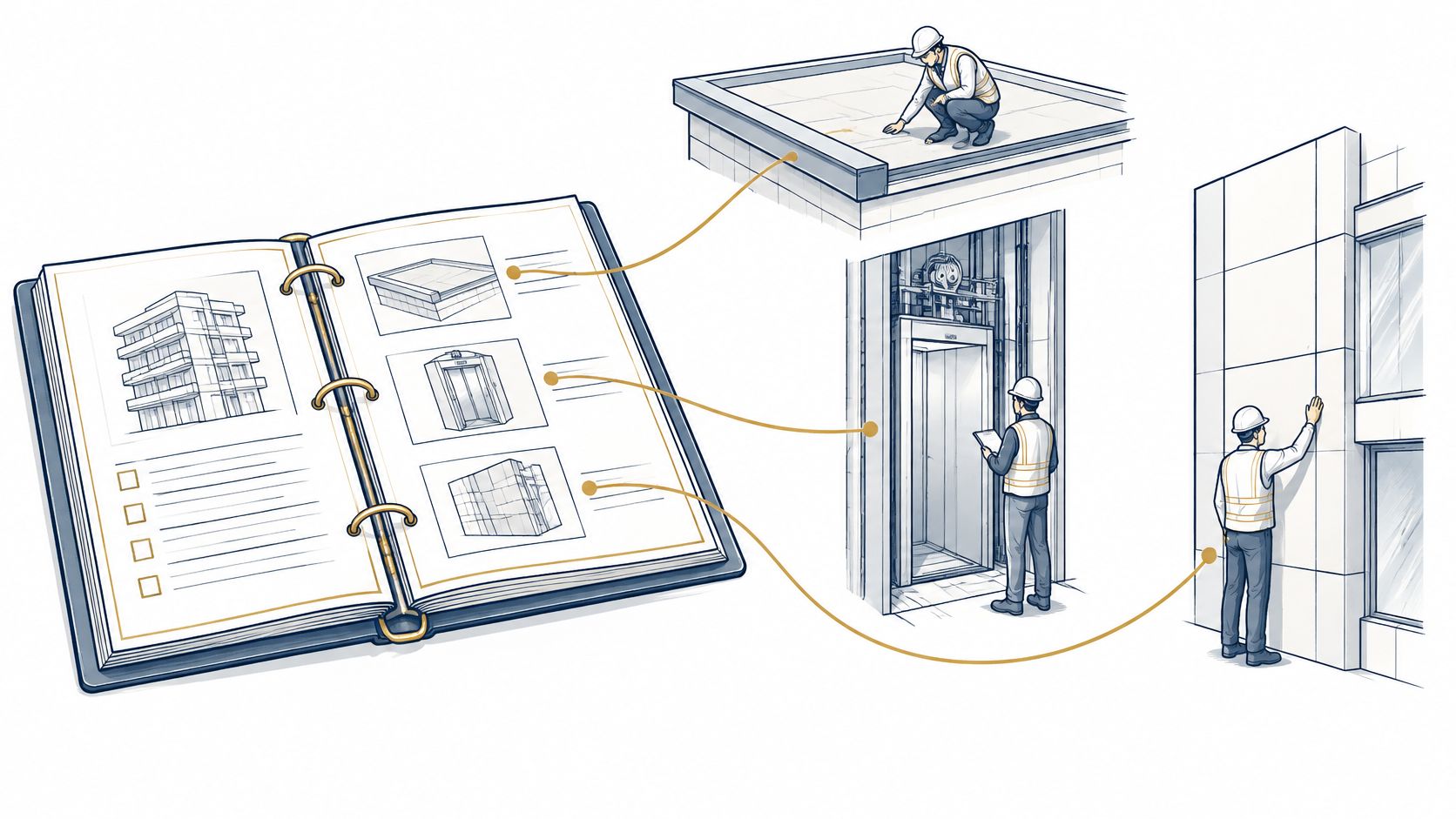
Reading a component entry
The terminology becomes clearer when applied to a roof:
- Remaining useful life means how long the roof is expected to keep working before replacement or major work.
- Replacement cost means the estimated cost at projected prices, rather than what the original roof cost.
- Funded reserves means the savings already on hand for future obligations.
Say the preparer finds that the roof needs replacement sooner than previously expected. The association may need to collect more money over a shorter period. Building condition affects capital costs, which affect reserve contributions and, in turn, owners' assessments.
Practical rule: Check the component inventory and funding recommendation, not merely the report's cover date.
The study is a qualified preparer's planning estimate. It isn't a guarantee of future costs or an inspection of an individual unit.
How the Component Method Sets Yearly Contributions
The component method works like a row of labeled savings jars: the roof gets one, the elevator gets another, and the parking deck gets its own. The preparer calculates a funding need for each major asset separately, then adds those amounts into a single recommended annual contribution.
The Community Associations Institute's explanation of its reserve study standards connects component condition, remaining useful life, estimated costs, and funding needs. It also distinguishes predictable reserve expenses from operating expenses, improvements, insurable losses, and unforeseen events.

Following the calculation
- Estimate the obligation. The preparer assigns each component a remaining useful life and a repair, replacement, or deferred-maintenance cost.
- Calculate its funding need. The model weighs the reserve money already set aside for that component against the time left before the anticipated expense.
- Combine the contributions. The per-component amounts add up to the recommended annual reserve contribution.
Timing is what the method prices. Under a flat percentage of the operating budget, the contribution stays the same year after year, even while a roof replacement moves closer and its expected price rises. An association following that rule can look disciplined right up until the bill arrives.
Pull the cost assumptions, remaining-life estimates, and expenditure schedule first. Check whether they account for inflation, local labor and materials, hurricane exposure, and observed condition. Each of those figures is an assumption, and the yearly contribution is only as reliable as the assumptions behind it. The Gulf-front condo buying checklist helps organize the broader purchase review around those calculations.
Florida's Structural Integrity Reserve Study Rules
Florida generally requires a residential condominium association to complete a structural integrity reserve study, often called a SIRS, at least every 10 years after creation for each building three habitable stories or higher, as determined by the Florida Building Code, under Florida Statutes section 718.112.
The initial screening should establish which building is being evaluated and which requirements apply. A development's marketing name doesn't resolve those questions.
- Confirm building height. Use the building's documented habitable-story classification, rather than an impression from listing photographs.
- Establish the creation date. Have the association's records and qualified advice establish the applicable study cycle and any relevant timing provisions.
- Find the latest study. Identify its completion date, inspection date, preparer, and building designation.
- Compare its scope. Locate the component inventory and check it against the statutory categories.
Components a Florida structural integrity reserve study must address
The statutory categories provide a starting point. The checks and funding implications below explain how a purchaser can read those entries.
| Component | What to check in the study | Why it affects funding |
|---|---|---|
| Roof | Remaining useful life and replacement cost | Replacement can be a large single project |
| Load-bearing walls and primary structural systems | Condition findings and repair scope | Structural work can outweigh routine maintenance |
| Fireproofing and fire-protection systems | Inspection date and any deferred items | These systems must remain functional |
| Plumbing | Age, condition, and planned replacement | Concealed failures can grow before they're noticed |
| Electrical systems | Condition findings and replacement schedule | Replacement timing drives contribution timing |
| Waterproofing and exterior painting | Remaining life and recurring cycle | Recurring cycles need steady contributions |
| Windows and exterior doors | Condition, remaining life and replacement schedule | Building-wide replacement can be a large project |
| Any other item over the statutory cost threshold | Whether the study lists items whose deferred maintenance or replacement cost exceeds $25,000 or the inflation-adjusted amount, whichever is greater, and whose neglect would harm the items above | A missing item can hide a future cost |
An older report may no longer match construction prices, deterioration, storm-related changes, or completed repairs. The next check is the revision history: does the study reflect what has happened to the building?
These requirements concern the building's shared obligations, not a single unit's interior condition. Applicability and completion status should be confirmed through association records and qualified advice.
Documents to Request and Who Should Review Them
The useful review package connects physical findings, board decisions, and actual spending. Records should be requested through the seller, the listing process, or the association's established release procedures. Listing descriptions alone don't establish condition, insurance coverage, or financing eligibility.
Organizing the records
- Reserve and condition records: The latest reserve study, inspection reports, amendments, and board responses to identified work.
- Money and decision records: Adopted budgets, financial statements, reserve-balance history, board minutes, and assessment notices.
- Risk records: Special-assessment records, available litigation information, insurance policies, and deductible schedules.
The next line to check is the property identification on each document. A report covering shared amenities or another phase doesn't necessarily answer questions about the building containing the proposed purchase.
Checking the preparer
Under section 718.112(2)(g)3.a, 2026 Florida Statutes, the study, including its visual-inspection portion, must be performed or verified by a Florida-licensed engineer or architect, or by a person certified as a reserve specialist or professional reserve analyst by the Community Associations Institute or the Association of Professional Reserve Analysts. A purchaser should identify who performed or verified that work, rather than assuming every contributor to the report performed the physical review.
The inspection date matters separately from the publication date. Check whether later repairs, findings, or board decisions appear in an update or supporting documentation.
Dream Destin Realty helps clients review available building records, including association information, inspections, reserves, rental rules, and insurance, as part of purchase due diligence. Dream Destin Realty's condo buying guide provides purchase-process context for organizing those questions.
Technical findings belong with a qualified building professional, legal interpretation with a qualified attorney, and project eligibility with the lender. Each should receive the complete relevant documents, rather than an isolated summary page.
Testing Whether the Funding Plan Is Realistic
A funding plan works like a household budget: it holds up only if the money arrives before the bills do. The practical review is a stress test. Change one assumption at a time, then find the line in the cash-flow schedule that absorbs the hit.
The Florida Condominium Act calls for a funding schedule designed to meet identified obligations by the end of their estimated useful lives while maintaining a reserve cash balance above zero. That makes the cash-flow schedule a more useful review tool than a reserve total viewed alone.
Comparing the plan with actual decisions
Start with the study's recommended annual contribution and the adopted budget's reserve contribution line. Any difference needs an explanation supported by the current funding plan.
Then compare component timing with funding availability. A project expected before sufficient money accumulates needs an identified funding source, whether that is a larger contribution, borrowing, or a scheduled assessment.
Funding signals and the question each one answers
| Signal | What it tells you | Question to ask |
|---|---|---|
| Positive reserve balance | Cash on hand at the study date | Is the balance still positive after the largest projected project? |
| Recommended annual contribution | The amount the study says the plan needs | Does the adopted budget meet or exceed it? |
| Component with a short remaining life | Work that is nearer than the funding horizon | How is that work funded? |
| Pending special assessment | Possible extra charges to owners | Is it approved, proposed, or already paid? |
| Deferred maintenance | Work postponed past the study schedule | Has the board set a date and a funding source? |
| Insurance deductible | Part of a loss the association may need to cover | Is the deductible reserved or assessed? |
A practical stress test asks what changes if a repair is delayed, a proposal exceeds the estimate, or an assessment becomes payable. For each scenario, locate the revised contribution, borrowing, assessment, or project schedule using the questions in the table above. A single reserve ratio can conceal a concentrated obligation in a roof, elevator, seawall, or other costly component.
A postponed project keeps its place in the funding plan until the board funds it, reschedules it, or removes it from the component list.
Insurance deductibles require separate review of the policy and the association's funding arrangements. Buyers preparing to review Destin Beach Club association documents should apply the same document-based approach without assuming a particular reserve condition.
Florida's 2025 condominium legislation summary describes conditional temporary reserve-contribution relief. Where relief applies, check the adopted restoration schedule and confirm that the deferred contributions reappear in a future budget year at amounts the association can realistically collect.
Confirm Reserve and Contract Status Before You Commit
Before making a final purchase commitment, the buyer should understand the study's status, the funding arrangements for identified work, and any unresolved transaction questions. The practical goal is to surface known obligations and open questions while the contract still allows time to act on them.
A completed study also does not settle lender acceptance. The lender evaluates the project under its own requirements, and the buyer separately weighs insurance costs and likely ownership expenses.
Separating preliminary screening from property review
During preliminary screening, the buyer can establish whether the association has a study and whether financing will require a project review. Once a particular property is under consideration, the review moves from general descriptions to the actual records.
- Ask the lender about project eligibility early. Identify the documents needed and any unresolved eligibility questions.
- Compare dues with the adopted funding plan. Determine whether current charges reflect approved contributions or whether a change is already planned.
- Identify unresolved obligations. Review litigation information, structural findings, deferred work, outstanding loans, and proposed or approved assessments.
- Confirm inspection and study status. Establish which reports apply to the building and which have been completed.
The association's records should distinguish a proposed assessment from an approved assessment and show any payment schedule. Responsibility and timing for each obligation belong in the written contract.

Checking the contract disclosures
For contracts entered into after December 31, 2024, Florida Statutes section 718.503 requires a conspicuous statement when an association must have a milestone inspection, turnover inspection report, or structural integrity reserve study but has not completed the applicable item. The statute also addresses circumstances in which specified reports are not required.
Reviewing a building's records works like reading a home inspection report: a blank page and a page of findings call for different responses. A missing report leaves an information gap the buyer still needs to fill. A report identifying work calls for evaluation of the findings, the association's response, and the funding behind them. Sorting the building into pass or fail without reading the circumstances skips the step that matters most.
Resources such as the document checks for Gulf-front condo buyers can help organize property research, while current association records remain the source for resolving the actual purchase questions.
Decision checkpoint: An unanswered question is a reason to obtain clarification, not an automatic verdict on the building.
Ask a qualified real estate attorney to list which assessment, inspection, or funding questions must be resolved before each contract deadline, and what options the agreement provides if an answer is still outstanding when that date arrives.
Dream Destin Realty helps clients review available association information, inspections, reserves, and insurance as part of purchase due diligence. Explore the brokerage's buyer resources to prepare questions about a condo's reserve study, adopted budget, and planned work, or contact the team for help organizing building-record questions.


