
Gated Community Pros and Cons: What Buyers Should Check
Gated community pros and cons for buyers on Florida's Emerald Coast: security limits, association fees, road rules, access and lifestyle fit.

On this page
On this page
Gated community pros and cons come down to one trade: controlled entry and private rules on one side, and recurring association costs, shared obligations and less flexibility on the other. For most buyers, the answer turns on fees, private roads, recorded rules, and how access works on an ordinary day.
If the gate stopped working tomorrow, who would pay to fix it, who could enter, and which document would decide? That question matters more than the entrance design.
Table of Contents
- Gated Community Pros and Cons at a Glance
- Security Benefits and Limits of a Gate
- Fees, Assessments and Who Pays for Shared Infrastructure
- Rules, Roads and Access Under Florida Law
- Lifestyle Fit by Buyer Situation
- Confirm the Records Before You Commit
- Common Questions About Gated Community Living
Gated Community Pros and Cons at a Glance
Whether a gated community's trade of controlled entry and private rules for recurring costs fits a buyer depends on the recorded documents for the specific development, including its budget, declaration, access policies, and road agreements. The gate alone doesn't decide the value of the package.
A gated community is usually governed by a homeowners association or a community development district. That entity sets fees and rules and arranges care for shared property. Buyers comparing homes in Miramar Beach, Walton County should read the table as a starting point, then test each row against the documents for one address.
| Factor | Potential benefit | Main tradeoff |
|---|---|---|
| Access control | Limits casual entry and supports visitor screening | Delays for guests, deliveries and service workers; possible emergency-access issues |
| Security | Visible barrier; some studies link gates to lower property crime | Evidence is mixed over the long term; possible false sense of security |
| Fees | Shared amenities and private roads funded collectively | Recurring assessments and possible special assessments |
| Rules | Consistent standards for upkeep and exterior appearance | Limits on changes, use and leasing |
| Maintenance | One plan for roads, gates, drainage and common areas | Repair costs and replacement passed through the association |
| Lifestyle | Privacy and shared amenities | Less walkability and less contact with surrounding streets |
Reading rule: Treat the gate as one feature. The budget, declaration, and road agreements decide whether the full package fits your use and carrying costs.
Security Benefits and Limits of a Gate
A gate may help with some property crime, but it doesn't guarantee lower crime. The 2026 systematic review of 202 studies published between 2000 and 2024 found that long-term evidence on crime reduction is mixed, and several of those studies linked gated communities with a false sense of security.
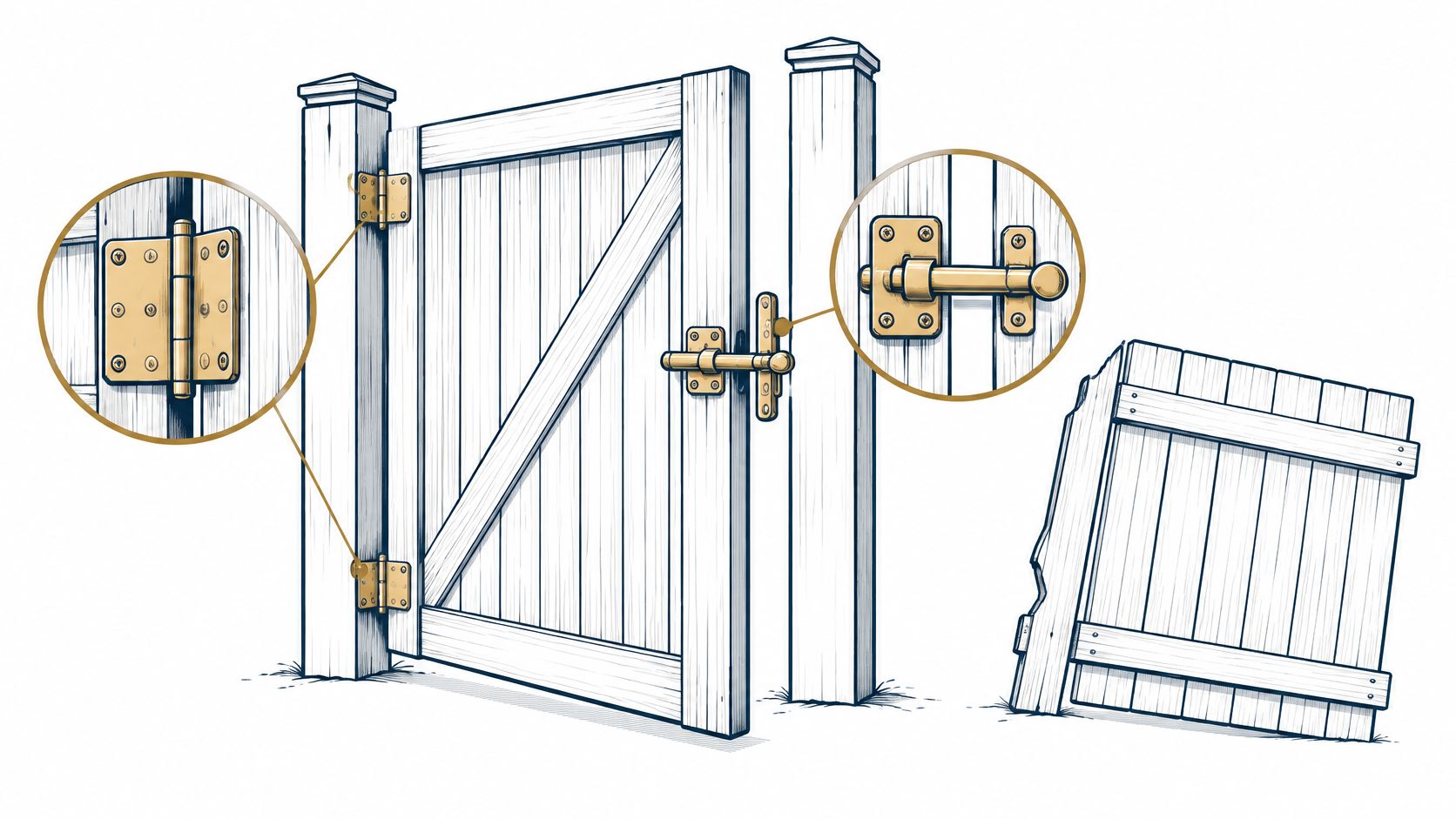
Design and staffing change the result. A study of 698 gated communities in one large Chinese city found higher levels of entry control were significantly associated with lower burglary rates while controlling for management fees, building height, building age, housing prices, homes for sale, rentals, and floating population. That supports stronger entry control, not every gate in every place.
What to verify
Compare current local police incident data with the actual setup. Check lighting, camera coverage, visitor protocols, emergency access, and whether the gate is staffed, monitored, or only decorative.
A gate can also create a false sense of security if residents relax basic precautions. Perceived safety has value, but it shouldn't replace incident records, working equipment, and a funded repair plan.
Fees, Assessments and Who Pays for Shared Infrastructure
A home in a gated community is usually a package, not a gate by itself. That package can include shared amenities, neighborhood rules, maintenance services, and private security infrastructure, all funded through recurring charges.
The national scale explains why documents matter. Homes in privately governed communities, including gated developments, homeowners associations, and condominium communities, grew from approximately 701,000 units in 1970 to about 24 million units by 2009, across roughly 305,400 common-interest developments, according to industry figures cited in a peer-reviewed study archived in PubMed Central. Those figures describe privately governed communities in general, not gated communities alone.
Separate controlled access from everything bundled with it. Private roads, recreation space, stormwater systems, landscaping, gates, signs, and common structures each carry operating and replacement costs. A higher purchase price doesn't prove buyers are paying a premium for the gate itself.
Costs to compare
- Regular assessments: What services and amenities do they cover?
- Reserve funding: Are roads, gates, drainage, and shared structures funded for replacement?
- Special assessments: What's the history, and are capital projects already discussed?
- Insurance and litigation: Could shared-structure coverage or pending disputes change future charges?
- Delinquency rates: Do unpaid accounts signal strain in the operating budget?
Estimate total annual carrying cost, not purchase price alone. Model ordinary dues alongside insurance changes, major repairs, and possible capital projects. That comparison is especially useful in Emerald Bay, a gated golf community in Destin, Okaloosa County, when reviewing Emerald Bay Destin homes for sale, where the relevant question is what a specific address obligates you to fund.
Rules, Roads and Access Under Florida Law
Control at the entrance depends on recorded documents and agreements, not on the gate alone. Road ownership is the clearest example. A neighborhood that looks private may still involve public access duties, district funding, or county traffic arrangements.
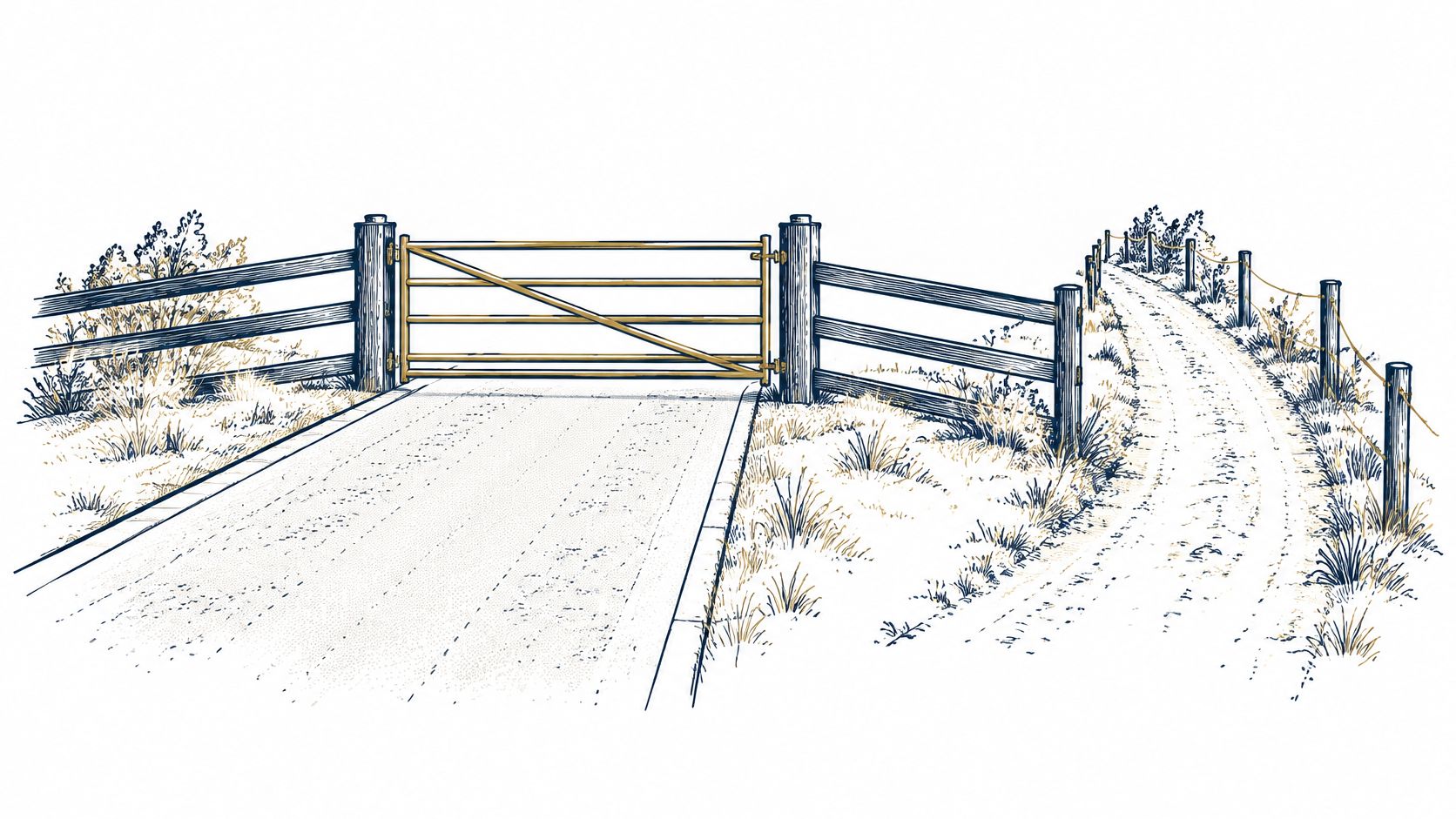
Under Florida Statute 177.107, a county or municipality may, under specified conditions, abandon and convey subdivision roads and rights-of-way for conversion to a gated neighborhood with monitored public access. The receiving district must conduct a reserve study for roads and related drainage, street lighting, or sidewalks every five years and annually fund the amounts identified in that study.
Traffic devices carry a separate duty. Under Florida Statute 336.125, when a county abandons subdivision roads and conveys them to a homeowners' association to create a gated neighborhood, the association must install, operate, maintain, repair, and replace the traffic-control devices on those private roads unless an agreement expressly gives the county traffic-control jurisdiction.
Verify who owns and maintains roads, gates, signs, drainage, lighting, sidewalks, and traffic-control equipment before you rely on a fee estimate. Those duties can shape assessments and future special funding needs.
Rental use needs the same document discipline. Rental-use due diligence considers recorded declarations and amendments, applicable association rules, and local requirements for the exact property. Marketing remarks, map labels, or listing badges don't prove rental permission, private rights, or access. For the licensing side, review Florida vacation rental licensing requirements alongside the property records.
Lifestyle Fit by Buyer Situation
An owner who winters elsewhere may want guests admitted while the home sits empty; a household with daily deliveries may read the same gate as friction. The useful question is narrow: which recorded duty, fee, or access rule will shape the week after closing?
| Use pattern | Gated community may fit when | Open neighborhood may fit when | Check first |
|---|---|---|---|
| Primary residence with shared upkeep preferred | Association handles roads, gates and common areas under clear rules | Owner prefers direct control over exterior and common-area decisions | Budget, reserve study, maintenance list |
| Second home used part of the year | Managed access and a documented gate procedure suit an owner who is away | Owner wants fewer rules on use or leasing | Declaration, rental rules, gate outage procedure |
| Frequent guests or deliveries | Visitor procedure is simple and gate hours fit the schedule | Entry is fast without codes or call-ins | Guest procedure, service entry, after-hours access |
| Walking to daily services | Services are reachable inside or just outside the gate | Shops and services are within walking distance on public streets | Walking route from the property, street layout |
| Interest in shared amenities and formal governance | Amenities are maintained under written standards | Owner would rather avoid association rules and assessments | Amenity list, governing documents, fee history |
The pattern that decides fit is usually ordinary: who pays for shared parts, how visitors enter during an outage, and whether the street layout puts errands inside or outside the entrance. A gate can favor an absent owner and burden a high-traffic household at the same time; the documents show which effect dominates. If the main decision is attached versus detached ownership, weigh a broader condo, townhome or house comparison before scoring the gate itself.
Confirm the Records Before You Commit
A gated entrance answers one question on sight. The recorded documents for the exact address answer the rest, so request them early and match each one to a decision you will have to live with.
| Record | What it shows | Question it answers | If it is missing or unclear |
|---|---|---|---|
| Recorded declaration and amendments | Use limits, leasing rules, exterior standards | Can I use and lease this property as intended? | Treat use and leasing as unresolved until the recorded text is in hand |
| Association budget and reserve study | Operating costs and planned funding | How likely are future assessments? | Request the current budget and any reserve schedule from the association |
| Road and gate maintenance agreements | Who maintains roads, gates, drainage and lighting | Who pays when a shared structure needs repair? | Get written confirmation of which entity maintains the roads and gate |
| Gate-access and emergency-access policy | Entry hours, visitor and service procedures | How do guests, deliveries and emergency crews get in? | Ask for the procedure in writing from the association or manager |
| Association insurance information | Coverage the association carries | What does the association cover, and what must I insure myself? | Ask for the policy summary, then confirm your own coverage separately |
| Pending litigation and special-assessment history | Open disputes and past one-time charges | Are there known costs or disputes not yet in the budget? | Ask directly about open disputes and past charges |
| Local police incident data | Reported incidents for the area over time | What does the crime record show beyond the gate? | Request the data from the local agency |
A gap in the file means the question stays open, and an open question about cost or use is a reason to slow the timeline. Association insurance information deserves care here: it describes what the association carries and says nothing about the coverage you need to buy yourself.
Before closing, confirm that the association's estoppel certificate has been ordered; under Florida Statute 720.30851, the association issues it within 10 business days of a request from the parcel owner, the mortgagee or a designee, and it states the amounts owed on the property. Match every record against your own use pattern, and where insurance and leasing overlap with a condo purchase, review how to check condo insurance and rental rules before you sign.
Common Questions About Gated Community Living
Can a guest enter during a gate outage? Ask for the written gate-access and emergency-access policy, then test it against a real arrival: a guest reaching the entrance while the reader is down, a delivery during restricted hours, and an ambulance that cannot wait for a call-back. The workable communities name the backup entry method, the staff or service responsible, and how emergency crews are let through.
Will a road repair turn into a special assessment? Follow the road maintenance agreement from ownership to funding. If the association owns the roads, gates, drainage and lighting, check whether reserves already cover their cycle and which repairs fall outside the budget. A private street can look ordinary until a resurfacing, drainage fix or gate replacement lands as a one-time charge.
Can the rules still block the purchase after the price works? Yes, when the declaration and amendments restrict the use behind the offer: leasing limits, guest procedures, exterior changes or access rules can conflict with the plan for the property. The cleaner test is simple: keep the gated address only where the recorded operating rules and funded repair plan still work on an inconvenient day.
Dream Destin Realty helps Emerald Coast buyers compare gated and open neighborhoods by the records that drive cost, access, and daily use, including association budgets, reserves, rules, and road responsibilities. If you're weighing a specific gated address, contact Dream Destin Realty to organize a document-based review before you commit.


