
Gulf View Condos Destin Florida: How to Verify a View
Learn how to check a Destin Gulf view condo's sightline, legal frontage, access, and association records before you compare units.

On this page
On this page
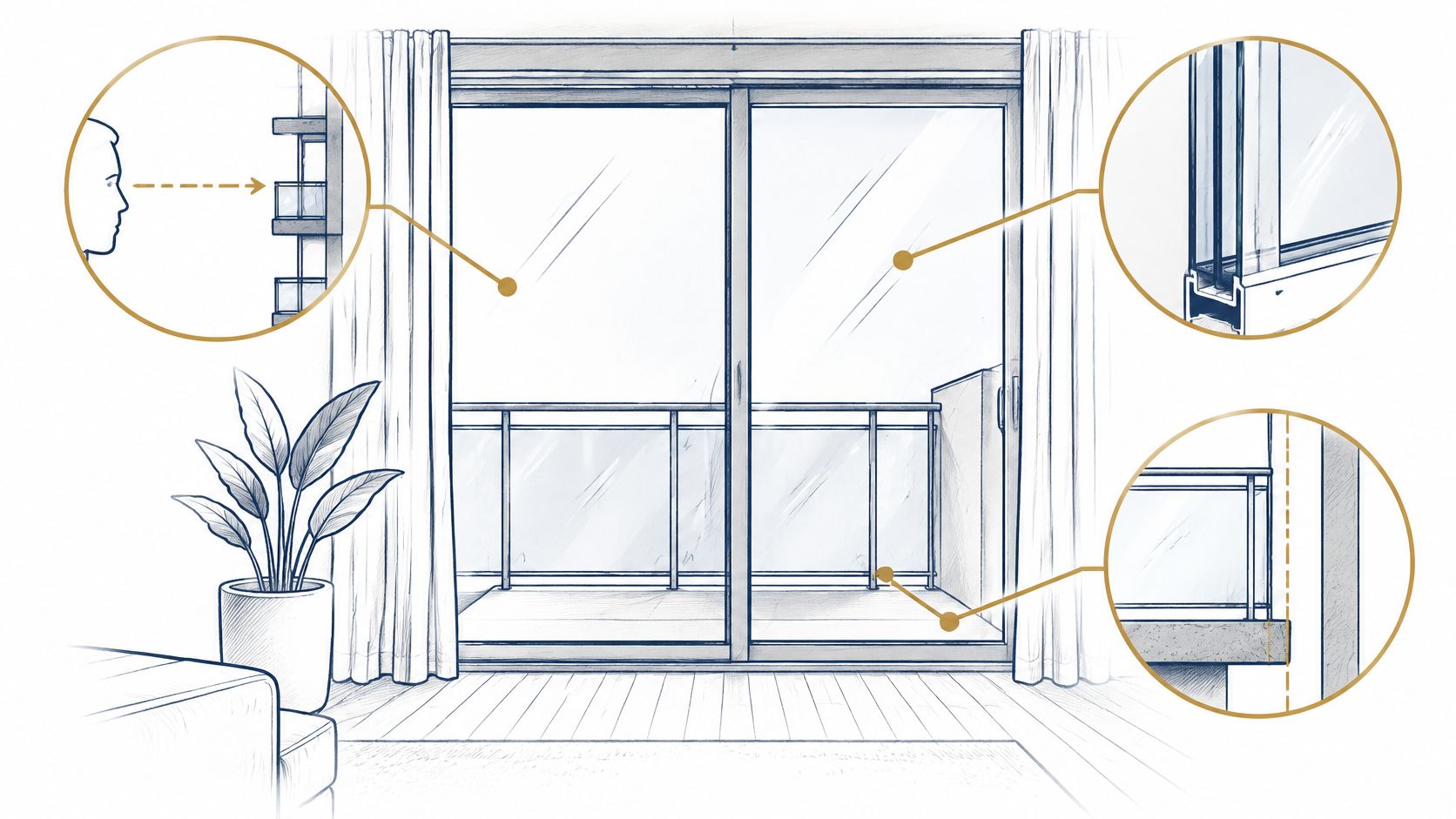
A Gulf outlook becomes part of the living space in a Destin condo, whether enjoyed from a window, a balcony door, or a seated position inside. Those different viewing positions offer a useful starting point for comparing how a home fits daily life.
Destin's public beach parks and trails add another local dimension to that search. A condo comparison can bring together the experience inside the home, the beach route, and the ownership obligations without treating a Gulf view as the same thing as frontage or access.
Table of Contents
- Why a Gulf View Is Three Separate Questions
- The Evidence Matrix for Each View Decision
- What Recorded Documents Establish About Frontage
- Public Beach Access Versus Rights Conveyed With a Unit
- How to Check the Sightline From Inside the Unit
- Window and Balcony Responsibility Under Your Documents
- Compare Units and Decide Before You Make an Offer
Why a Gulf View Is Three Separate Questions
A view from the living room serves a different purpose from a view you can find only by stepping onto the balcony. During a Destin showing, start where you'd read, eat, or sit with visitors. That position tells you more about daily enjoyment than the strongest photograph in a listing gallery.
Buyers searching Destin and the Miramar Beach corridor should separate sightline, frontage, and access rather than treat them as interchangeable descriptions.
What evidence distinguishes an actual Gulf view from Gulf frontage or beach-access rights?
The sightline is what you can see from the specific unit's living area and balcony. Note whether water fills the window, appears between structures, or becomes visible only when you turn toward a particular corner.
Frontage and legal identity concern the parcel and interests described in the recorded condominium declaration and related documents. A photograph of the Gulf doesn't establish that the condominium property touches the shoreline.
Access concerns the route to the beach and the basis for using it, whether through public options or rights conveyed with the unit.
The City of Destin Beach Information page identifies public beach parks and trails, making it useful for comparing a building's location with public beach options. That public resource doesn't establish an access right attached to a privately owned condo.
Buying distinction: A strong Gulf view can coexist with public-only beach access and no private frontage.
Keep separate notes for each question during the showing. Otherwise, an appealing outlook can lead you to assume that a convenient path or shoreline interest comes with it. The view deserves attention, but it doesn't answer the other questions.
The Evidence Matrix for Each View Decision
Before touring a Destin condo, work through the matrix row by row and decide which records you need for the features you value. Each row pairs one decision with the evidence that can support it, so a seller's photograph stays in the sightline row and a recorded declaration stays in the frontage row.
A seller's photograph helps you plan the visit. A recorded declaration identifies the property. Each one answers only the row it belongs to.
View decisions, evidence, and open questions for a Destin Gulf view condo
| Decision | Appropriate evidence | What remains to establish |
|---|---|---|
| Actual-unit sightline | Photographs or observations taken from inside the specific unit, from the living area and balcony, at more than one time of day | Whether the view is angled, partial, obstructed, or dependent on neighboring structures or vegetation |
| Frontage and legal identity | Recorded declaration, legal description, unit identification, and survey or plot-plan materials | Which parcel and which rights the unit actually carries |
| Public versus conveyed access | City of Destin beach information for public options, plus declaration appurtenances and any recorded easements | Whether the unit holds any access right beyond public options |
| Window and balcony responsibility | Declaration, amendments, and association responsibility matrix | Which party maintains, repairs, or replaces each window, door, and railing component |
| Association financial documents | Current budget, reserve study, financial statements, meeting minutes, and pending assessment notices | Ongoing cost exposure and any planned or pending capital work |
| Current insurance review | Master policy declarations, deductibles, and a unit-owner coverage quote | What the association insures and what the owner must insure separately |
Separate a document received from an answer established
A file in hand can still leave the underlying question open. A budget can show a spending category without explaining the scope of a planned balcony project. An access easement can require interpretation before you know whether it benefits the unit you're considering.
When you weigh the broader purchase beyond one unit's paperwork, compare Gulf-front condo ownership factors against the rows above. Keep each sightline judgment anchored to the unit in front of you.
Keep a working copy with space for the document's date, the relevant page, and the person responsible for clarifying it. Preserve the original file so your attorney, inspector, or insurance professional reviews the same material you saw. A paraphrased email loses the page numbers and exact language a reviewer needs.
- Record the exact issue. Write "whether the recorded easement benefits this unit" instead of a broad label like "beach access."
- Identify missing material. An amendment referenced in the declaration belongs in the review, even if the seller has not supplied it yet.
- Keep unresolved items visible. Leave a category open while any part of its file is outstanding, and treat that row as unresolved cost or risk until someone answers it.
What Recorded Documents Establish About Frontage
Every Destin condo carries two identities: the marketing name in the listing and the legal parcel described in the county records. The recorded-document provisions of Florida Statutes section 718.104 address the condominium declaration, land description, unit identification, and survey, graphic, or plot-plan materials.
Those materials connect the unit to the described condominium property and locate it within the building. They answer where the unit sits on paper.
Read each recorded drawing in light of its date and purpose, together with subsequent amendments and other current records. A drawing identifying units and common elements is not a current photograph or, by itself, a promise that neighboring land will remain unchanged. Compare the recorded materials with current on-site observations.
Read each record for its actual purpose
The legal description answers an identification question. The survey and graphic materials explain spatial relationships as of recording. A claim about a protected outlook needs supporting language of its own, created by an instrument that grants it.
- Declaration and amendments. Request the recorded versions and identify provisions affecting the unit, common elements, and use rights.
- Exact legal description. Match the purchase documents to the unit under consideration, including any interests expressly identified.
- Survey or plot-plan materials. Locate the described land and building configuration, then verify on site what has changed since the drawing date.
- Open rights questions. List any claimed view protection or shoreline interest that the available records leave unproven.
Appurtenances need careful reading
Appurtenances are addressed in Florida Statutes section 718.106, including interests and use rights provided through the declaration. A general airspace provision carries no promise about an unobstructed outlook.
Mark what each provision establishes and what it leaves open. Do not infer protection against neighboring development from general unit-ownership language alone. Any claimed view restriction or easement needs its own document-specific legal review.
At Dream Destin Realty, we help clients review available building records, including association information, inspections, reserves, rental rules, and insurance, as part of purchase due diligence. Dream Destin Realty's Seafarer guide gives building-specific context for that review, while the recorded instruments remain the controlling source for a purchase.
A legal professional determines enforceable rights from the current deed, declaration, amendments, easements, and other applicable documents. Ask for that interpretation while you still have time to act on it.
Public Beach Access Versus Rights Conveyed With a Unit
A Destin condo may sit beside a public beach, offer a route to the sand, or convey a specific access right. Those are separate claims. Check the route first, then identify the document that supports any right attached to the unit.
Use the city's public beach information to orient yourself. For parking, hours, and amenities, check the current page for the specific facility rather than relying on a general overview or an older listing description.
Investigate the route and the right separately
Walk the proposed route when practical. Note gates, entrances, crossings, and any segment over another property. For each segment, ask what authorizes access.
Florida Statutes section 718.111(5) addresses association access to units for specified maintenance, repair, replacement, and protective purposes; it is not the public-beach provision. The separate public-beach provision in section 718.106(5) limits certain local-government prohibitions on pedestrian access to a public beach contiguous to condominium property, with health, safety, and natural-resource exceptions. It does not establish a private beach entitlement for every Destin condo owner.
The question for your unit is specific: what access right, if any, does its paperwork describe?
- Recorded access easement. Request the complete instrument and identify the benefiting property, route, and restrictions.
- Declaration use rights. Check for language describing access interests; a beach photograph or gate alone does not establish them.
- Association access rules. Request the current rules for the route described in the listing.
- Seller or association confirmation. Ask which path is used and which recorded document supports that use.
A path you can walk during a showing and a right conveyed at closing are different things.
Chateau La Mer beach access details offer building-specific context. Use the declaration, easement, current association rules, and any written seller or association explanation for the unit you are considering; access descriptions for another property do not establish this unit's rights.
How to Check the Sightline From Inside the Unit
Treat the Destin showing as a repeatable observation, not a quick glance through the balcony door. Bring the unit identification, a floor plan if available, and a simple place to record photo positions.
A consistent method makes it easier to compare units without giving the most dramatic listing image too much influence.
How can a buyer verify the exact unit’s sightline, obstructions and orientation without relying on marketing photos?
- Match the unit to the records. Confirm the unit number against the legal description before evaluating the windows. This keeps photographs, floor plans, and showing notes attached to the correct property.
- Stand where you'll use the room. Observe the outlook from the main living area window and balcony door, then from an ordinary seated position. Record what you see without leaning around a wall or holding the camera outside the room.
- Describe the geometry. Note window direction, floor position, viewing angle, and nearby buildings, trees, or structures. Distinguish water visible straight ahead from water visible only at the edge of the opening.
- Repeat the visit under different conditions. Return at another time of day and, if practical, in another season. Light, reflections, and vegetation can change how clearly you experience the outlook.
Frame edges and hardware are useful reference points when recording a viewing position. Keep them in an uncropped reference photograph so later comparisons use the same opening.
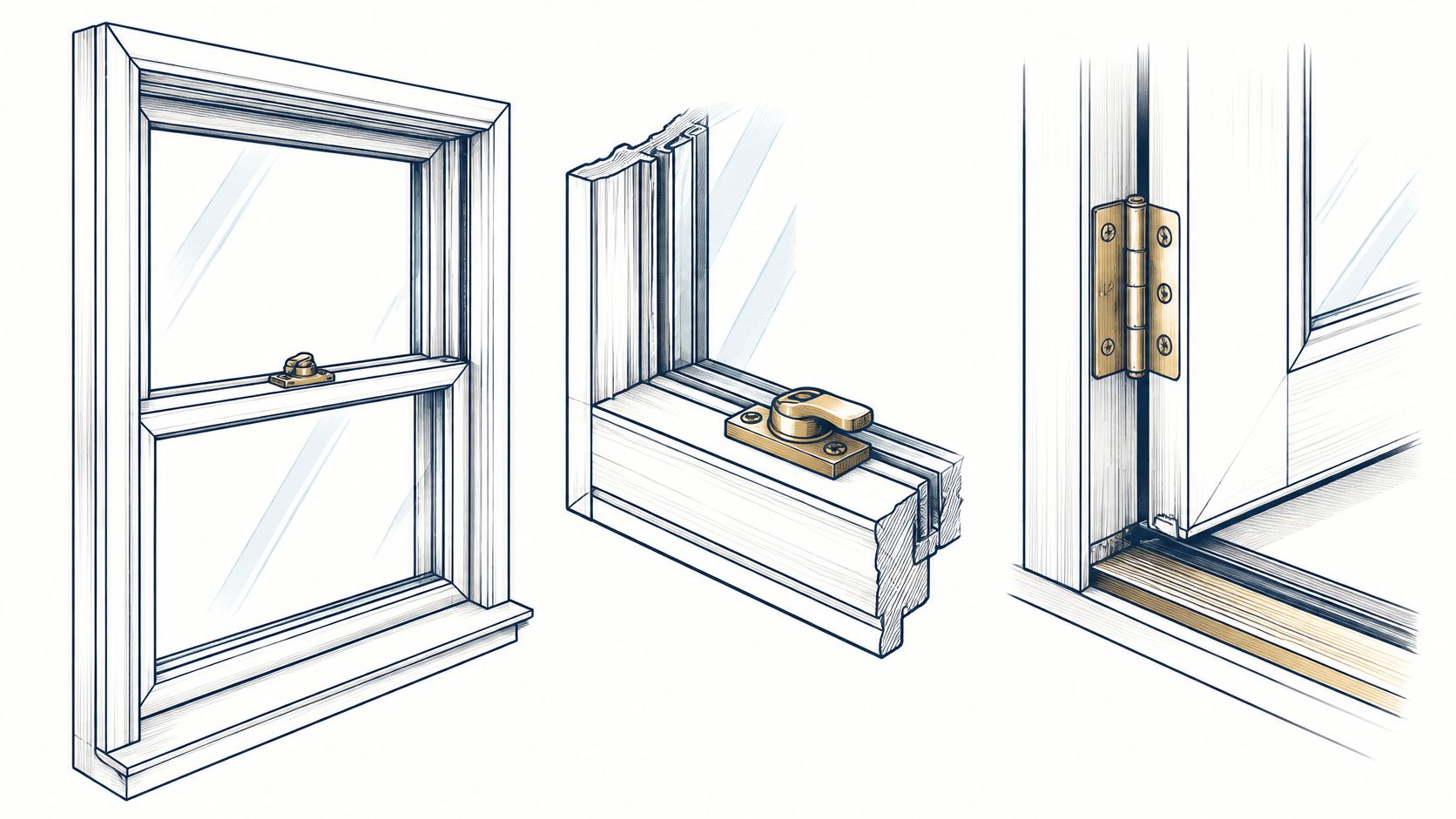
Keep photographs traceable

Generic illustration of a stable camera position, not a photograph of a property or its view. Record the actual position used for each unit photograph.
- Record provenance and position. Take timestamped photographs, identify who took them, and describe where the camera stood. Ask the seller to identify the origin and date of any supplied photograph that influences your decision.
- Identify what the view relies on. Ask whether this outlook is specific to the floor, window arrangement, balcony position, or an opening between adjacent structures. Investigate relevant neighboring parcels rather than assuming their present condition will continue.
- Write down the unknowns. Request the seller's written confirmation of material statements about the outlook. Keep unanswered questions separate from what you personally observed.
Don't use a wide-angle image as your only record. Include an ordinary room-level photograph that shows the window frame and surrounding interior, so you can remember how much of the outlook is available without repositioning yourself.
Owner-supplied photographs, GIS maps, and listing labels don't guarantee a view. Your visit establishes current observations, not permanence, and it helps distinguish a usable living-space outlook from a narrow glimpse that requires a particular stance.
Window and Balcony Responsibility Under Your Documents
The view reaches you through physical components: glazing, frames, sliding doors, rollers, latches, hinges, and balcony railings. In a Destin condo, ownership, maintenance, and replacement responsibility for those parts shouldn't be assumed from their location.
Read the declaration, amendments, and association responsibility matrix together. If the matrix uses a broad term such as windows, ask whether it includes the glass, frame, seals, hardware, and surrounding connections.
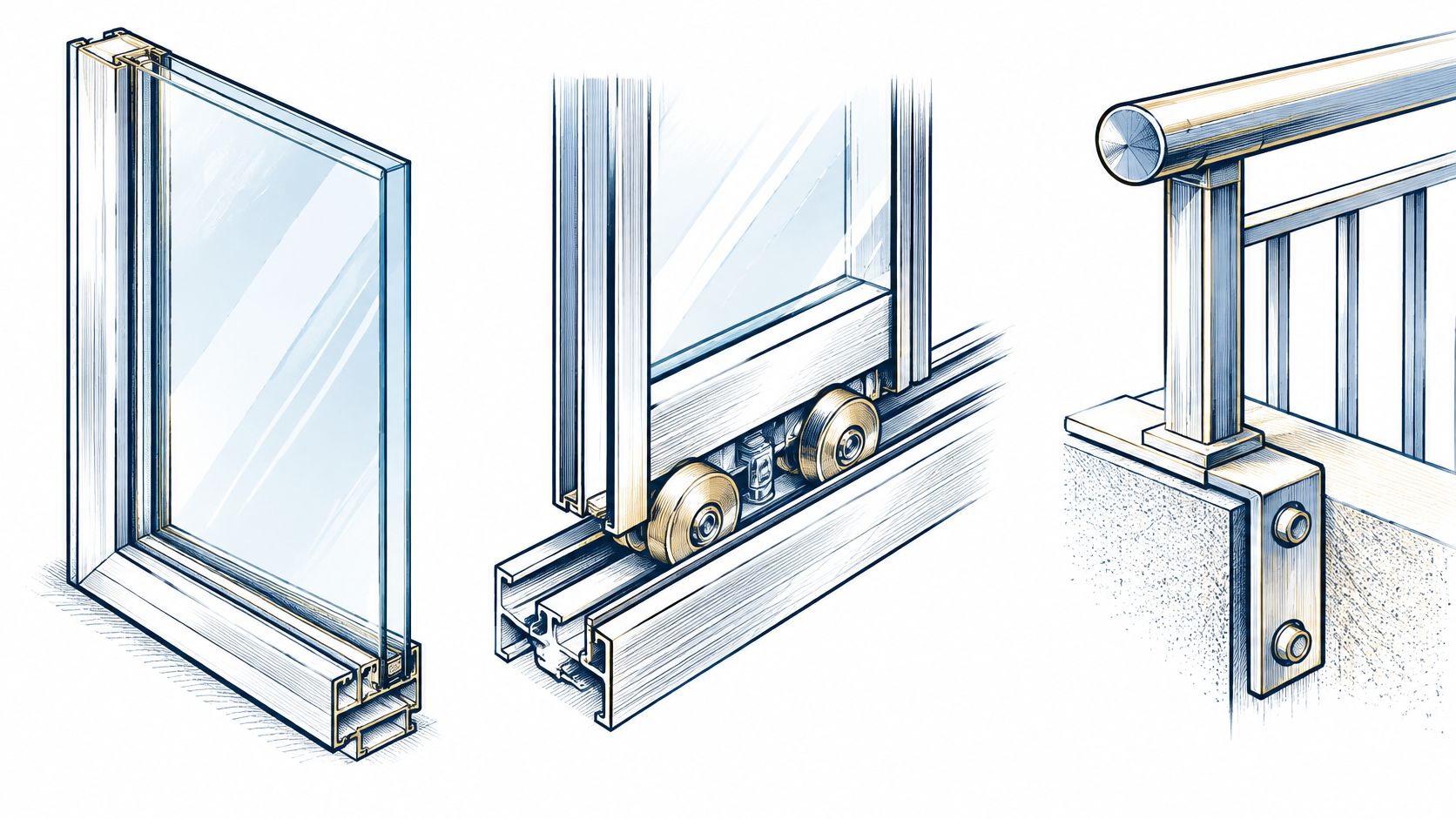
Which window, balcony, insurance and common-element responsibilities affect ownership of the specific condo?
| Component | Written question to resolve |
|---|---|
| Glazing and frames | Who maintains and replaces each part, and is any replacement scheduled? |
| Sliding door and hardware | Who handles rollers, tracks, seals, latches, and frame replacement? |
| Balcony railings and fasteners | Who inspects, maintains, and replaces these components? |
| Tinting or modifications | What approval is needed before changing glass, finishes, or balcony components? |
Ask whether any window or balcony project is planned or pending, and request the available scope and association correspondence. A vague reference to exterior work isn't enough to establish whether your unit's door or railing is included.
Observe condition without assigning responsibility
During the visit, note haze, staining, visible seal concerns, and cleanliness on each pane. Operate accessible latches and sliding hardware with permission, and record sticking or incomplete operation for the inspector rather than diagnosing the cause yourself.
Ask about replacement history and the basis for any stated replacement schedule. Don't assume that a recently renovated interior includes new exterior glazing or that a clean pane proves the surrounding assembly is sound.
Emerald Towers insurance and financing guidance offers another building-specific starting point. For the unit you're buying, the current governing documents and policy review must establish responsibility and coverage allocation.
Clear glass and functioning hardware affect daily enjoyment of the view. The purchase decision also needs a clear answer about who handles the work when those components require attention.
Compare Units and Decide Before You Make an Offer
Two Destin units can look similar in listing photos yet offer different sightlines, access arrangements, and ownership costs. Compare them using the same visit method and records with current dates. That makes the trade-offs visible before you decide what to offer.
Put both units on the same basis
Record each unit's building, layout, and legal description. Note where the view is visible from inside, what appears in the sightline, and how the outlook changes from the balcony. For access, compare the rights identified in the documents for each unit rather than relying on a listing's “Gulf-front” label.
Then compare the current monthly assessment and what it covers. Use the association budget and financial records to distinguish regular costs from a special assessment or planned capital work. The aim is a like-for-like comparison, not an assumed premium for the stronger view.
Review building-level obligations
Ask the association which structural inspection and reserve-study reports it holds, and request the complete reports and related repair records. Florida's DBPR condominium guidance provides separate information on inspections, reserves, and association records. Use the actual reports for the building rather than assuming that a general summary establishes its condition or funding.
Request any milestone-inspection report, follow-up engineering recommendations, repair contracts, current assessment information, and relevant board minutes. Have an appropriate professional explain material findings. A polished interior does not establish the condition or cost exposure of shared structural systems, waterproofing, roofs, or exterior components.
How should two units be compared when one has a stronger view but different fees, condition or access rights?
Compare the observed view, documented access, regular assessments, known capital work, and unresolved questions side by side. Record the date and basis of each answer. A stronger sightline does not settle cost exposure, while a current budget or an absence of listed work does not promise that future costs will be zero.
Decide how much the observed outlook matters to your use of the home, then weigh it against documented obligations and open questions. Do not assign an assumed view premium or describe uncertain future costs as predictable. Keep unknowns separate from confirmed facts.
Browse Destin condo buildings for listing context, or compare Destin gulf-front condos if shoreline positioning is central to your search. The Destin area page provides location context, not proof of a unit's boundaries or rights.
Dream Destin Realty provides live listings and local market intelligence for buyers comparing Gulf-view condos. Listing details can help identify properties to consider; the unit visit and current records are needed to assess sightlines, frontage, access, and ownership obligations.
Before making an offer, have a legal professional interpret enforceable rights from the deed, declaration, amendments, and easements. Contact the Destin team to discuss your unit comparison and the records involved.


