
Harbor Lights Condos Destin: Buyer and Investor Guide
Explore Harbor Lights condos Destin with verified facts on location, floorplans, HOA rules, STR eligibility, insurance costs, and buyer due diligence steps.

On this page
On this page
Harbor Lights Condos in Destin is a 39-unit condominium association at 211 Durango Road in Okaloosa County, built in 2007 according to Okaloosa County property records. The popular assumption that any Destin condo automatically works as a nightly rental is the wrong starting point here. Harbor Lights is a smaller, newer harbor-area condominium, and its value depends on the documents, association economics, and lawful use of the specific unit.
The building sits in Destin's Holiday Isle and harbor area, where boating access, harbor activity, and residential privacy compete with the stronger beach orientation found along Scenic Highway 98. Buyers searching Harbor Lights condos Destin should evaluate it as a specialized ownership opportunity, not as a generic vacation rental product.
Table of Contents
- Harbor Lights Location and Community Overview
- Building Specifications and Unit Floorplans
- Association Governance and Financial Obligations
- Short-Term Rental Eligibility and Destin Compliance Rules
- True Ownership Costs and Insurance Considerations
- Buyer Due Diligence Checklist and Next Steps
Harbor Lights Location and Community Overview
Harbor Lights is not a generic Destin vacation-rental property. Its harbor setting, association structure, and unit-specific use rights determine whether the ownership model works. Okaloosa County records show 39 condominium residences built in 2007, and the Florida Division of Corporations record lists Harbor Lights Owners Association, Inc. at 211 Durango Road. Buyers should use those records to identify the legal condominium regime, then verify current documents before relying on marketing descriptions.
The property occupies Durango Road in Destin's Holiday Isle harbor area. The parcel meets Old Pass Lagoon, but no dock or slip is recorded under the building's name in county records. It does not provide the same experience as direct Gulf frontage. Buyers who prioritize beach access should compare the property with Gulf-oriented condominiums before making an offer. A broader search of waterfront real estate in Destin FL helps establish whether the harbor setting matches the buyer's priorities.

Harbor positioning versus Gulf-front ownership
Harbor-side ownership means activity and access rather than an uninterrupted Gulf horizon. Waterfront businesses, boat traffic, and nearby services shape the daily environment, while the surrounding residential streets offer a different pace from concentrated beachfront resort areas. That combination suits buyers who want the harbor specifically. It is a poor fit for anyone whose primary goal is direct beach frontage.
County records date the building to 2007, with a top occupied level of seven. Confirm any amenity a listing mentions through the declaration, amendments, rules, and association records, including whether it is available to every owner, subject to restrictions, or tied to a particular unit or membership.
Why the small association changes the analysis
A 39-unit association spreads major repairs and insurance obligations across fewer owners than a large coastal tower. One roof, structural, mechanical, or storm-related project can therefore create a more concentrated financial impact. Review the budget, reserves, recent meeting minutes, insurance declarations, pending assessments, and maintenance records before closing.
The right question is whether Harbor Lights supports the way you intend to own the unit. Confirm the association's rental rules, owner-use restrictions, insurance responsibilities, and current carrying costs in writing. A harbor address may attract buyers, but verified ownership rights and documented expenses determine the purchase.
Building Specifications and Unit Floorplans
Marketing language can make Harbor Lights sound more uniform than the ownership records support. County records show 39 residences on six occupied levels, from the second level to the seventh, so height and exposure differ from one unit to the next.
Public records do not establish Harbor Lights' complete inventory of layouts, sleeping capacity, balcony sizes, parking rights, storage assignments, or interior finishes. One residence cannot define every unit. Obtain the condominium plat, legal description, current seller disclosure, and the specific unit's floorplan before writing an offer.
Request these for the specific unit:
- Square footage and floorplan from the condominium plat
- Bedroom and bathroom count from the seller disclosure
- Assigned parking, storage and balcony rights from the declaration
Confirm which areas belong to the unit, which are common elements, and whether parking, storage, balconies, or access rights are assigned, limited common elements, or shared facilities. The closing file should contain documents that answer each point.
Space is useful only when the documents support it
A larger residence offers more room for personal use, but it also requires more furnishing, maintenance, conditioning, and interior insurance. Review the unit's condition alongside the association's responsibility for windows, doors, balconies, exterior walls, plumbing lines, and mechanical systems. Those boundaries affect both repair decisions and future expenses.
Verify any amenity a listing mentions directly through association records and an on-site inspection. Confirm its current condition, operating schedule, access rules, and maintenance responsibility. An amenity shown in marketing may be unavailable, changed, restricted, or funded through obligations that affect owners.
Buyers should also examine nearby alternatives by reviewing 2 bedroom condos for sale in Aegean Destin. Compare legal structure, unit size, location, fees, and leasing rules. Bedroom count alone says little about the ownership arrangement or the costs attached to it.
Association Governance and Financial Obligations
Marketing language rarely shows the ownership obligations that shape Harbor Lights' value. The association collects assessments, maintains shared property, buys insurance, enforces rules, and makes decisions that affect both resale prospects and carrying costs. Florida condominium governance operates under Chapter 718, but the controlling details are found in the recorded declaration, amendments, bylaws, rules, budgets, contracts, and current board records. As noted above, verify the association's legal identity and governing documents before relying on any summary.
Board structure matters more than a polished listing description. Review the current directors, officer roles, meeting notices, voting procedures, quorum requirements, amendment thresholds, and recent rule changes. Minutes should show how the board handles insurance renewals, maintenance decisions, owner complaints, and assessment proposals. A small ownership group can make each vote and delinquency more consequential, so examine participation, collection practices, and whether one issue is driving repeated conflict.
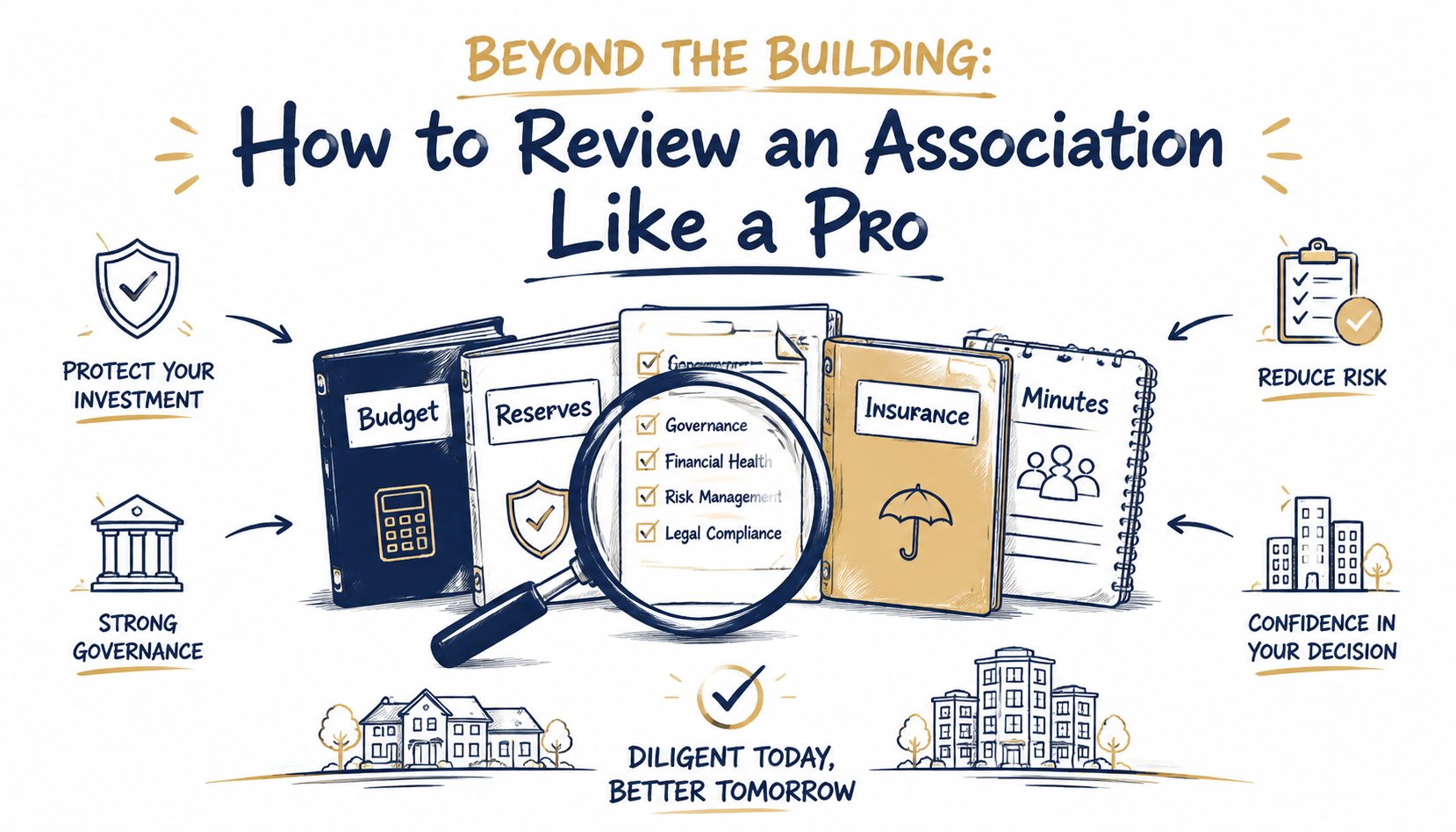
Documents that should arrive before the inspection period ends
Request the current package from the seller or association, then have the appropriate professionals review it. At minimum, examine:
- Declaration and amendments: Confirm unit boundaries, common elements, leasing provisions, pet rules, parking rights, use restrictions, and any recent amendments.
- Current budget and financial statements: Review operating income, reserve contributions, insurance expenses, owner receivables, and unusual cost increases.
- Reserve information: Identify the components funded by the association and compare reserve balances with the repair obligations in the documents.
- Board and membership minutes: Look for insurance problems, leaks, concrete work, elevator issues, disputes, assessments, and rule changes.
- Insurance records: Identify covered property, deductibles, exclusions, renewal terms, and owner exposure to loss assessments.
- Pending claims and litigation: Request written disclosure of active claims, threatened litigation, construction disputes, and unresolved damage.
A clean unit inspection does not establish financial health. It evaluates the residence, while association records reveal the condition of shared property and the obligations attached to ownership.
Practical rule: Do not let a low asking price replace missing records. Delay the decision until the budget, reserves, insurance, assessments, voting rules, and leasing restrictions are clear.
For broader local context, buyers can read the Dream Destin Realty St. Lucia review. Use Harbor Lights' recorded documents, current board records, and written association responses as the evidence for this purchase.
Short-Term Rental Eligibility and Destin Compliance Rules
Harbor Lights is not automatically a nightly-rental investment. Treating it that way before confirming the documents is a costly underwriting mistake. Dream Destin Realty's review does not mark Harbor Lights as short-term rental eligible, so treat it as a primary or second home rather than a vacation rental investment.
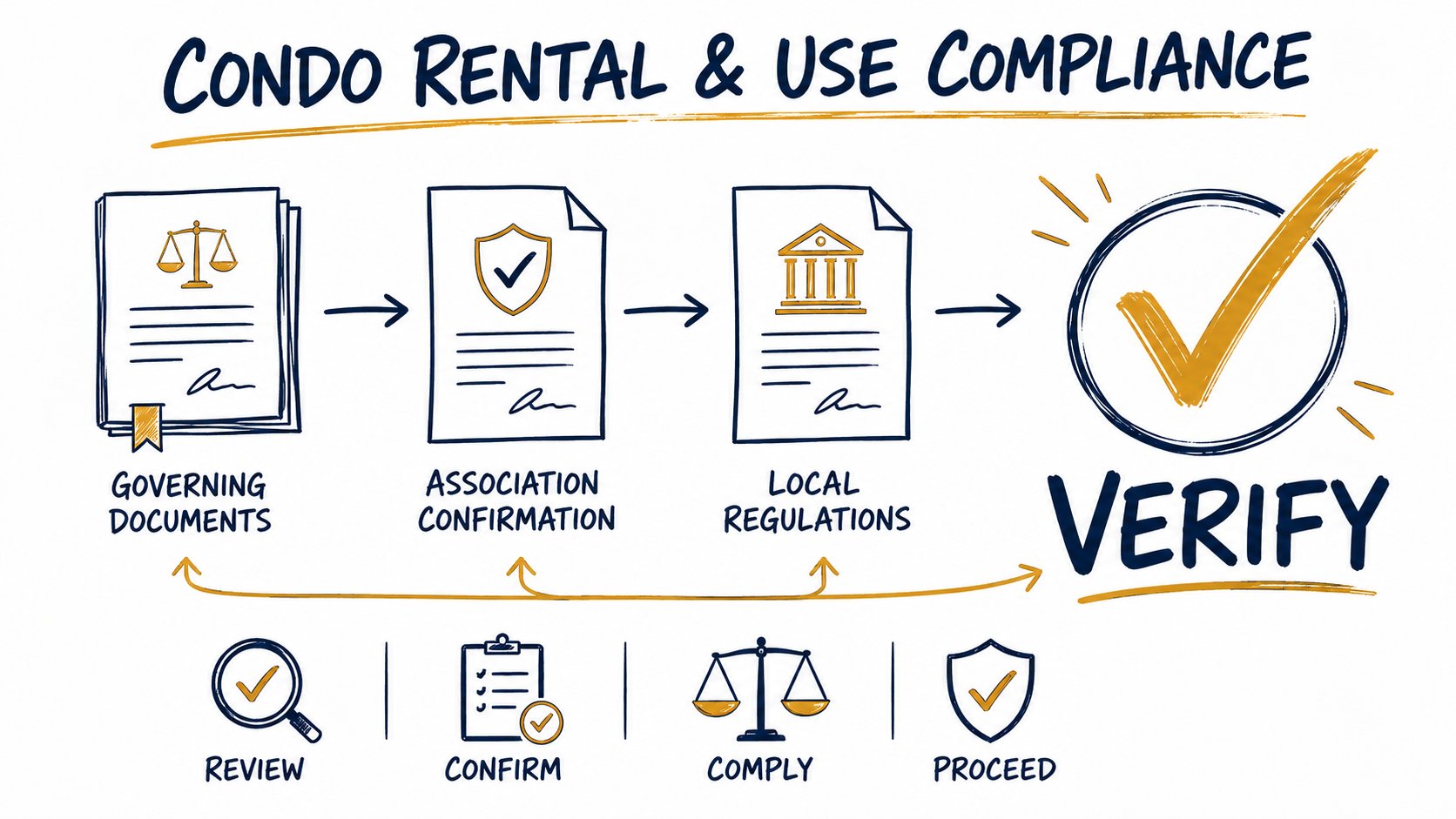
The property-specific permission comes first
Obtain the recorded declaration and every amendment affecting leasing. Request the current association leasing rules, or written confirmation from association management, before the inspection period expires. The response should address the exact unit, permitted rental duration, registration requirements, application procedures, occupancy limits, and any restriction on rental frequency.
Ignore rental advertisements, prior rental history, MLS remarks, and seller projections until the association confirms the current rule. Those materials may describe past activity rather than permitted use today. If the declaration, amendments, and management response conflict, treat rental eligibility as unresolved and require a clear answer from the association or qualified Florida counsel.
The City of Destin requires short-term rentals inside city limits to register every year. Registration opens January 1, and the City charges a late fee after March 31. The City's registration page and current guide list which properties must register and the full requirements, and the City's short-term rental FAQ lists a registration fee of $500 to $700 based on the home's square footage. That municipal requirement does not settle the private-use question. Buyers must also verify zoning, state licensing, applicable taxes, occupancy limits, safety requirements, and association restrictions.
Registration does not create a rental right
City registration cannot override a condominium declaration. The association must permit the intended rental use, and the unit must satisfy current government requirements.
Get written answers to these questions:
- Does the declaration permit the intended rental duration?
- Do amendments or current rules change that permission?
- Does the association require approval, registration, or a minimum ownership period?
- Are occupancy, parking, noise, or guest rules stricter than city requirements?
- Does the exact unit carry a separate restriction?
- What registration, licensing, inspection, and tax obligations apply?
The underwriting decision should follow the documents. If current records restrict leasing, evaluate Harbor Lights as a second home or owner-occupancy property, not as a vacation-rental purchase. Buyers reviewing alternatives can see the Villages of Crystal Beach buyer guide, then request the same property-specific leasing confirmation for each candidate.
Approval also creates continuing administrative duties. Owners must retain registration and licensing records, follow applicable tax procedures, monitor rule changes, and ensure managers and guests comply with property restrictions. None of those steps creates permission where the association prohibits the intended use.
True Ownership Costs and Insurance Considerations
The listing price is the least reliable measure of what Harbor Lights will cost. Buyers need a property-specific model covering association assessments, property taxes, interior insurance, utilities, maintenance, financing, and possible special assessments. The Florida Office of Insurance Regulation's January 2026 stability report lists Okaloosa County averages, including wind, of $1,754 for condominium unit owner policies and $3,891 for homeowner policies, as of September 30, 2025. Get a written quote for the exact unit.
That county figure is not a Harbor Lights quote. An insurance agent must review the building, unit, coverage type, deductibles, loss history, and association master policy before a buyer uses insurance in a unit-level projection.
Build the cost model from verified records
Confirm each figure with the association, tax roll, lender and insurer.
| Expense Category | Notes |
|---|---|
| Association assessments | Confirm the current amount, payment schedule, inclusions, and planned increases. |
| Property taxes | Verify the unit's current tax record and reassessment implications. |
| Master insurance exposure | Review the association policy, deductibles, exclusions, and assessment allocation. |
| Individual condo insurance | Obtain a unit-specific quote for contents, liability, interior coverage, and loss assessment. |
| Utilities and maintenance | Confirm what the association includes and what the owner pays directly. |
| Special assessments | Review notices, minutes, reserves, capital plans, and pending votes. |
| Financing costs | Model the buyer's actual loan terms, cash contribution, and closing costs. |
Insurance can change the purchase decision
A lower purchase price does not guarantee lower ownership costs. Insurance, assessments, taxes, and repairs can outweigh a lower purchase price. If association records restrict short-term rentals, remove rental income from the model entirely and evaluate the unit as a second home or owner-occupancy property.
Request the master policy declarations page, renewal information, deductibles, exclusions, claims history, and pending coverage changes. Obtain an individual condo policy quote before the inspection deadline.
The number that matters is the post-expense cost, not the listing price.
Do not calculate projected rent, cap rate, return on investment, or cash flow until the unit passes the association's written leasing review and applicable government requirements. Also verify whether the master policy's deductibles or exclusions could create owner assessments after a covered loss.
Buyer Due Diligence Checklist and Next Steps
Marketing claims do not establish ownership rights at Harbor Lights. Before closing, verify the association documents, lawful rental use, insurance exposure, financial obligations, and the exact rights attached to the unit.
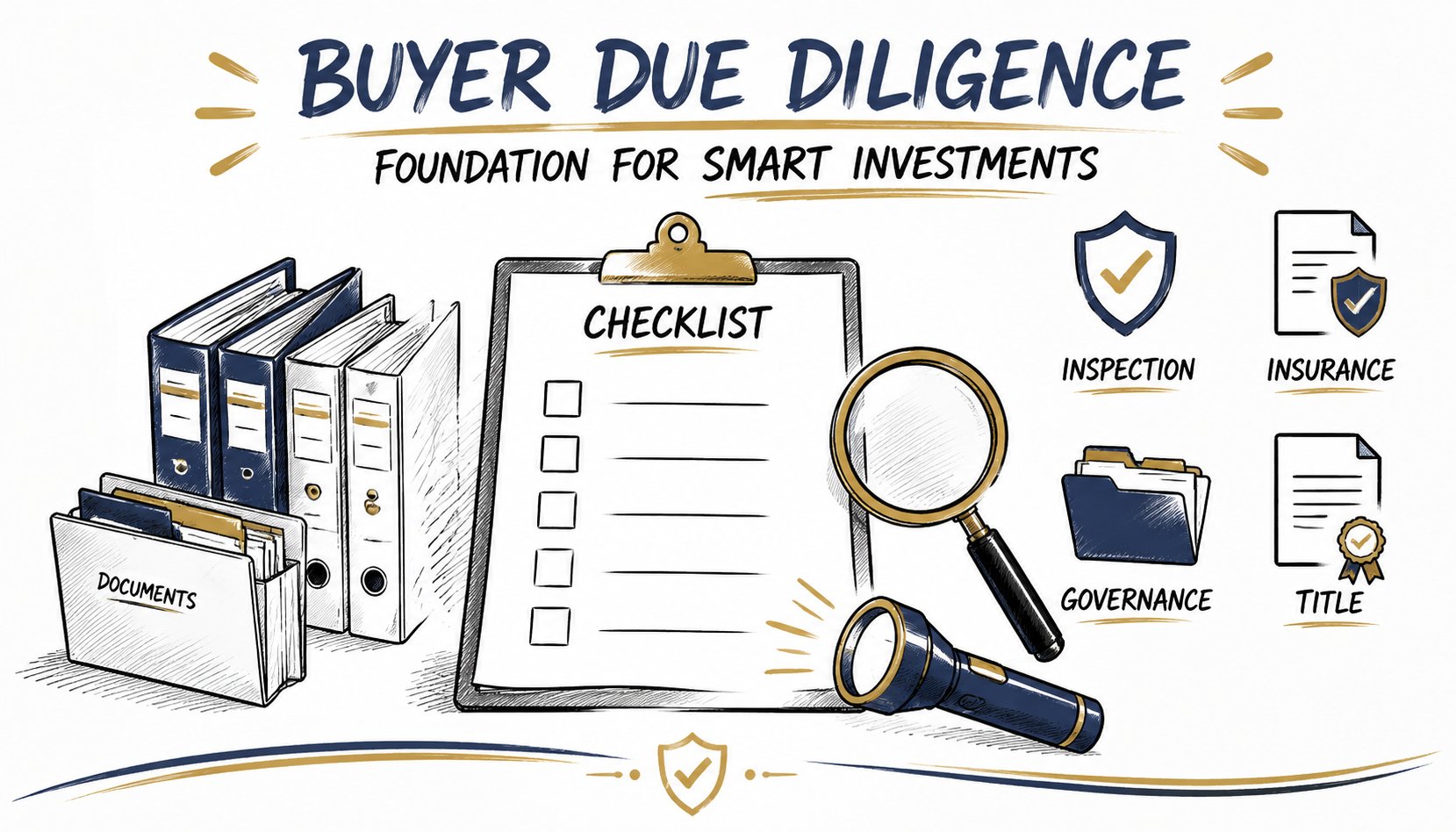
Review the legal and financial file
Obtain the declaration, amendments, bylaws, rules, plat, and unit legal description. Confirm the association name, 39-unit condominium structure, assigned parking or storage, limited common elements, maintenance boundaries, pet rules, leasing restrictions, and approval rights.
Request the current budget, financial statements, reserve information, master insurance documents, assessment notices, and recent board and membership minutes. Look for deferred maintenance, water intrusion, elevator or concrete work, roof repairs, insurance renewals, litigation, collection problems, and proposed assessments. Ask specifically about pending projects and costs assigned to individual owners.
Verify the intended use in writing
A buyer planning rental activity must obtain written association approval for the exact unit and intended rental duration. Do not rely on listing language or past occupancy. Confirm current Destin registration requirements, applicable state licensing, tax obligations, occupancy rules, inspections, and zoning requirements. If the association's written position is unclear, remove rental income and investment-return assumptions from the analysis.
A second-home buyer should verify access, parking, noise, amenity rules, maintenance duties, and insurance costs. Market listings can provide context, so buyers may browse Destin condos for sale, but those listings do not prove what use Harbor Lights permits.
Complete physical, insurance, and financing checks
Hire an independent inspector familiar with coastal condominiums. Review the HVAC, plumbing, electrical systems, windows, doors, balcony, appliances, moisture evidence, and interior finishes. Request engineering reports, elevator maintenance records, capital-project records, and proof of completed repairs.
Give the lender the association's financial and insurance package early. Confirm project eligibility, documentation requirements, owner-occupancy considerations, reserves, insurance, and pending assessments before relying on financing. For a 1031 exchange, coordinate with your qualified intermediary and tax adviser before meeting deadlines or identifying replacement property.
The 2007 construction year and 39-unit association identify the property, but current records determine the risk. Confirm every material point before closing. Dream Destin Realty can help organize property-specific questions and current listings. Visit Dream Destin Realty and the Harbor Lights listings page for a buyer consultation focused on lawful use, insurance, and total ownership cost. To compare Harbor Lights with other Destin condominium communities, see the Destin condos for sale guide.


