
Brownstones at Kelly Plantation Destin Homes: A Guide
Explore Brownstones at Kelly Plantation in Destin, compare ownership documents, review home condition and plan a property-specific offer.

On this page
On this page
Brownstones is the townhome neighborhood named within Kelly Plantation in Destin by the official Kelly Plantation neighborhood guide. It gives buyers a distinct neighborhood name to use when comparing homes within the larger community, rather than combining every Kelly Plantation property into one townhome search.
Kelly Plantation places Brownstones among its named neighborhoods and describes a separate private golf operation in its owner FAQ, checked October 14, 2026. Use the Kelly Plantation community guide for broader community context. Brownstones ownership still depends on the selected home and the documents that accompany its conveyance.
Table of Contents
- What Brownstones at Kelly Plantation Actually Is
- Checking Phase and Construction Records
- Townhome Specifications Buyers Should Inspect
- Kelly Plantation Master Amenities in Practice
- Rental and Lease Rules at the Master Level
- Flood Zone, Insurance, and Total Cost Reality
- Offer to Closing Decision Matrix for Brownstones
- Four Buyer Questions Before Touring
- Pricing Context, Resale, and Emerald Coast Comparisons
- Next Steps With Dream Destin Realty
What Brownstones at Kelly Plantation Actually Is
The official neighborhood guide identifies Brownstones as a townhome setting within Kelly Plantation. A neighborhood description is useful orientation, but the contract needs a precise legal description. Ask the title company to match the address to the current deed, recorded parcel and any phase documents, and distinguish the conveyed home from common or separately controlled property. Do not treat a list of addresses as a current count of legally conveyed residences.
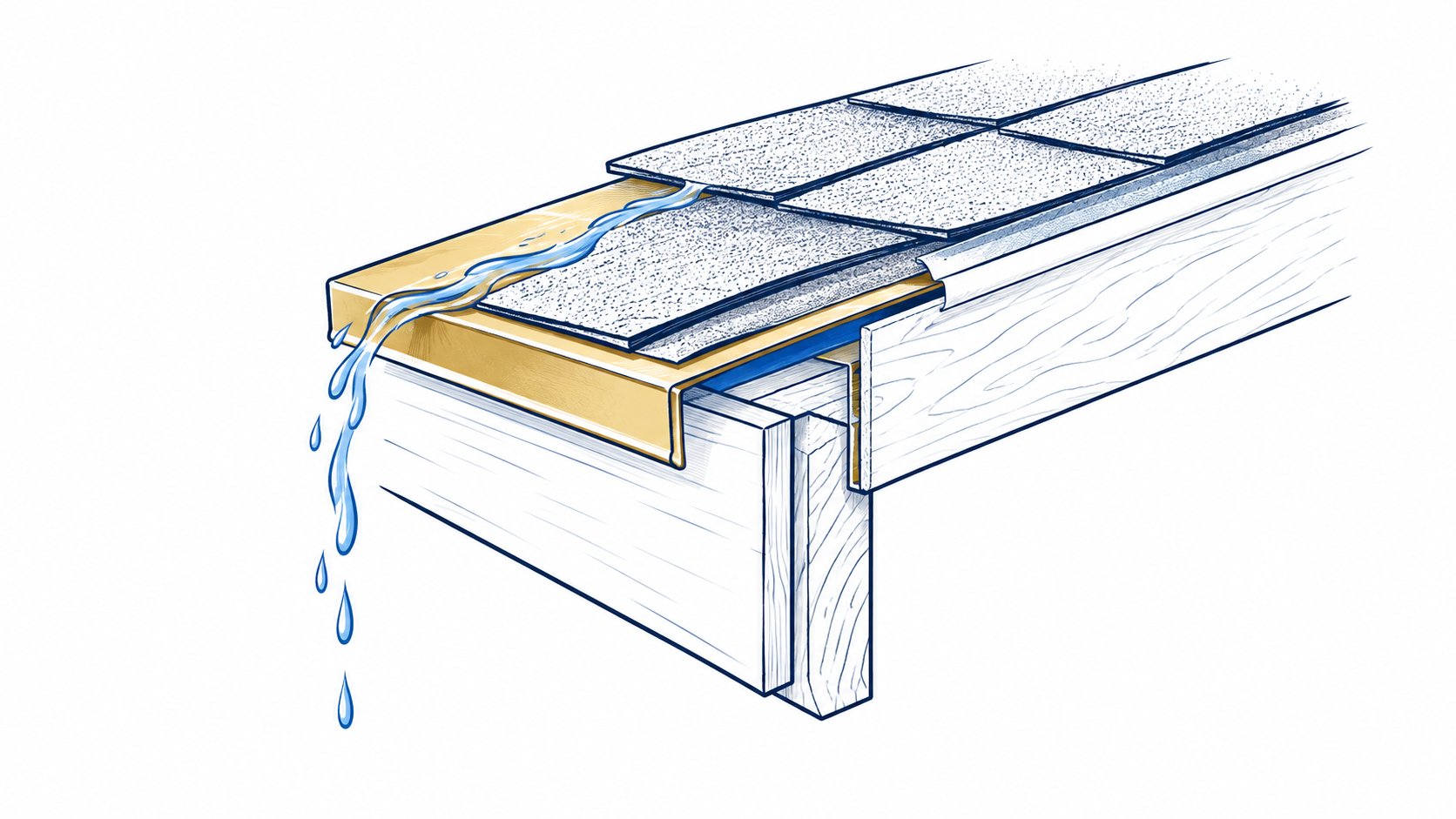
This generic roof-edge detail illustrates a water-control topic for inspection, not a Brownstones roof or an installation specification. Ask the qualified inspector to document the selected home's flashing, water intrusion and repair needs, then confirm responsibility for the work in the current governing documents.
Master and Additional Ownership Obligations
Review the Kelly Plantation master documents and every additional Brownstones instrument that applies to the selected home. The current official owner FAQ identifies an additional Brownstones service assessment and separate private golf ownership. That statement does not, by itself, establish the precise legal structure of a second association or require two separate estoppels. Have the closing team identify the governing entities, documents, amounts and certificates actually needed for this property.
A similar floor plan can come with different construction history, repairs, insurance terms and obligations. Compare the actual documents rather than assigning a standard package to every home. Ask: what does this parcel convey, which instruments govern it, who maintains each component, and what amounts will be due at closing? Record the answers beside the relevant title or association document so a verbal description cannot silently become a purchase assumption.
Practical rule: Treat the neighborhood name as an orientation point. Treat the phase, parcel, declaration, estoppel, insurance file, and title commitment as the ownership evidence.
Checking Phase and Construction Records
Obtain the recorded phase description, original building permit, final inspections and certificate of occupancy where applicable. A developer's projected completion date and an assessment year do not establish when the particular home was completed or occupied.
Separate the date a document was recorded from the dates a building was permitted, completed, improved or repaired. Those dates can answer different buyer questions. A roof replacement invoice, window permit or HVAC installation record may matter more to an insurer or inspector than an advertised construction year. Match records to the address and scope of work, and ask for clarification when the dates or descriptions disagree.
Why phase matters in a resale comparison
A useful comparable-sales analysis must group homes by more than bedroom count and finished square footage. Compare phase, construction vintage, exterior maintenance responsibilities, parcel characteristics, and association obligations. A later-delivered unit may receive different scrutiny from an insurer or inspector than an earlier unit, even when the floor plan and interior finishes look nearly identical.
A small comparable-sales set can make one listing appear typical when it is not. Check the sample and reporting dates before drawing a neighborhood-wide conclusion. Price analysis should weigh documented condition, improvements, legal phase where verified, parcel characteristics, association charges and insurance quotations. If the evidence is limited, show the uncertainty to the buyer rather than filling it with a neighborhood-wide average or a seller's asking price.
Records to request early
Request the recorded declaration, amendments, phase information, parcel identification, permits, certificates of occupancy if available, prior inspection reports, and association records before comparing two addresses. Seller disclosures and MLS remarks help establish a starting point, but they do not replace recorded documents or association files.
Construction vintage is a risk and comparability variable, not a decorative detail. It should shape the inspection scope, insurance questions, offer terms, and resale comparison from the start.
Townhome Specifications Buyers Should Inspect
Inspect the selected home's actual configuration: living area, room arrangement, stairs, parking, exterior materials and mechanical systems. Confirm the measurement basis for advertised square footage and the legal allocation of garages or spaces. Ask the inspector to identify the accessible components and any limits on inspection. Do not use an individual MLS description to establish a uniform bedroom count, garage entitlement, utility arrangement or specification for every Brownstones home.
Where the selected home has multiple levels, evaluate stairs, upper-level windows, exterior walls, roof drainage, air sealing and mechanical systems as connected parts of the building. The layout and actual inspection findings, not a standard neighborhood floor-plan claim, should determine the inspection scope.
This generic cracked-window detail illustrates a condition question to raise during inspection, not a Brownstones window or evidence about a particular home's construction year. Document actual glass, frame and moisture findings, obtain a qualified repair scope and confirm the applicable maintenance responsibilities before finalizing offer terms.

Inspect the envelope before the finishes
Start outside. Check roof coverings, flashing, penetrations, valleys, window and door assemblies, sealants, siding transitions, garage openings, and drainage paths. Attractive renovations do not prove that water is leaving the structure correctly. Request documentation for previous repairs, especially where exterior work affects shared components.
Give the garage a separate inspection. Review door seals, slab transitions, storage conditions, evidence of wind-driven water, and the connection between garage exposure and the association's maintenance responsibilities. For wood-destroying organisms, hire an inspector experienced with Northwest Florida construction and coastal conditions.
Reconcile the unit with the association
Obtain written responsibility answers for the roof, exterior walls, windows, garage elements, drainage and shared systems. Review all applicable master and Brownstones instruments alongside the insurance policies and any maintenance agreement. Ask which party arranges a repair, which party pays, and whether approval is required. A service assessment alone does not establish that every exterior component is covered or that the buyer has no direct repair responsibility.
Confirm present dues, additional service assessments, reserves, insurance allocations, leasing rules and maintenance duties through current records for the selected property. Ask for current balances and pending charges, not just a prior listing's monthly or quarterly estimate. Buyers evaluating alternatives should compare Destin townhome associations by governing structure and owner responsibilities, not amenity lists alone.
Kelly Plantation Master Amenities in Practice
Consider the wider Kelly Plantation setting separately from the rights conveyed with the Brownstones home. Community marketing can introduce facilities to ask about, but it does not establish the buyer's access, operating hours, guest privileges or costs. Request the current amenity rules and any relevant membership or access agreement, then identify which features are included, separately charged or unavailable to the intended users.
Use Kelly Plantation's official community information for the community's own description. Before assigning value to a facility, confirm its current operation and the selected owner's rights in writing. Pool dimensions, clubhouse size or advertised schedules are not necessary to decide whether the actual ownership package serves the buyer's plans.
Access follows association procedures
Ask how owners and guests obtain access, what current rules apply, and whether there are reservations, charges or limits. Verify the arrangements with the responsible operator. Do not assume a listed community feature creates a permanent, deeded or unrestricted right. If a particular facility is essential to the purchase, have the agent and closing team identify the agreement that supports that expectation before the relevant contract deadline.
The golf course is part of the broader Kelly Plantation setting, but golf ownership and membership should be verified separately. The official master materials identify separate private golf ownership, so don't add membership value to your purchase analysis until the applicable rights and costs are documented.
Compare documented community services with the buyer's intended routine. Private-community ownership is not an all-inclusive hotel program, and advertised amenities are not a substitute for the current access agreement.
Rental and Lease Rules at the Master Level
The Kelly Plantation master owner FAQ, checked October 14, 2026, states that short-term and vacation leases are not allowed and long-term leases must be at least 12 months. Treat that current published master guidance as restrictive. This guide does not establish an exception or permission for the selected home; obtain the applicable current recorded restrictions and written association confirmation before relying on any lease plan.
Review the current Kelly Plantation owners FAQ before treating any listing, prior rental history, or marketing description as evidence of permission. The same materials identify an additional Brownstones service assessment and separate private golf ownership. Those are ownership facts that belong in the offer analysis.
The correct verification sequence
- Read the master declaration and amendments. Confirm the lease definition, minimum term, notice requirements, approval process, and enforcement provisions.
- Read every applicable Brownstones instrument. Ask the closing team to identify any additional declaration, amendments, rules, maintenance agreement or governing entity, and the restrictions that apply to the selected home.
- Obtain written confirmation for the selected property. Ask each governing association or authorized representative identified in the title and document review to address the exact intended use under current rules.
- Check government requirements separately. Association permission doesn't replace applicable city or county zoning, registration, licensing, occupancy, or minimum-stay rules.
- Make the contract decision from current documents. Don't base the purchase on past bookings, rental advertisements, MLS remarks, or seller assurances.
If the intended stay length conflicts with the published master guidance, do not price the home as though that use were available. Even a proposed longer lease needs the applicable documents and confirmation. Buyers researching broader rules can read this guide to 2026 rental laws, but it does not override the property's declarations or association rules.
Flood Zone, Insurance, and Total Cost Reality
Flood and insurance questions need a current determination for the selected address, not a neighborhood-wide label or an MLS field. Obtain the current mapping and any relevant elevation documentation, then have the lender and insurer explain their requirements. Ask what the quote covers, what it excludes, and which costs or deductibles belong to the owner rather than a governing association.
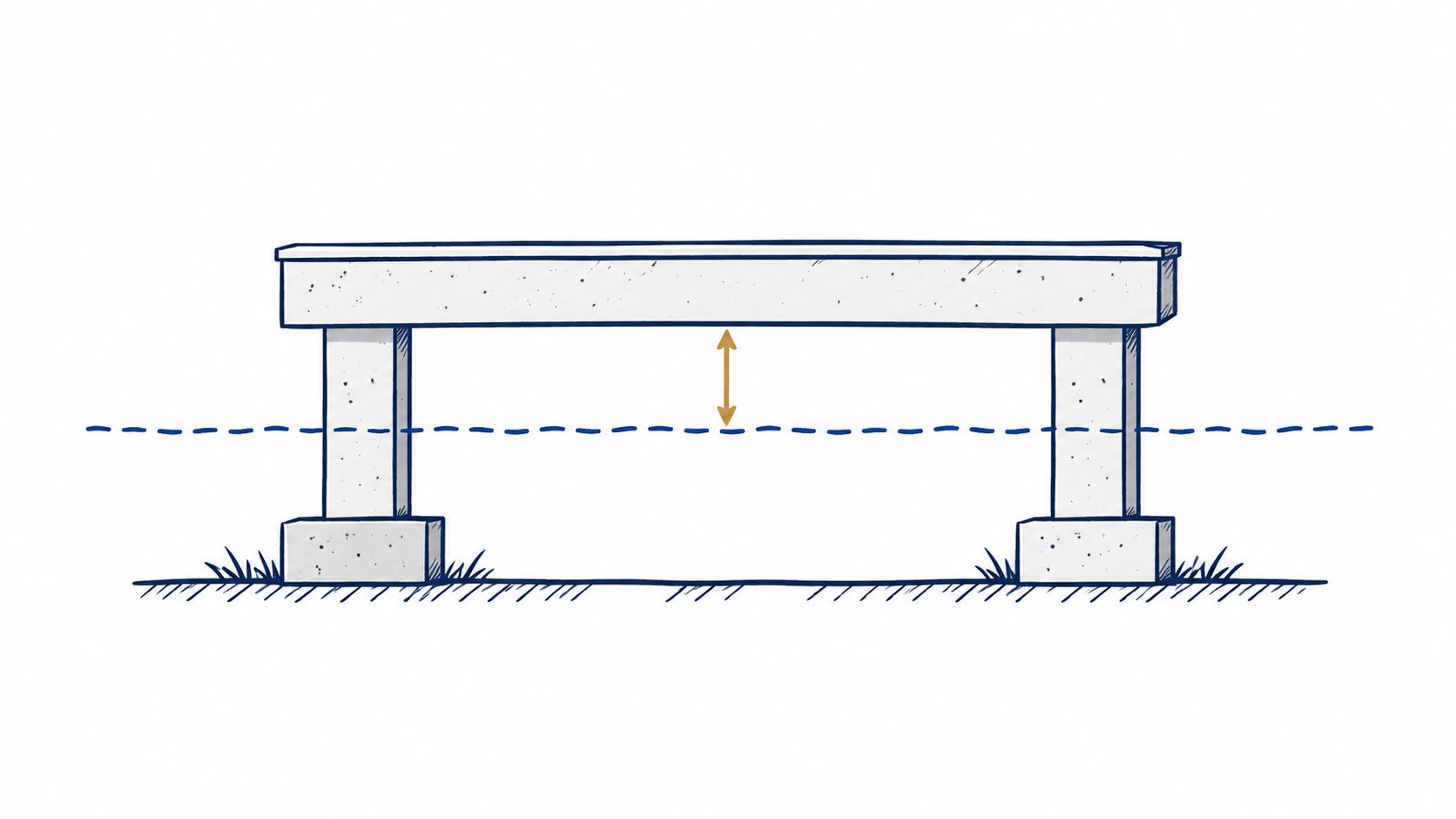
Do not extend one property's flood classification or elevation to another. Drainage conditions, site position, policy structure and documented loss history require exact-property review. The generic clearance illustration below explains the relationship between a structural element and a water level; it is not a drawing of Brownstones, a site elevation measurement or evidence of a particular foundation design.
Separate the insurance questions
Ask the insurer and associations to identify:
- Flood coverage: Determine whether coverage is required by the lender, what the policy covers, and how deductibles and exclusions apply.
- Master property coverage: Confirm which building elements the association insures and where the unit owner's policy begins.
- Interior and personal property: Establish coverage for finishes, contents, temporary relocation, and loss assessment.
- Claims history: Request available prior-loss information for the unit and relevant common elements.
- Drainage and resilience work: Ask whether projects, repairs, or assessments are planned.
Only current quotes and policy documents answer the property's real cost question.
Elevation-related features do not establish immunity from loss. Ask the lender and insurer which coverages are required and which additional protections merit consideration for the selected property. Association, building, interior, wind and flood policies can address different risks. Analyze the current quotations and documents together instead of relying on waterfront labels, finishes or a comparison property's insurance arrangement.
Offer to Closing Decision Matrix for Brownstones
A Brownstones offer should be built around documents, not impressions. The following matrix assigns each file to the decision it informs and the person or entity who should supply it.
| Evidence to obtain | Decision it informs | Who supplies it | Contract timing |
|---|---|---|---|
| Master declaration, bylaws, amendments, and current rules | Confirms use, leasing, architectural controls, owner obligations, and enforcement rights | Master association, seller, title or closing team | Before offer, with review period preserved |
| Applicable Brownstones instruments, amendments and rules | Identifies additional restrictions, services, assessments and maintenance duties, where applicable | Identified governing party, seller, title or closing team | Before offer or during document-review period |
| Master estoppel | Confirms current dues, balances, assessments, violations, and association status | Master association or its authorized agent | Before closing and before contingency expiration |
| Any additional certificate required for Brownstones obligations | Confirms applicable additional charges, balances, violations and governing status | Governing entity or agent identified by the closing team | Before closing and before contingency expiration |
| Title commitment, legal description, parcel record, and survey | Establishes what is conveyed, easements, liens, and title exceptions | Title company, seller, county records | Before offer approval and during title period |
| All applicable master and property-specific insurance policies | Shows insured elements, deductibles, exclusions, and owner responsibilities | Associations, insurance representatives, seller | During insurance and document review |
| Flood determination, elevation information, and quotes | Establishes lender requirements and the buyer's insurance budget | Lender, insurer, surveyor, seller | Before financing and insurance deadlines |
| Permits, certificates, repair records, and inspection findings | Tests construction history, alterations, condition, and repair exposure | Seller, county, inspector, contractors | During inspection period |
| Financing approval and association review | Confirms the lender will accept the property and its insurance structure | Lender and buyer | Before financing deadline |
| Exact-property disclosures and current listing materials | Identifies known defects, exclusions, included items, and representations to verify | Seller and listing representative | Before offer and before inspection expiration |
Have the closing team identify every required association certificate and obtain current balances from the correct governing entities. A master certificate does not necessarily describe every additional obligation, but the existence and form of a separate Brownstones certificate must be established from the applicable documents rather than assumed. Reconcile all charges, violations and pending assessments with title, insurance and inspection review before closing.
Use the matrix to write the offer
Make document delivery, inspection access, financing, title, insurance, and association review explicit in the contract. Ask the closing team to reconcile the legal description with the parcel records and the seller's description before the buyer waives relevant contingencies.
A clean showing proves very little about association debt, flood coverage, recorded restrictions, or the seller's title. Those questions belong in the contract timeline.
Four Buyer Questions Before Touring
Ask these questions before scheduling a serious showing:
- What are the current Kelly Plantation master association dues, and what services do they cover? Request the current budget, fee schedule, assessment history, and master estoppel.
- What additional Brownstones service assessment or governing obligation applies? Identify the responsible entity and current supporting documents, then confirm maintenance duties, insurance, reserves, violations and planned charges.
- Is golf membership separate from ownership? Obtain the current membership structure and costs directly from the relevant private golf organization. Don't treat golf access as an included property right.
- What is the minimum lease length under the current master and Brownstones rules? Ask for the current declarations, amendments, rules, and written confirmation for the selected property.
These questions won't replace full due diligence, but they quickly expose a mismatch between a buyer's intended use and the property's governing structure. If an answer is verbal, ask for the document that supports it.
Pricing Context, Resale, and Emerald Coast Comparisons
Compare the selected parcel and building first, then evaluate the wider Kelly Plantation setting. Documented condition, improvements, insurance costs, governing obligations and verified amenity access are useful comparison dimensions. They are not a guarantee of resale value. Ask the agent and appraiser to distinguish current asking prices from closed-sale evidence and explain which differences can reasonably be compared.
Start with comparable Brownstones homes from the same phase and build vintage. Review sale condition, repairs, assessment history, insurance documentation, and the obligations attached to the specific parcel. Then compare that result with nearby Destin townhomes, gated communities, and other Emerald Coast options in Destin, Miramar Beach, Santa Rosa Beach, Inlet Beach, and Fort Walton Beach. Broader comparisons clarify alternatives, but lease rules, flood exposure, association structure, and beach access can change the ownership equation.
This generic hinge-and-jamb detail illustrates a door-operation and clearance question for the showing and inspection. It is not a Brownstones interior or a statement about a particular floor plan. Compare the selected home's actual condition, usable space and documented repair responsibilities before choosing offer terms.

What supports resale
Buyers should focus on four practical areas:
- Document clarity: Clean title, accurate parcel information, complete association records, and matching legal descriptions.
- Physical condition: Roof, windows, sealants, drainage, HVAC management, garage condition, and documented repairs.
- Cost visibility: Current dues, assessments, insurance obligations, and reserve funding.
- Use compatibility: Written confirmation that intended occupancy and leasing comply with current rules.
For broader Destin context, review the broader Destin real estate context. Treat it as market context, not a Brownstones valuation or inventory source. Before relying on rental use, obtain current written confirmation for the property. Avoid unsupported income assumptions, especially when insurance, association costs, and parcel-level obligations remain unresolved.
Next Steps With Dream Destin Realty
Begin with the exact address and ask the closing team to identify all applicable document packages. Request the current master declaration and amendments, additional Brownstones instruments, required certificates, budgets, insurance materials, flood determination, permit history, inspection access, title commitment and financing review. Keep a dated request list so missing documents remain visible before the relevant contingency expires.
Have an agent reconcile those records with the home's phase and parcel details. Confirm the minimum lease term for your intended use before writing an offer. Get insurance quotes before accepting the projected monthly ownership cost.
Bring the address, intended use, financing plan and closing timeline to Dream Destin Realty for a property-specific review. The firm can coordinate association, title, inspection, insurance and financing questions while comparing alternatives. Contact Dream Destin Realty to organize the documents and offer deadlines for your selected Brownstones home.
Request written answers, not verbal assurances, before touring further or submitting an offer.


