
Kokomo Kove Destin Homes Buyer Guide: Records and Fit
Kokomo Kove Destin homes buyer guide covering the recorded plat, county parcel classes, home comparisons and the professional checks that shape an offer.

On this page
On this page
Kokomo Kove lies in Crystal Beach Subdivision in Destin, where buyers can compare individual homes by layout, storage and everyday use. The original recorded Kokomo Kove plat identifies the historical community as KOKOMO KOVE, A PLANNED UNIT DEVELOPMENT. For a home here, usable rooms and accessible components are practical starting points for a purchase comparison.
Kokomo Kove's Kokomo Row and Sunfish Street are listed in Destin in the County's community-area address records. Compare homes by usable layout, storage and circulation, then separate visible window, plumbing and exterior observations from professional conclusions and recorded obligations.
Table of Contents
- Where Kokomo Kove Sits in Destin
- Public Records and What Each One Confirms
- Comparing Layout, Storage and Window Condition
- Plumbing Shutoffs and Water Supply Checks
- Exterior Moisture and Roof-to-Wall Junctions
- Maintenance Duties and Recorded Obligations
- Separating Preferences, Findings and Obligations
- Flood Zones, Insurance and Lender Coordination
- Matching a Kokomo Kove Home to Your Intended Use
- Price Context, Ordered Steps and the Next Move
- Kokomo Kove Buyer Questions
Where Kokomo Kove Sits in Destin
Kokomo Kove's recorded identity places it in Crystal Beach Subdivision, City of Destin, Okaloosa County, Florida. The original plat referenced above describes a portion of Blocks 1 and 28 and is recorded in Plat Book 11, Page 89 as a 1989 instrument. That date belongs to the recording, not to the construction of any particular home.
The City of Destin subdivision-plat directory links the original document. Use that historical context to orient a search around Kokomo Row and Sunfish Street, then compare the actual homes rather than assuming they share a construction date, floor plan or maintenance history.
Location establishes the search area. It doesn't establish the condition or obligations of a home.
This discussion concerns that Destin community, not Kokomo Sands, another similarly named place or an unrelated company. For a wider comparison of homes and communities, use the broader Destin real estate hub without treating its area-level information as a finding about Kokomo Kove.
A productive comparison separates different kinds of evidence. Public records establish identity and administrative use classes. An inspection addresses accessible building condition, an insurer evaluates coverage, a lender sets financing requirements, and applicable documents establish duties or permissions. Combining those sources produces a useful purchase decision; substituting one for another doesn't.
Public Records and What Each One Confirms
Each Kokomo Kove record answers a narrow question, and the distinction matters before a buyer turns a public-record description into an ownership assumption.
| Record | What It Confirms | What It Does Not Confirm |
|---|---|---|
| Original recorded Kokomo Kove plat | The historical name and Crystal Beach Subdivision location described above | Current boundaries, access rights, rules or title |
| City of Destin subdivision-plat directory | The City links the original Kokomo Kove plat | A present boundary survey |
| County parcel query for the KOKOMO KOVE label | Records under the label carry SINGLE FAMILY and VACANT use descriptions | Ownership, title or current private rights |
| County community-area address query referenced above | Kokomo Row and Sunfish Street are listed in Destin | Individual addresses, build dates or unit counts |
The parcel descriptions support a homes-focused comparison, not a condominium-building template. They remain administrative classifications, however, rather than conclusions about title or the legal rights attached to a property.
Read the table horizontally. The address record answers a location question; it doesn't settle construction history. The plat supplies historical identity; it doesn't replace a current survey or a title professional's examination of applicable instruments.
Buyers also comparing condominium ownership can use Dream Destin Realty's Caribbean Dunes condo guide as a separate comparison. Don't transfer a condominium's ownership structure, maintenance arrangements or documentation requirements to a Kokomo Kove home merely because both appear in the same search directory.
The practical result is a shorter, more accurate offer file. Label what a record establishes and leave unanswered questions with the professional or document capable of settling them.
Comparing Layout, Storage and Window Condition
How Should a Buyer Compare Layout and Storage in a Kokomo Kove Home?
Compare each home by the routes people use daily, from entry to kitchen, living area, primary bedroom and laundry, and record storage by location and usable depth rather than by a closet count alone. Within the Kokomo Row and Sunfish Street search area, evaluate each candidate separately instead of assuming similar listing descriptions mean similar usability.
Walk the routes with ordinary tasks in mind. Consider carrying groceries, moving furniture and reaching laundry storage. A door that swings across a passage or a closet obstructed by furniture may matter more to daily use than an attractive photograph.
- Circulation: Note pinch points where doors, counters or furniture interrupt movement.
- Storage: Look at usable shelving depth, access and the distance from where stored items will be used.
- Room function: Consider whether the arrangement works with your furniture without relying on an unverified alteration.
At accessible windows, observe whether the sash opens and latches, whether glazing appears fogged between panes, and whether sills or trim show staining or discoloration. Don't force a reluctant window or probe a surface during a showing. Record the location and let the inspector evaluate it.
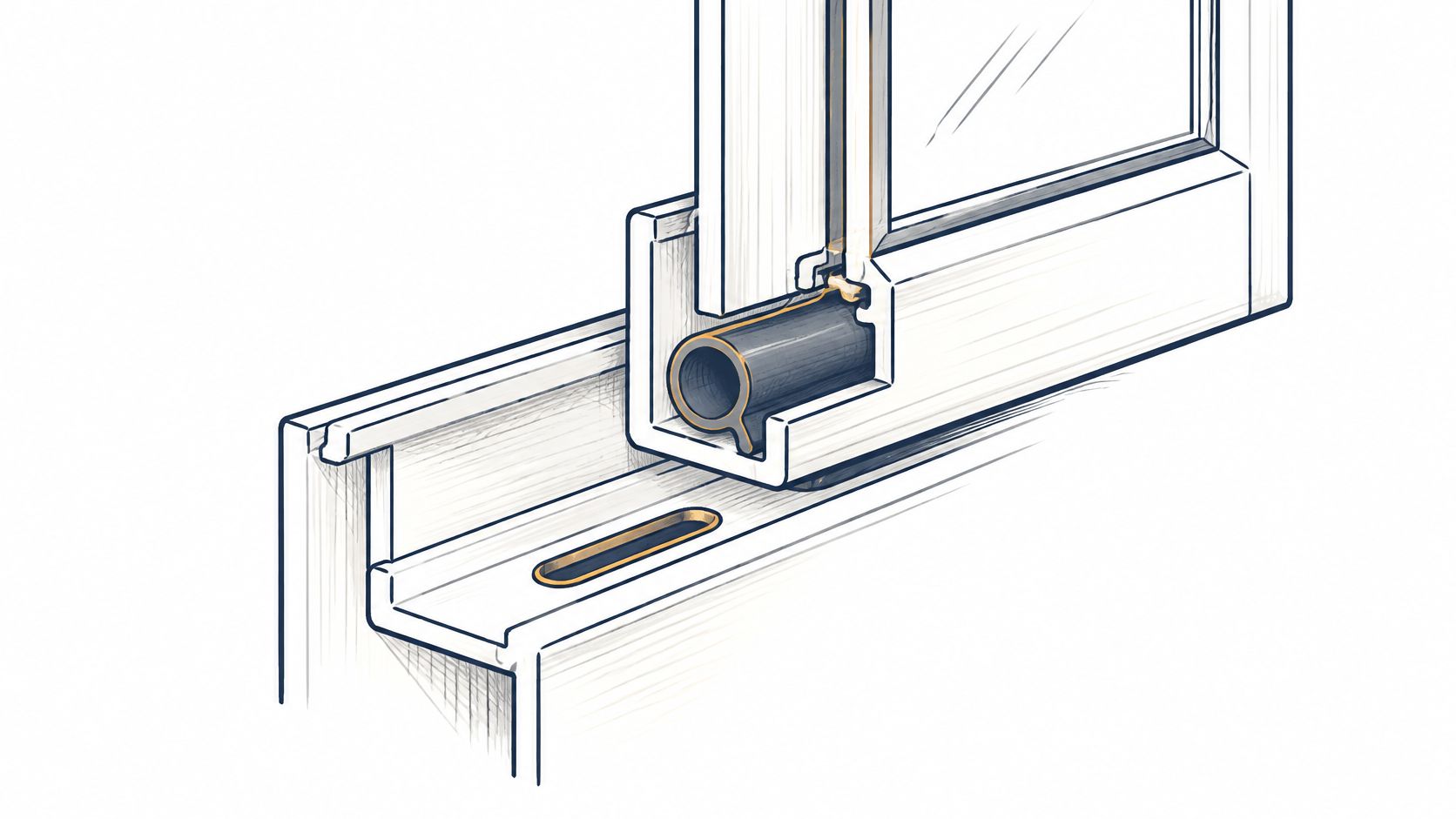
Conceptual window-track and sealing-gasket detail.
Seal failure and frame damage are professional condition findings, not conclusions a buyer should make from appearance alone. Ask the inspector to identify accessible windows examined, testing limitations and any recommended specialist review.
Rooms that look comparable online can differ materially in light, storage and circulation. Keep those preferences in your comparison notes, but place suspected window defects in the inspection scope rather than treating them as established repair costs.
Plumbing Shutoffs and Water Supply Checks
What Do Plumbing and Shutoff Findings Actually Tell a Buyer?
They help establish whether the water supply can be located and isolated; a licensed plumber should evaluate pipe condition, pressure, materials and fixture function. Kokomo Kove's administrative residential classification doesn't answer those questions for an individual home.
During a showing, note the apparent location of the main supply shutoff and accessible fixture shutoffs beneath sinks and near toilets. Record whether stored items, cabinetry or finished surfaces obstruct access. If a valve isn't visible, describe it as not located, rather than declaring it missing.

Conceptual valve cutaway showing the handle and internal passage.
An accessible handle is an observation. Whether the valve isolates the supply is a testing question.
Leave operation of unfamiliar or deteriorated valves to the professional performing the evaluation. A plumber can assess accessible supply components, test agreed functions, investigate visible corrosion or leakage, and explain what remains concealed or outside the engagement.
Keep the documentary review distinct. Evaluate applicable plumbing permit history for the address through the City's records and any repair invoices the seller supplies during the transaction. Match descriptions of work to the components being evaluated instead of assuming a broad renovation description covers the entire system.
A polished faucet is a finish choice. It doesn't establish the condition of concealed piping, the operation of a shutoff or the scope of prior work. Negotiate from the professional's written findings and defined repair scope, not from fixture appearance.
Exterior Moisture and Roof-to-Wall Junctions
Kokomo Kove's historical plat doesn't establish the present condition of a home's exterior assemblies. For each candidate, make roof-to-wall junctions, openings and drainage part of the inspection conversation rather than focusing exclusively on the roof surface.
Potential investigation areas include flashing where roofing meets a wall, window and door transitions, vent penetrations and runoff directed toward the foundation. A buyer can note stains on soffits, peeling paint near joints, cracked sealant or interior ceiling staining. Those observations identify places to examine; they don't identify a cause.
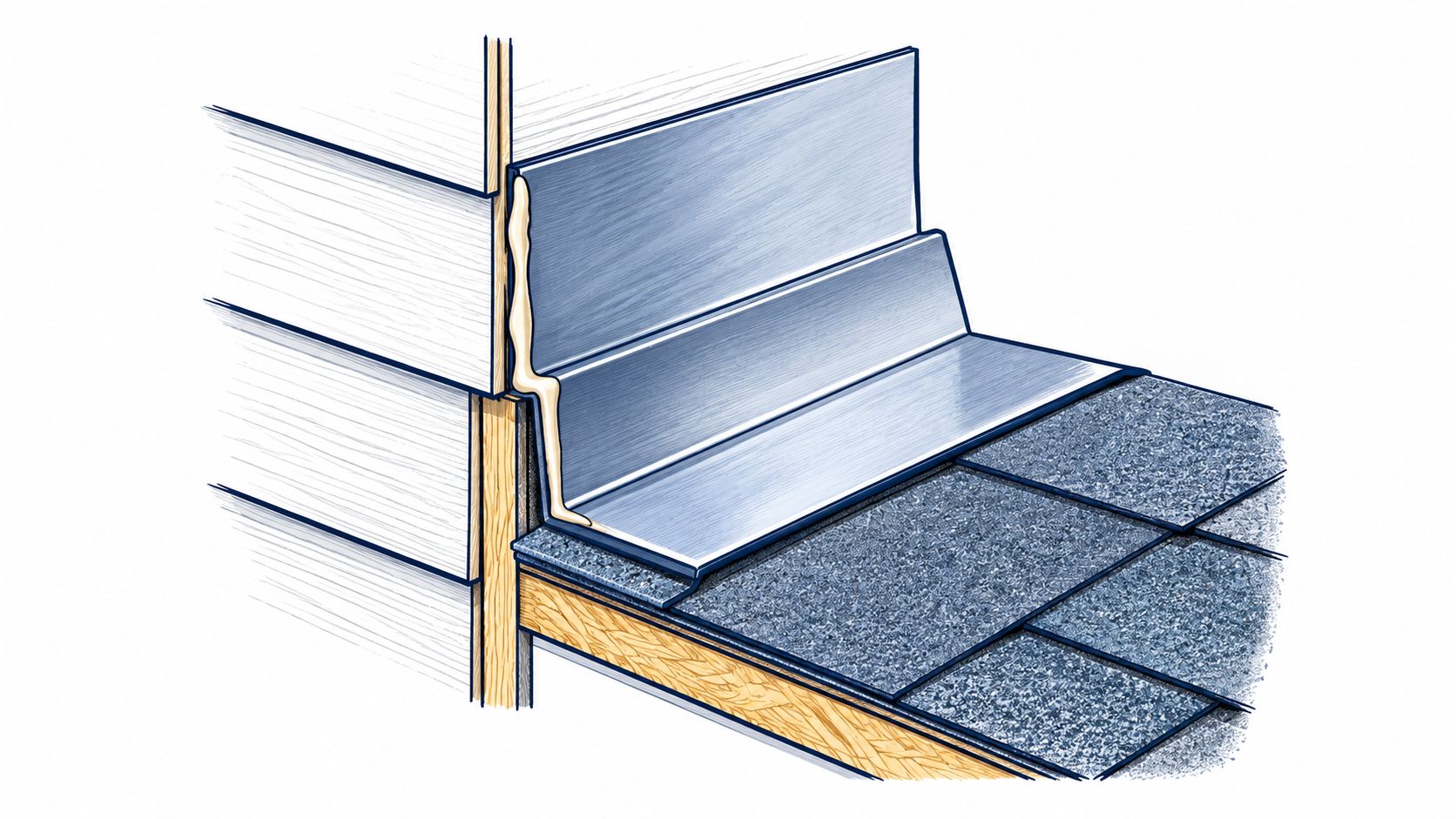
Conceptual flashing detail at a roof-and-wall junction.
Match the Investigation to the Evidence
Ask a licensed inspector to address accessible flashing, roof edges, covering condition, gutter discharge and grading. If the findings call for a roofer or another specialist, define the follow-up scope before treating a preliminary observation as a complete diagnosis.
- Visible staining: Record the location without assuming the source is directly above it.
- Concealed assemblies: Confirm inspection limitations and whether further investigation requires permission.
- Repair history: Compare available invoices and permit records with the area under review.
Opening or probing an assembly requires an appropriate scope and authorization. A routine visual inspection shouldn't be represented as an examination of every concealed connection.
Likewise, establish roof replacement history from available records and invoices rather than accepting a listing description as proof. A useful inspection assignment names junctions and transitions, not just “the roof,” so the written report can address the buyer's actual concern.
Maintenance Duties and Recorded Obligations
Which Records Confirm Ongoing Obligations for a Kokomo Kove Lot?
Applicable recorded documents and current written statements from the responsible authority establish obligations; listing fields and marketing copy don't. The historical Kokomo Kove plat is part of the identity record, but it isn't a substitute for the complete documents applicable to a transaction.
Evaluate recorded declarations, amendments, written rules and any current association statement supplied during the purchase. Have the closing or title professional explain which instruments apply and what they establish. A document may assign maintenance or a charge, but its actual language controls the conclusion.
No listed fee isn't proof of no obligation. Nor does the absence of a common-area parcel establish the absence of covenants or an association.
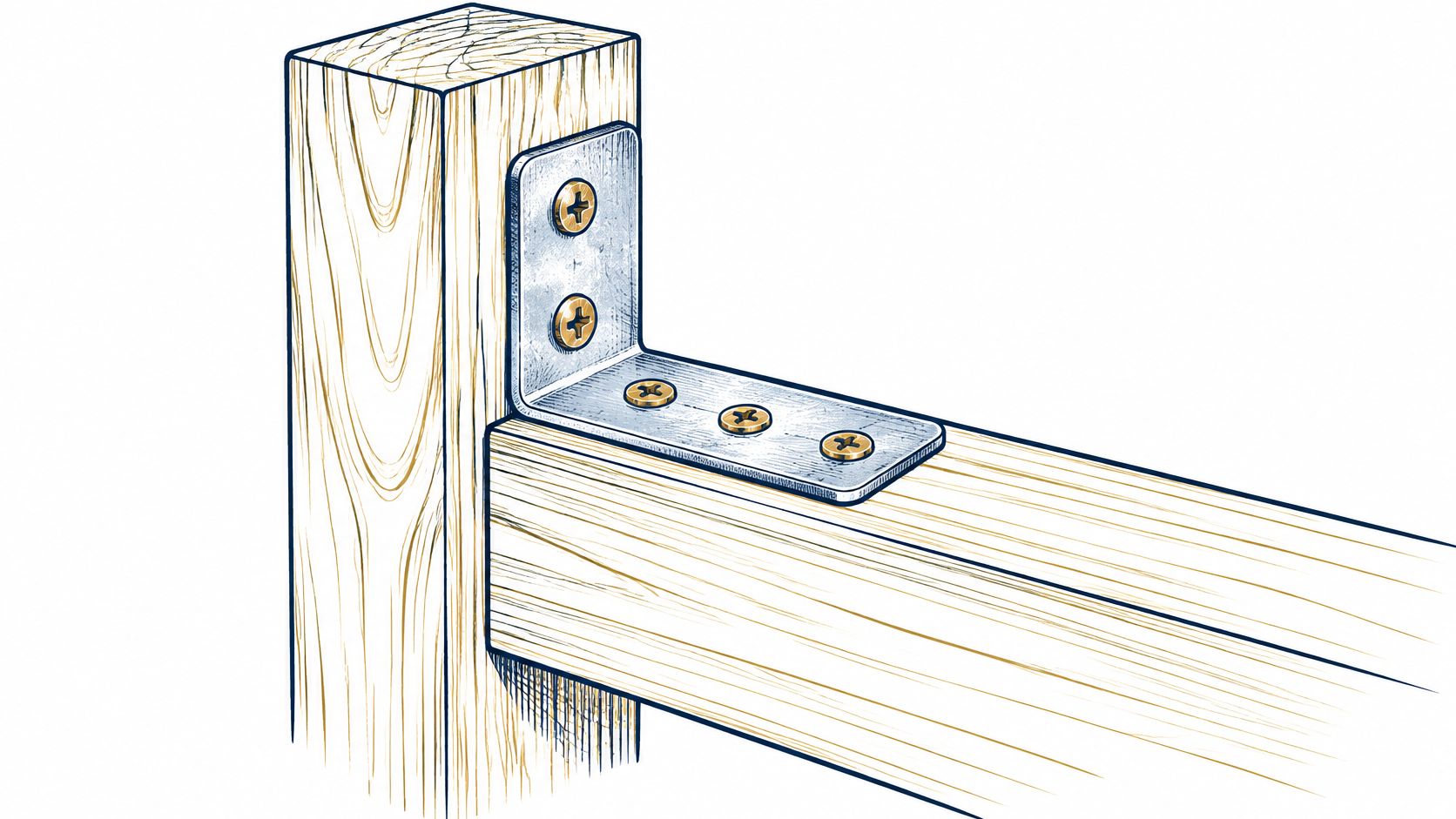
Conceptual metal connector joining wood components.
For the physical maintenance scope, ask the inspector to assess accessible fasteners and metal connectors at roof framing and exterior connections. The report should distinguish an observed condition from a recommendation for further engineering review. It shouldn't assign a legal maintenance duty unless the applicable documentation establishes one.
Separate responsibility from condition: A sound component can still carry a maintenance duty, and a defective component doesn't identify who must pay.
Where documents supplied during the transaction address shared features, landscaping or other maintenance, compare the stated duty with the physical inspection scope. Where an obligation remains unclear, review the applicable current transaction documents with the closing or title professional before relying on an allocation.
Separating Preferences, Findings and Obligations
Kokomo Kove paperwork enters the offer file from different places: buyer walkthrough notes, inspector reports, seller disclosures, permit history, and recorded documents where they apply. Sort each note once: a visible preference is your use choice, a professional condition finding is a qualified assessment, and a documented obligation is a duty created by an applicable record or written statement.
| Item | Settled by buyer preference | Settled by professional review | Settled by record or written term |
|---|---|---|---|
| Layout and storage | Daily flow, closet fit, work-from-home use | Inspector or contractor when access, safety, or function is questioned | Duty only through an applicable document |
| Window seals and frames | Light, view, operation feel | Inspector evaluates accessible seals and frames; specialist for scope | Warranty, disclosure, or maintenance language controls cost |
| Plumbing and shutoffs | Fixture finish and kitchen or bath arrangement | Licensed plumber tests supply condition and shutoff function | Permit history and written terms show work and duties |
| Roof-to-wall junctions | Exterior look and trim taste | Inspector evaluates flashing and moisture evidence | Recorded or contractual allocation governs repair responsibility |
| Fasteners and connectors | Rarely a taste item | Inspector assesses accessible connections | Qualified technical review defines the physical scope; applicable legal or contractual documents establish any payment duty. |
| Association charges | Affordability and tolerance for dues | Physical condition stays with inspection | Applicable records or current statements confirm any charge |
Worked example: a fogged bedroom window. If the room feels dim to you, label it preference and let it shape price or walk-away discipline. If the inspector records seal failure and recommends repair, label it finding and ask a window professional for scope before requesting a credit. If a warranty, seller disclosure, or maintenance term assigns coverage, copy that language into the obligation bin and have the closing professional interpret it.
Keep the bins separate in the offer file. The same window can justify a price adjustment, a repair scope, or a document question, and each response needs the right proof.
Flood Zones, Insurance and Lender Coordination
Check the flood zone for the exact Kokomo Kove address before relying on a neighborhood-level description. Use the FEMA Flood Map Service Center result as an address-specific starting point, then have the insurer and lender explain how the applicable map information affects their requirements.
Begin the insurance review with address-specific wind and flood quotes from licensed insurance professionals. Ask which flood-zone information, elevation documentation and claims information they use. Keep deductibles, exclusions and coverage assumptions visible when comparing quotes rather than comparing premium alone.
A claims-history document disclosed during the transaction is evidence to evaluate, not a listing amenity. Clarify what period and property it covers, and let the insurer explain its underwriting significance.
A quote based on incomplete property information isn't the same as confirmed coverage on final terms.
Next, have the lender state the address-specific flood-insurance and appraisal conditions applicable to the proposed loan. Review those requirements in writing before removing a financing contingency, with timing governed by the actual contract.
Buyers considering other ownership types can also consult Dream Destin Realty's Harbor Plantation guide as a separate property comparison. Don't transfer another community's coverage arrangements or financing treatment to a Kokomo Kove home.
The practical aim is coordination. The inspector describes condition, the insurance professional evaluates coverage, and the lender establishes loan conditions. If their information differs, resolve the discrepancy before treating the purchase budget as settled.
Matching a Kokomo Kove Home to Your Intended Use
Can a Kokomo Kove Home Be Used as a Rental?
Not on the strength of a listing, a past rental, a seller statement or a neighborhood average. A Kokomo Kove rental-use conclusion requires current, written, property-specific evidence addressing applicable City requirements, recorded documents and any governing rules for the exact address and intended duration.
The City of Destin short-term rental registration page is the municipal starting point. It links the City's registration guide and application portal; municipal registration does not establish private permission. No community-wide rental eligibility conclusion follows from the public identity records discussed here.
For buyers planning to buy a vacation rental property in Destin, permission must precede reliance on that intended use. Evaluate applicable documents supplied through authorized transaction channels without treating advertising or prior operation as a substitute.
Compare the Ownership Routine
For a primary residence, test the daily routine against the actual home. Consider travel patterns, storage, work space and the time you intend to devote to maintenance. Make those comparisons from your needs and the property's observed characteristics, not assumptions about who lives nearby.
For a second home, define the arrangements between visits:
- Property checks: Decide how accessible components and visible issues will be monitored.
- Service response: Identify who can coordinate a repair when you're away.
- Coverage: Have the insurance professional explain terms relevant to periods of vacancy or absence.
The same layout can suit frequent visits but be inconvenient for extended absences. Match the purchase to a workable operating routine, with professional findings and documented permissions supporting the intended use.
Price Context, Ordered Steps and the Next Move
A list price on a Kokomo Kove home is a starting position, not a market reading. Destin-wide sales figures draw on transactions across many neighborhoods and property types, so they describe the broader market without measuring the specific home in front of you.
Price a specific purchase against recent comparable sales using current MLS information. Compare physical characteristics, documented condition, improvements and applicable obligations. Do not turn an isolated asking price into a community benchmark, and do not let an area-wide average determine what you offer.
The Kokomo Kove homes for sale page collects current listings and community details for continuing the search. A Destin condo value resource answers a different question and should not substitute for home-specific comparable sales.
Put the Purchase Work in Order
Use this sequence to organize decisions, while scheduling each task within the contract's actual deadlines.
- Confirm identity and applicable records. Match the parcel's administrative use class to the property under consideration and evaluate recorded documents the seller supplies. Keep historical identity separate from present title conclusions.
- Obtain the address-specific flood-zone result and wind and flood insurance quotes. Review the assumptions behind coverage before treating the carrying cost as established.
- Schedule the professional inspection. Include accessible plumbing, windows, roof-to-wall junctions and fasteners. Arrange specialist follow-up where the report identifies a need.
- Review the lender's written requirements against the insurance information and inspection findings. Resolve unanswered financing conditions before the relevant contingency deadline.
- Tie offer terms to evidence. Use appropriate inspection, financing, insurance and title contingencies. During contract negotiations, distinguish a repair request grounded in a finding from a preference-based price position.
- Confirm title and closing requirements before the final walk-through. Use that visit to compare the property with the contract and agreed work, not as a replacement for the earlier professional evaluation.
In practice, an offer may precede completion of inspections. Structure contingencies so the remaining work can inform the decision rather than assuming every question will be settled before contract.
Each decision in that sequence sits in one of three bins: a visible preference, a professional condition finding or a documented obligation. Preferences are yours to weigh. Findings come from the inspector, insurer or specialist who examined the property. Obligations come from recorded documents and lender conditions. Match each item to the record or professional who settles it, because an insurance issue, repair finding or recorded restriction can change acceptable price and terms. A useful buyer guide keeps those decisions tied to evidence instead of asking a buyer to price unresolved questions by intuition.
Kokomo Kove Buyer Questions
How do the original Kokomo Kove plat and current County street records place this community in Destin's Crystal Beach area?
The original plat names Kokomo Kove as a planned unit development within Crystal Beach Subdivision in the City of Destin. The County community-area address query identifies Kokomo Row and Sunfish Street in Destin. Together, these cited records support the location context above, not a present boundary survey, title opinion or finding about a particular home.
How should a buyer compare a Kokomo Kove home's layout, accessible windows, plumbing and exterior condition with the appropriate professionals?
Compare circulation and usable storage against your own routine, then record accessible window, plumbing and exterior observations without diagnosing them. Have the inspector define the accessible inspection scope and limitations, with a licensed plumber, roofer or other qualified specialist addressing findings that need further investigation. A component illustration or showing observation is not a condition report for a Kokomo Kove home.
Which maintenance, association, insurance, assessment and financing obligations need property-specific written support before an offer?
Any assumed maintenance allocation, association charge, assessment, coverage or loan condition needs current evidence applicable to the exact property and transaction. Review applicable recorded instruments and current written transaction records with the closing or title professional, coverage terms with the insurance professional, and financing conditions with the lender. If an offer precedes that review, the actual contract and appropriate contingencies must provide time to resolve the remaining questions; this guide does not certify any fee, assessment, policy or loan approval.
What evidence confirms parking, access and rental use for a Kokomo Kove home?
Applicable recorded instruments, current governing rules and property-specific title or survey evidence would need to establish any claimed parking or access right. For an intended rental duration, the applicable private documents and current jurisdictional requirements must also be checked for that exact property and use. The public identity records cited here do not establish those permissions. Parking allocations, access rights and rental eligibility remain unverified in this guide; advertising, prior operation and registration alone do not fill that gap.
Dream Destin Realty is located at 3997 Commons Drive West, Suite I, Destin, FL 32541. Bring the candidate property, your intended use and the findings already available so the consultation can focus on the decisions still ahead.
Dream Destin Realty offers live listings, local market intelligence and the ability to connect with a local expert. Visit Dream Destin Realty to explore your options, then schedule a consultation before making an offer on a Kokomo Kove home.


