
Buying a Home Before Marriage: Title, Costs and Risks
Learn how title, contributions, and exit planning affect buying a home before marriage in Florida, with prompts for qualified legal advice.

On this page
On this page
Buying a home before marriage can work when partners agree on ownership, payments, and an exit plan before closing. A couple may already be comparing homes while deciding whose savings will cover the down payment. The practical next step is to separate who owns the property from who owes the lender, then document what happens if circumstances change.
Table of Contents
- What the Deed and the Mortgage Each Control
- Title Options Compared Side by Side
- Who Pays for What Before and After Closing
- Plan Your Exit Before Closing
- How Marriage Can Change a Florida Home Plan
- Death, Incapacity and Creditor Risks to Plan For
- Confirm These Steps Before You Sign
What the Deed and the Mortgage Each Control
Buying together creates separate ownership and borrowing records. The deed is the ownership map, identifying who holds title. The loan documents establish the promise to pay the lender. Those records answer different questions, so partners shouldn't assume that sharing a mortgage automatically establishes their intended ownership shares.
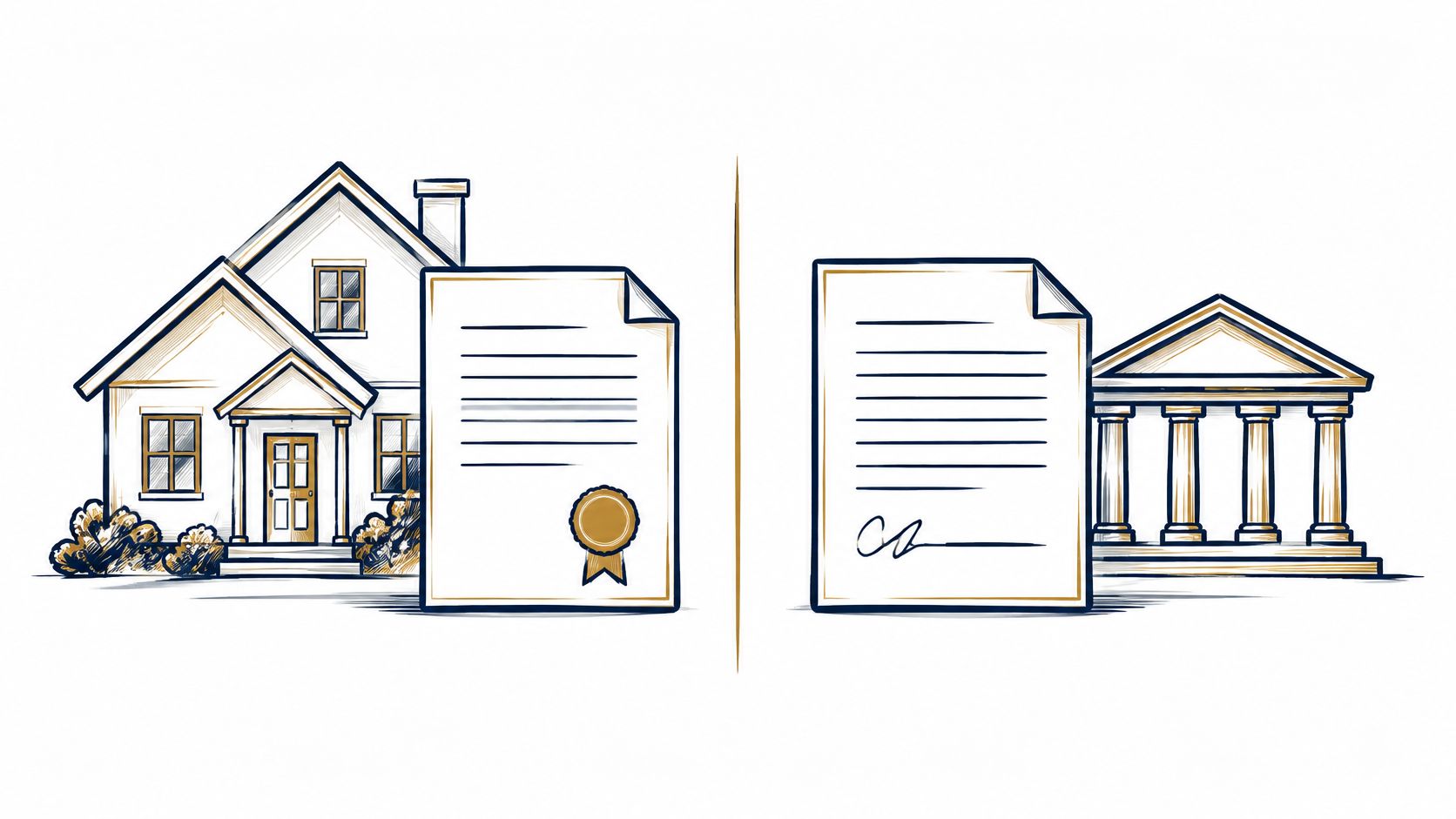
When unmarried buyers borrow together, joint liability can leave each responsible for the entire payment, not merely an agreed portion. The Consumer Financial Protection Bureau explains that this responsibility continues until the mortgage is legally changed, refinanced, or paid off; a private agreement generally doesn't release either borrower from the lender's contract.
Say one partner agrees to pay the mortgage while the other covers household expenses. That arrangement may organize their budget, but it doesn't change the lender's rights if the mortgage payment is missed.
Practical rule: A payment agreement between partners isn't a release from the loan.
Check both sets of documents
Before closing, the buyers should ask the lender to confirm payment-account controls, reserve funding, and the process required for a sale or refinance. Their attorney should separately review how the proposed deed and ownership agreement express their intentions.
Partners researching buying with Dream Destin Realty can organize these as separate questions for the lender and attorney. Read the deed and loan together before choosing a title form, rather than treating either document as the whole arrangement.
Title Options Compared Side by Side
Title forms for unmarried co-buyers
| Title form | Ownership share | If one owner dies | Settle before closing |
|---|---|---|---|
| Tenancy in common | Owners may hold unequal percentages | Share generally passes under a will or succession law, not directly to the partner | Contribution record, buyout method, estate plan |
| Joint tenancy with right of survivorship | Ownership interests established by the deed's wording | Property can transfer to the surviving owner | Confirm survivorship wording and estate documents with a Florida attorney |
| Sole title in one partner's name | Titleholder only | The titleholder's estate plan and applicable Florida homestead rules govern the outcome | Written agreement covering contributions and the other partner's rights |
Tenancy in common can accommodate unequal ownership interests. As Cornell Law School's explanation notes, it generally doesn't include automatic survivorship: a deceased owner's interest passes under a will or applicable succession law. That can introduce an heir or estate representative into decisions about occupancy or sale.
Joint tenancy with right of survivorship can transfer the property to the surviving owner. A Florida attorney should confirm that the actual deed creates the intended result and coordinates with the partners' estate documents.
Choose the outcome before the label
Sole title means only the named titleholder owns the property. The other partner shouldn't assume that contributing to a down payment or renovation creates the ownership interest intended. Counsel should explain how any contribution agreement would protect that partner and what remedies it could provide.
Consider partners bringing unequal savings to closing. They might want ownership percentages that reflect those contributions, or they might prioritize transferring the home to the survivor. Neither preference establishes a universally safer title choice.
The deed establishes legal ownership, while a separate agreement can address expectations the deed doesn't spell out. Buyers comparing physical responsibilities through the condo, townhome or house comparison should keep that property-type decision separate from title.
Contribution and exit decisions should guide the title choice, rather than being fitted around a title label selected first.
Who Pays for What Before and After Closing
A useful budget identifies the payer, paying account, and treatment of later contributions for every expense. Agreeing only on the down payment leaves recurring bills and unexpected repairs unresolved.
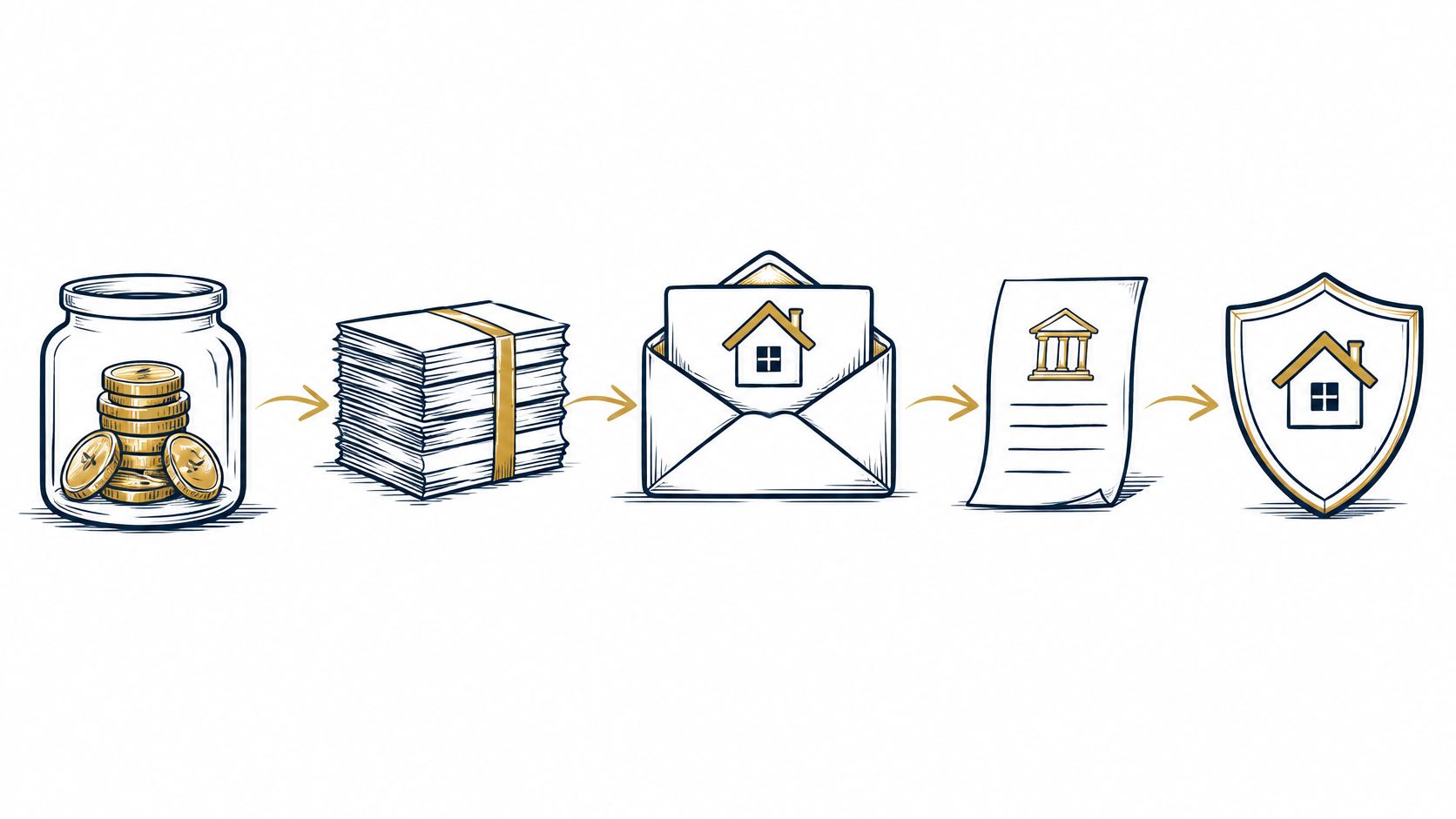
The down payment needs more than a split. Each contribution should be recorded along with the treatment the partners intend: reimbursement at sale, a larger ownership share, or another arrangement an attorney drafts. Closing costs work the same way, with each charge assigned to a named payer rather than divided in a lump at the closing table. The Florida closing costs guide can help organize questions for the transaction.
Recurring expenses carry the same requirement. The monthly mortgage payment needs a named funding account and one person responsible for confirming the payment went through. Property taxes, insurance premiums and renewals, and association charges each need a payer and a rule for costs that arrive irregularly, such as special assessments.
Record the payment arrangement
Cost worksheet for unmarried co-buyers
| Cost category | Who pays | Paying account | How later contributions are credited |
|---|---|---|---|
| Down payment | Enter contributor names | Enter funding account | Record agreed capital treatment |
| Closing costs | Assign each charge | Enter funding account | Record reimbursement terms |
| Monthly mortgage payment | Enter agreed shares | Enter payment account | State expense or equity treatment |
| Property taxes | Enter agreed shares | Identify escrow or direct account | Record adjustment method |
| Homeowners insurance | Enter agreed shares | Enter premium account | Record reimbursement method |
| Association charges | Assign regular and special charges | Enter payment account | State allocation rule |
| Repairs and improvements | Assign approval and payment duties | Enter reserve account | Attach improvement-credit formula |
The credit-formula column does the work a spoken agreement cannot. Say one partner contributes $60,000 toward the down payment and the other contributes $20,000. The agreement could return each contribution dollar-for-dollar at sale before any remaining equity is divided, or it could treat the $40,000 difference as a larger ownership share instead. Those produce very different outcomes, and only a written formula distinguishes them. The same logic applies to renovations: a kitchen upgrade one partner funds needs its own credit rule, separate from routine upkeep.
A repair reserve also needs a funding rule and a contribution record. Calling an account shared doesn't explain how unused funds will be divided if one partner leaves or the home sells.
Dream Destin Realty helps clients review available building records, including association information, inspections, reserves, rental rules and insurance, as part of purchase due diligence, so the figures entered in this worksheet reflect the property's actual obligations.
From the first payment onward, each partner should retain bank statements, repair receipts, and the signed credit formula.
Plan Your Exit Before Closing
The Florida Bar advises unmarried joint owners to enter an ownership agreement describing each person's rights and duties. Preparing that agreement is part of buying responsibly, not a prediction that the relationship will end.
An attorney-drafted agreement can address:
- Ownership interests: Each buyer's percentage interest.
- Initial contributions: Down-payment and closing-cost funding.
- Monthly obligations: Payment responsibilities and missed-payment procedures.
- Property expenses: Repairs, taxes, and insurance.
- Use of the home: Occupancy and access expectations.
- Buyout procedures: How an owner can purchase the other's interest.
- Separation: What happens if the relationship ends.
Make the buyout workable
A promise that one partner can buy out the other isn't a complete plan. The agreement should establish how the property will be valued, how disagreements over value will be resolved, and when the buyout must be completed.
It should also address financing. A partner may want to keep the home but be unable to qualify for the necessary refinance. Counsel can draft a listing trigger if neither owner can complete a buyout, along with rules for selecting representation, approving sale terms, and paying expenses while the property remains unsold.
For example, partners might agree to use an independent appraisal rather than debate online estimates during a separation. Their attorney should turn that preference into a defined procedure, including what happens if an appraisal is challenged.
An exit plan protects both partners while cooperation is easiest.
Without a written arrangement, unmarried co-owners don't receive the standardized property-division framework associated with divorce. A disagreement may require court involvement, potentially including a partition action. A Florida attorney can explain the available remedies and how they apply to the particular ownership arrangement.
Buyers working with Brian Burgett, Broker/Owner of Dream Destin Realty should keep legal drafting with counsel. The final practical test is straightforward: can each partner explain the agreement in plain language, and does it match the deed?
How Marriage Can Change a Florida Home Plan
According to the Florida Bar's discussion of homestead signing requirements, when a married owner lives on the property, or the owner's spouse or dependents live there, the spouse must sign deeds and mortgages because of Florida constitutional requirements. A later conveyance or refinance may therefore require participation from a spouse who wasn't named on the original purchase deed.

A required signature settles the consent question for that transaction. Signing requirements and ownership rights are separate issues. The signature works like a permission rule for the paperwork, while the deed and the partners' records still shape who owns what.
Review the plan before a wedding
- Preserve the purchase file: Keep the original deed, closing statement, loan documents, and contribution records.
- Confirm the intended title: Review whether the existing arrangement still reflects both partners' intentions.
- Document the property's use: Explain whether it serves as a primary residence and how homestead status may affect the plan.
- Review proposed changes: Ask a Florida attorney to confirm signing requirements before adding a spouse to title, refinancing, selling, or borrowing against the home.
A partner who bought alone before marriage may later seek a refinance. The spouse's signature may be required even though the original deed named only the purchasing partner, and that signature still leaves the treatment of each partner's financial contributions to the written plan.
Marriage is a reason to review the existing arrangement. Treat it as maintenance on the purchase itself: the deed may stay the same while the signing rules around it change.
Death, Incapacity and Creditor Risks to Plan For
If an owner dies, the surviving partner may not receive that owner's share. An ownership arrangement without survivorship can leave the survivor sharing decisions with heirs rather than owning the entire home.
Florida homestead rules add another layer. The Florida Bar's homestead and marital-planning discussion explains that a homestead generally can't be freely left by will when an owner is survived by a spouse or minor child, although it may be devised to the spouse when there is no minor child.
Where the applicable homestead descent rules govern and an owner leaves a spouse and descendants, the spouse generally receives a life estate, while descendants receive the vested remainder. The spouse may instead elect an undivided one-half interest as a tenant in common, as the same Florida Bar discussion explains. Counsel should confirm how title and the particular family circumstances affect the result.
Review the documents together
- Deed: Confirm the ownership and survivorship language.
- Will: Check intended beneficiaries against applicable homestead restrictions.
- Beneficiary designations: Review whether financial resources support the intended plan.
- Powers of attorney: Establish who may act during incapacity and within what authority.
- Insurance: Review coverage needs with a qualified insurance professional.
Debt questions deserve separate attention, and property-specific conclusions about estate debts belong with Florida counsel.
Florida homestead protection also isn't a blanket answer to every creditor concern. The Florida Bar's explanation of homestead restrictions describes forced-sale protections alongside exceptions, including taxes, assessments, and certain contractual obligations.
Planning question: Which document authorizes action if an owner can no longer make decisions?
Partners should also test whether available income and reserves could carry the home after an income loss. An inheritance plan doesn't necessarily solve an immediate payment shortage.
Confirm These Steps Before You Sign
Treat these as planning steps; legal prerequisites depend on your transaction. A staged checklist keeps preliminary decisions separate from property review and final commitments, so each question reaches the right person at the right time.
- Preliminary, before an offer: Discuss title options, record intended contributions, and identify a Florida real estate attorney. Buyers considering Destin can organize local purchase questions alongside those ownership decisions.
- Property review: Examine proposed vesting language, available building records, and association information. Confirm intended primary-residence use, and bring property-specific insurance questions to a qualified insurance professional.
- Final, before closing: Review closing documents with counsel, complete the co-ownership agreement, and establish secure storage for original documents and payment records.
A brokerage can help organize purchase due diligence. Enforceability, inheritance rights, tax treatment, and coverage decisions belong with the appropriate qualified professional.
The next concrete step is to bring the proposed deed wording, contribution record, and written questions to a Florida attorney. Buyers needing help organizing the local purchase process can contact the brokerage.
Partners planning a purchase before marriage can visit Dream Destin Realty to organize their Emerald Coast property search and prepare practical due-diligence questions before making a shared commitment.


