
Fixed-Rate vs Adjustable-Rate Mortgages: Questions Before Choosing
Compare fixed-rate and adjustable-rate mortgages: how each rate structure changes your payment and what to check in the loan documents.

On this page
On this page
A fixed-rate mortgage keeps the same interest rate throughout the contract term, while an adjustable-rate mortgage can change after its introductory period. The choice turns on more than the starting payment: buyers should compare the payment the contract permits, ownership costs outside the loan, and how long they could carry the mortgage if their plans change.
Table of Contents
- Start With the Short Answer on Fixed and Adjustable Rates
- Side-by-Side Differences That Matter Most
- How an Adjustable Rate Is Calculated After the First Reset
- How Initial, Subsequent and Lifetime Caps Work
- Your Budget and Plans Worksheet
- Stress Test Each Loan Under Worse Conditions
- Choose a Loan Only After Confirming the Disclosed Terms
- Answers to Four Common Questions About Rate Structure
Start With the Short Answer on Fixed and Adjustable Rates
A fixed rate provides payment predictability; an ARM trades some predictability for a potentially lower starting rate. The Consumer Financial Protection Bureau's loan overview explains that distinction without making either structure universally better.
Principal and interest means the amount that repays the borrowed balance and pays borrowing costs. Escrow is an account used to collect and pay property taxes and insurance. An ARM's introductory period is the stated stretch when its starting rate doesn't change.
Before choosing, buyers should judge either loan over the contract's full life, not an expected exit date. A lower initial payment isn't enough to establish long-term affordability.
Side-by-Side Differences That Matter Most
| Feature | Fixed-rate loan | Adjustable-rate loan |
|---|---|---|
| Interest rate during the loan term | Stays the same for the full contract term | Typically fixed initially, then resets |
| Principal-and-interest payment | Same monthly amount for the full term | Can change after adjustments |
| Starting rate compared with an ARM | Set at closing and held for the term | May start lower during the introductory period |
| Property taxes and insurance in escrow | Can still change | Can still change regardless of rate movements |
| Timing of rate changes | None during the contract term | Introductory period and adjustment frequency control |
| Reliance on refinancing | Not needed to keep the contract rate | Refinancing isn't guaranteed |
| Terms to confirm in the documents | Note rate, term and escrow amounts | Index, margin, first reset date, adjustment frequency, caps and floors |
The CFPB's fixed-versus-adjustable mortgage guidance explains that ARM timing isn't standardized. The initial rate may stay the same for months, one year or a few years, so buyers shouldn't infer adjustment dates from a general product description.
The table compares structures, not suitability.
How an Adjustable Rate Is Calculated After the First Reset
Start with a simple sum. For illustration only, if a loan's index stood at 4 percent and the note set a margin of 2.75 percent, the fully indexed rate would be 6.75 percent before the contract's adjustment limits apply. The CFPB's adjustable-rate mortgage handbook describes the index as a market-based measure that can change and the margin as the extra amount the lender adds above the index, which usually stays the same over the life of the loan. The index moves with the market; the margin usually rides on top of it unchanged.
With the loan note available, buyers can follow this procedure:
- Find the named index.
- Locate the margin.
- Add them to identify the fully indexed rate.
- Compare it with the introductory rate.
- Record the first reset date and later adjustment intervals.
- Request the lender's payment schedule in writing.
The rate difference alone doesn't provide the new payment. The lender's calculation must also account for the applicable loan terms and remaining repayment schedule, so the written schedule is the figure to budget against. The introductory payment is only the opening number; the fully indexed rate shows where the payment can head once the introductory period ends.
How Initial, Subsequent and Lifetime Caps Work
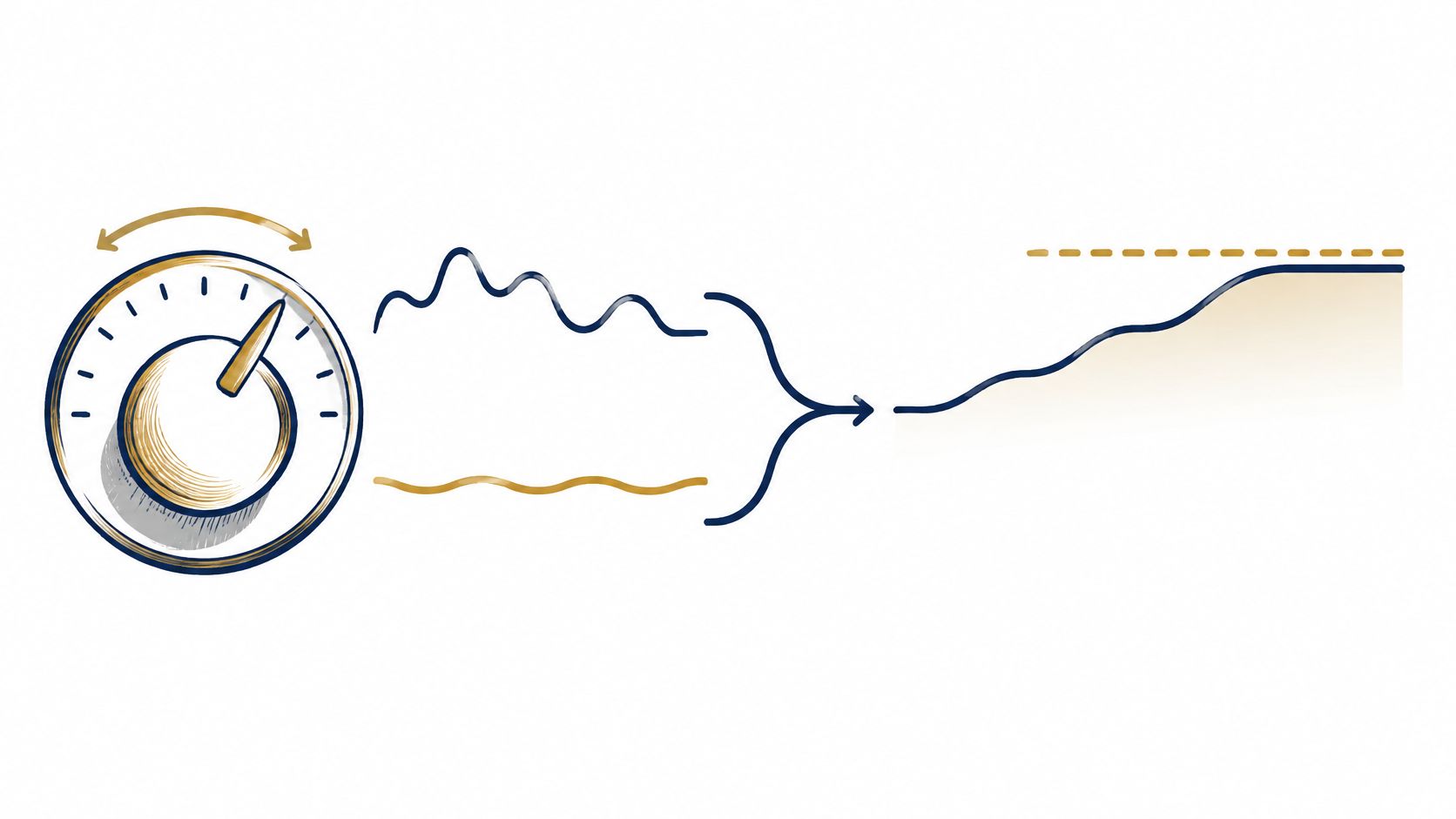
A 2/2/5 cap schedule works like three gates on the same road. If the introductory rate is R, the first reset may rise to R plus 2 percentage points, later resets may move up to 2 points from the rate just before them, and the rate may never exceed R plus 5. The CFPB's explanation of ARM rate caps separates those limits by when each one applies.
The initial cap governs the first change after the introductory period. The subsequent cap governs each later change measured from the preceding rate. The lifetime cap sets the highest rate the contract permits over the loan's full term. A floor can run in the other direction by limiting how far the rate can fall, so buyers should record it beside the caps and the dates when each applies.
A first adjustment inside the cap can still leave room for larger payments later.
The comparison that matters is the permitted path to the maximum payment, including escrow changes that can rise under either loan structure, weighed against how long the buyer expects to keep the home.
Your Budget and Plans Worksheet
A buyer working down this table writes the highest monthly payment the household can carry, counts the cash left after closing, and marks the years the property may realistically be held. The order matters: the quoted starting payment is one input, while the worst-case permitted payment, escrow costs that can rise under either loan type, and the holding period decide which structure fits.
| Input | Why it matters | Your answer |
|---|---|---|
| Highest total monthly payment accepted | Sets the ceiling every loan must pass | |
| Cash reserves expected after closing | Shows capacity to cover higher costs | |
| Years the property may be held | Tests the relevance of the introductory period | |
| Income stability and expected changes | Tests capacity to carry the loan through changes | |
| Plans that could change the holding period | Identifies reasons ownership could last longer |
Each row is a planning input the household answers first, in its own numbers rather than a published average. The lender separately identifies the documentation the particular loan requires.
Buyers can also understand homebuying due diligence to organize purchase questions separately from the mortgage comparison. A planned relocation or a change in second-home use belongs on the worksheet because it can shift the holding period and push the loan past its introductory years.
Stress Test Each Loan Under Worse Conditions
Suppose a loan's disclosures show one maximum payment at the first adjustment and a higher maximum at some later point. The buyer's ceiling has to survive the highest figure, since the note permits it. The lower starting payment is only one input; the CFPB's fixed-versus-adjustable guidance suggests considering another loan if the higher payments could not be afforded on today's income.
Those two maximums are different numbers, so buyers should request each one separately.
| Scenario | What to check | Pass or fail |
|---|---|---|
| Payment after first reset at the note maximum | Compare the permitted payment with the worksheet ceiling | Pass if the reset payment stays under the ceiling |
| Refinancing unavailable | Confirm the payment fits without refinancing | Pass if the highest permitted payment fits on current income |
| Sale or refinance delayed | Confirm affordability beyond the planned exit date | Pass if payments fit through every adjustment in the extended period |
| Taxes, insurance or association dues rise | Add revised costs and recheck the ceiling | Pass if the new total stays under the ceiling |
For the refinancing scenario, remove expected proceeds or savings from a replacement loan; the test is whether the existing payment can be carried on its own. For a delayed sale, extend the holding period through each adjustment that could occur before the new exit date. Escrow costs deserve the same treatment under a fixed-rate loan, since taxes and insurance can climb regardless of rate structure.
Condo buyers can use the 2026 condo HOA fee checklist to organize association-cost questions.
Decision rule: A failed scenario calls for revisiting the structure, purchase budget or holding plan, rather than assuming favorable future conditions.
Choose a Loan Only After Confirming the Disclosed Terms
Take a single adjustable-rate offer and apply the sequence in order. The disclosed maximum permitted payment is checked against the worksheet ceiling first, because a structure that fails there fails regardless of its starting rate. The earliest adjustment date comes next, since it sets when the worst-case payment could begin. Written payment illustrations supply the figures for both checks, and any failed stress-test scenario gets resolved before the structure is chosen.
The starting payment is only one input. The permitted maximum, the escrow costs that can rise under either structure, and the holding period decide what a buyer can carry. Check any verbal description of these terms against the note and disclosures.
Federal mortgage rules in 12 CFR 1026.43 direct lenders, in specified calculations, to use the maximum interest rate that may apply during the first five years of a loan whose rate can change in that period. Those calculations are the lender's; requesting the lender's full payment illustrations remains a separate step for the buyer.
Upfront costs deserve their own review through Florida closing costs.
For local purchase planning, the Destin, Miramar Beach and Sandestin, and Santa Rosa Beach guides walk through buyer considerations for each market. Recorded declarations, association rules, flood exposure and insurance requirements stay property-specific, so the guides frame the questions and each property's own documents supply the answers.
Answers to Four Common Questions About Rate Structure
Can the total payment change on a fixed-rate mortgage?
Yes. A fixed interest rate holds the principal-and-interest portion constant, but it does not freeze property taxes, homeowner insurance or the escrow deposit that collects them. The CFPB's explanation of escrow and impound accounts explains that property taxes and insurance premiums can change from year to year, and the escrow payment and total monthly payment change with them. The figure a budget must absorb is the total monthly payment, and that total can rise under either loan structure when escrow costs change.
Which terms control when an adjustable rate changes?
The loan documents, including any adjustable-rate rider, set the terms, so read them rather than a summary. The CFPB's adjustable-rate mortgage handbook advises getting the lender's written information on each loan and asking about the index, margin, caps and how often the rate can adjust. If a quote or conversation seems to conflict with the rider, ask the lender to explain the difference in writing before closing.
Do rate caps eliminate payment uncertainty?
No. Rate caps limit how far the interest rate can move, and some loans also carry payment caps, as the CFPB's adjustable-rate mortgage handbook explains; neither limits the escrow deposit, which moves with taxes and insurance on any loan. A capped adjustable loan can still produce a higher total payment through both channels at once.
Why should buyers not assume they can refinance before an adjustment?
Refinancing requires a willing lender on acceptable terms, and property values, income and credit can all shift before the first reset arrives. The safer test is the holding period: carry the loan on paper through every adjustment it permits, and choose it only if the worst permitted payment still fits the budget ceiling.
Dream Destin Realty provides buyer guides and property resources that help organize Emerald Coast purchase and due-diligence questions. Buyers can visit Dream Destin Realty to explore those resources and use the brokerage contact page to discuss purchase planning alongside their lender's written mortgage terms.


