
Buying a Home with Solar Panels: What to Check First
Learn how to verify solar ownership, lease terms, system condition, warranties and utility records when buying a home with solar panels.

On this page
On this page
Buying a home with solar panels starts with one confirmed fact, who owns the panels and what contract is attached to them, because that decides what transfers at closing and what you may inherit. Don't judge the system by panel count or a seller's savings claim until ownership, transfer terms, and utility records are in writing.
If panels look like a simple roof feature, what have you agreed to buy? That question matters because the equipment, the contract, and the utility account can each follow a different path at closing.
Table of Contents
- Why Solar on a Home Changes the Purchase
- Who Owns the Panels and What Transfers
- Documents to Request Before You Make an Offer
- Checking System Condition and Utility Records
- How Solar Affects Value and Your Offer
- Confirm the Solar Transfer Before Closing
Why Solar on a Home Changes the Purchase
A home's solar system isn't always part of the home in the same way a roof or water heater is. The panels may belong to the seller, carry a loan balance, or belong to a provider under a lease or a power-purchase agreement. A power-purchase agreement, or PPA, is an agreement to buy the electricity the system produces.
Each arrangement creates different documents, approvals, and payment questions. A listing statement that panels are owned doesn't prove transfer rights, condition, warranty coverage, or utility approval. You need the signed agreement behind that statement.
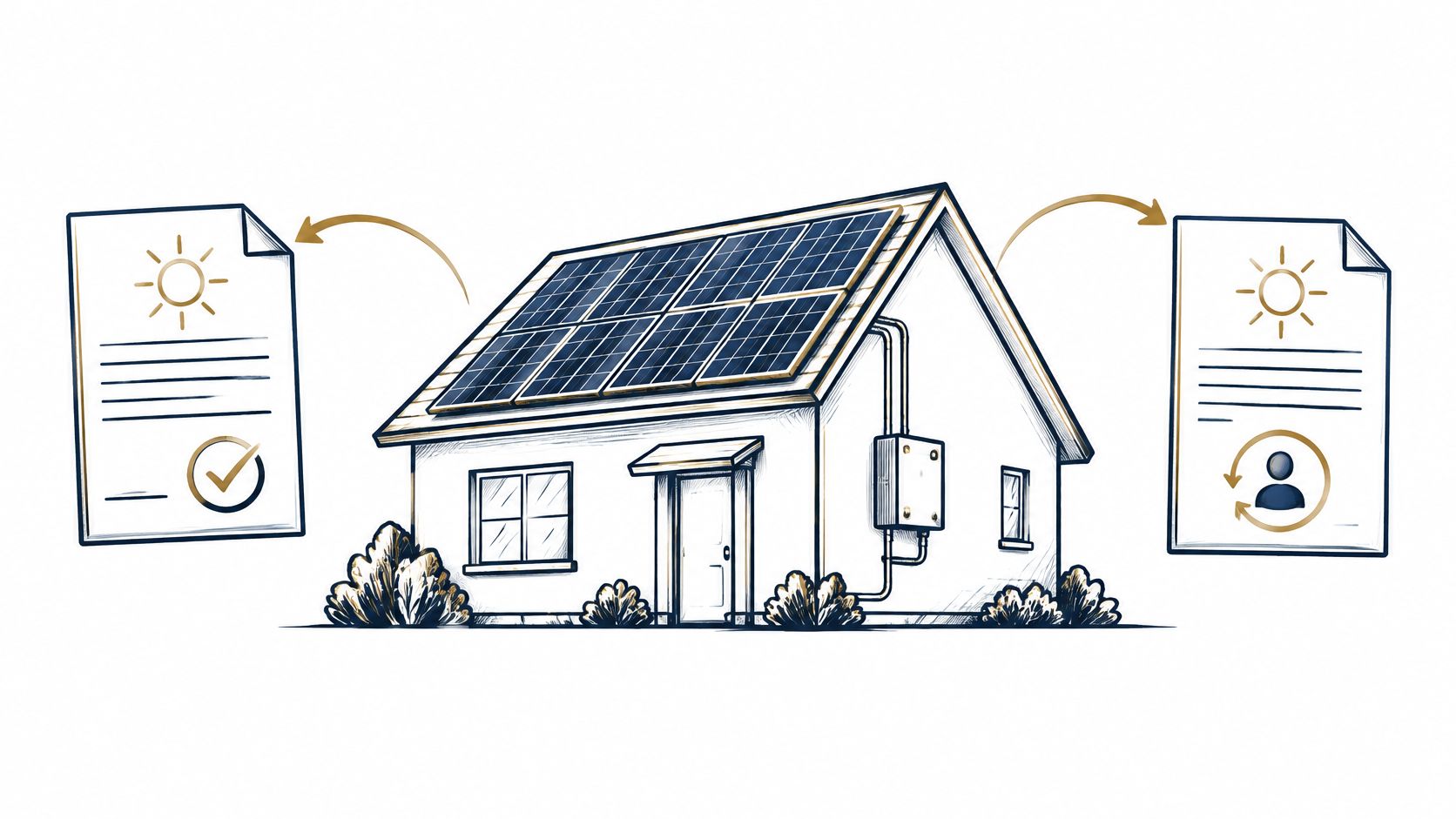
Work in three stages. First, confirm the arrangement. Second, check the records and the system. Third, confirm the transfer before closing.
Practical rule: End each stage with a document in hand before the inspection or due-diligence deadline, so you can separate what's verified from what's still open.
That sequence keeps price, financing, and closing decisions tied to evidence. It also prevents a late surprise, such as a provider approval or payoff amount appearing after you have already committed to a deadline.
Who Owns the Panels and What Transfers
The arrangement, not the panel count, sets your workflow. The U.S. Department of Energy consumer guide to buying a house with solar panels advises buyers to identify contractual agreements, because third-party ownership can require additional steps to assume or transfer the contract.
| Arrangement | Who holds the equipment | What to obtain | Transfer step |
|---|---|---|---|
| Seller-owned, paid in cash | Seller | Proof of ownership and confirmation it conveys | Confirm in purchase documents |
| Solar loan | Seller, subject to the loan | Current payoff statement and lien check | Payoff or lender transfer before closing |
| Lease | Solar provider | Full lease, remaining term, payment schedule, transfer terms | Provider and buyer approval where required |
| Power-purchase agreement | Solar provider | Full agreement, rate terms, production guarantees, buyout terms | Provider approval or contract assumption where required |
Where Each Path Can Stall
A seller-owned system still needs written proof that it conveys with the property. The biggest risk is assuming conveyance without that proof.
A loan needs a current payoff statement and a check for liens or other financing claims. An unresolved balance can become a closing or lender problem.
Lease and PPA terms can include remaining term, payment escalators, production guarantees, transfer requirements, buyer credit approval, and buyout provisions. A PPA charges for electricity produced and doesn't transfer equipment ownership to you.
Identify the arrangement in writing before making an offer, because the transaction workflow differs for each type. A Destin Buyer's Agent can help you organize which document proves the path you are on.
Documents to Request Before You Make an Offer
Ask for these records early, so you have time to review them before the inspection or due-diligence deadline. This early request matters in Destin, where you are also coordinating inspections, insurance questions, and lender review.
- Signed purchase, loan, lease, or PPA agreement: This names the owner, the payment terms, and the transfer rules that control your obligations after closing.
- Current payoff statement or transfer quote: This shows the amount or conditions needed now, not an old estimate from when the system was installed.
- Installation permit and final inspection record: Missing permits can raise lender, insurer, or utility questions about whether the installation was properly approved.
- Equipment specifications and serial numbers: Record panel, inverter, and battery numbers, because a missing serial number can slow a warranty or service claim.
- Warranty documents and assignment proof: A warranty helps only if its terms allow transfer to a new owner and the required assignment step is completed.
- Maintenance, repair, and replacement records: These show whether faults were fixed, parts were replaced, or the same production problem kept returning.
- Monitoring access and production history: Actual output lets you test the seller's savings claim against what the system generated over time.
- At least 12 months of electric bills: A full year shows seasonal use and charges that a single low bill can hide.
- Insurance information covering the system: This tells you what documentation your insurer may need and whether the current policy treats the array as covered property.
Keep copies of every document you receive. Note the date each record arrived, so gaps are easy to spot before your deadline.
Checking System Condition and Utility Records
Start with a simple test. Compare production history with electric bills for the same months, then note any gap between expected generation and billed use. A gap can point to a system fault, changed household use, or a tariff difference, and each cause leads to a different question. Low output points back to the equipment. Normal output alongside high bills points to usage or the rate plan.
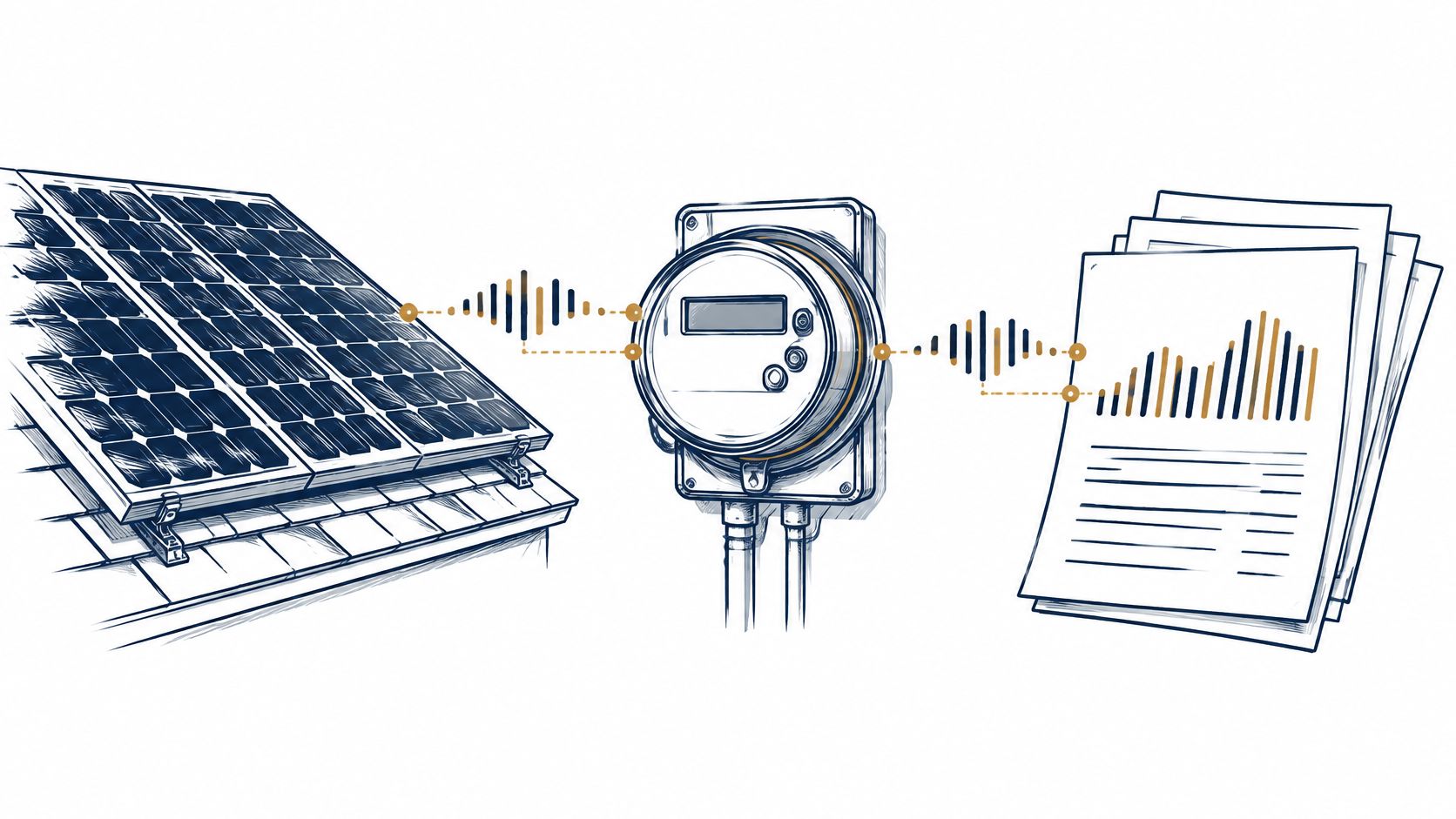
Next, confirm the grid relationship. FPL's net metering guidance states that a new owner moving into a property with an existing system must apply for net metering and sign an interconnection agreement. The FPL net metering FAQ also lists liability-insurance minimums of $1 million for Tier 2 and $2 million for Tier 3 systems, so confirm the system's size and tier before closing.
Roof and Insurance Checks
Confirm the roof's remaining service life. If reroofing is near, ask who pays for panel removal and reinstallation and whether that work affects any warranty.
Ask your insurer in writing whether the array is covered, what documentation is required, and whether the policy must change. The same record-first checks apply when you compare Destin vacation condos or single-family houses.
Verify advertised savings and resale premiums against production, tariff, roof, insurance, and contract terms before relying on them.
How Solar Affects Value and Your Offer
Historical evidence can inform an offer, but it can't set the price of one home. A Lawrence Berkeley National Laboratory study, summarized by the U.S. Department of Energy, found home buyers across the country have been willing to pay a premium of about $15,000 for a home with an average-sized solar array, according to the department's Solar Homes Sell for a Premium summary.
Those figures describe past U.S. market results for homeowner-owned systems, and they apply to an individual property only after appraisal evidence confirms them. Because the research covers homeowner-owned equipment, the premium evidence doesn't carry over to leased or PPA systems, where the seller doesn't own the array being priced.
Treat the national figures the way you'd treat a comparable sale from a different neighborhood: useful context that weakens the further the property differs. To translate a possible premium into an offer adjustment, compare the system's installed capacity with the average-sized array in the study, weigh its age and remaining warranty coverage, and decide what share of a premium the documentation supports. A Destin home value estimate gives you a baseline for the property itself, and your offer can then reflect the documented system on top of that figure.
The federal tax credit does not pass to a buyer. The IRS states that the Residential Clean Energy Credit is not available for any property placed in service after December 31, 2025, and the U.S. Department of Energy guide notes the credit could only be claimed on the original installation, so confirm with a qualified tax professional before counting any credit in your budget.
Value the system only after ownership and transfer terms are confirmed.
Confirm the Solar Transfer Before Closing
By the time you reach closing day, the solar file should be as settled as the rest of your paperwork. Each item below is a closing item in the same sense as your loan documents and your Florida closing costs: something to confirm in writing before the inspection or due-diligence deadline, with proof filed for your records. The ownership question comes first, because who owns the panels decides which of the later items even apply to your purchase.
Work down the checklist and file the written answer for each line.
- Arrangement type: file the written answer to who owns the system, either the seller's signed disclosure or the contract that names the owner.
- Payoff or transfer terms: file a current payoff statement, transfer quote, or provider approval letter, including any credit conditions attached to the transfer.
- Lender treatment: file your lender's written answer on whether an assumed solar payment counts as a debt obligation in your approval.
- Equipment and records: file written confirmation of what physically transfers, covering panels, inverter, battery, warranties, monitoring access, permits, and utility approvals.
- Utility account: file the utility's written procedure and the new interconnection or net-metering approval, or its stated path to approval after closing.
A gap in this file can delay closing or leave you carrying a long-term obligation outside your affordability plan. Keep legal, tax, and insurance decisions with qualified advisers.
Dream Destin Realty offers guides for buyers, sellers, and investors, along with a home valuation service and a blog that can help you organize due-diligence questions before you write an offer. If you are buying a home with solar panels on Florida's Emerald Coast and want help sorting ownership records from open questions, visit Dream Destin Realty to reach the brokerage.


