
Loan Estimate vs Closing Disclosure: A Buyer's Final Comparison
Loan Estimate vs Closing Disclosure: A Buyer's Final Comparison covers timing, loan terms, closing costs and cash to close.

On this page
On this page
The Loan Estimate shows the proposed loan terms and estimated costs within 3 business days after you apply, and the Closing Disclosure shows the final terms and costs at least 3 business days before closing. The two forms share the same fields, so each term and cost can be checked line by line before you sign. A useful comparison sorts each changed line by its rule category and by whether it needs a written lender explanation, so a higher closing total becomes a list of specific checks instead of one alarming number.
Table of Contents
- What Each Document Is For
- Timing From Application to Signing
- Loan Terms to Match Your Selected Offer
- Closing Cost Changes and the Limits That Apply
- Situations Where the Comparison Matters Most
- Confirm Each Difference Before You Sign
- Follow-Up Questions Before You Sign
What Each Document Is For
The Loan Estimate is the planning-stage document. The Closing Disclosure is the final settlement accounting for review, as explained in the Consumer Financial Protection Bureau's integrated disclosure rule. This guide covers application-to-final disclosure reconciliation, not lender shopping or Florida tax line items.
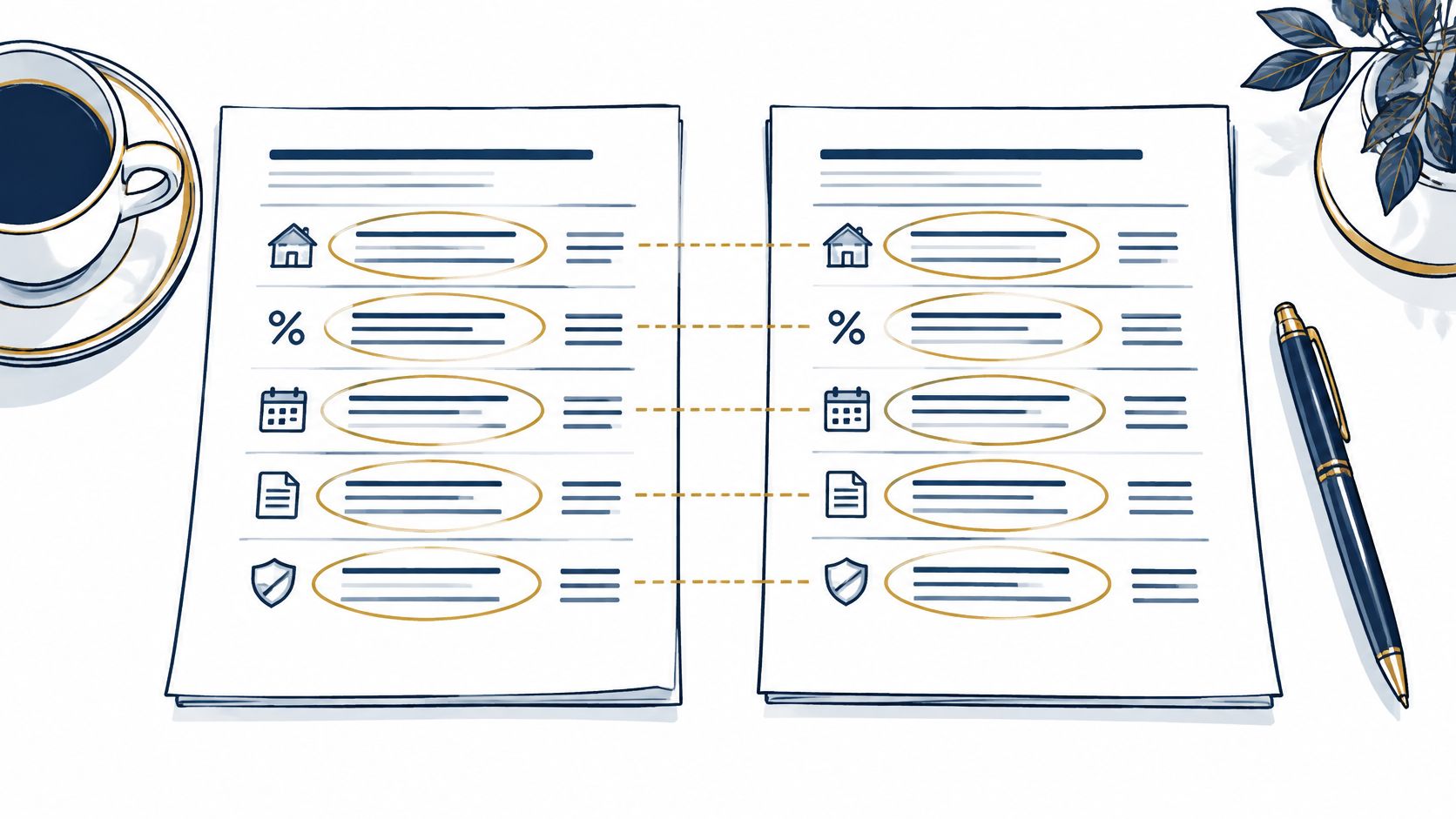
Loan Estimate and Closing Disclosure side by side
| Item | Loan Estimate | Closing Disclosure | What to compare |
|---|---|---|---|
| Purpose | Proposed terms and estimated costs | Final terms and costs for review | Use the estimate as the baseline |
| When received | Generally within 3 business days after application | Generally at least 3 business days before closing | Preserve the review window |
| Loan terms | Proposed amount, rate, product and payment | Final amount, rate, product and payment | Flag unexplained changes |
| Costs | Estimated loan and other closing costs | Final costs and lender credits | Compare each category |
| Cash to close | Estimated amount due at closing | Final amount due at closing | Track the dollar and percentage change |
The timing benchmarks are supported by the CFPB's disclosure FAQs. Matching fields make comparison practical, but a difference calls for an explanation, not an automatic accusation.
Timing From Application to Signing
The application starts the disclosure timeline. For this purpose, the lender needs the applicant's name, income, Social Security number or equivalent credit-report identifier, property address, estimated property value, and requested loan amount.
Under 12 CFR 1026.19(e)(1)(iii), the lender must deliver or mail the Loan Estimate within 3 business days after receiving the application, and the CFPB's Closing Disclosure guidance explains that the lender must give the buyer the Closing Disclosure at least 3 business days before closing, a deadline the regulation measures from consummation. Consummation is the point when the borrower becomes contractually obligated on the loan; the lender should confirm the applicable signing timeline.
Document timing from application to signing
| Stage | What happens | What the buyer checks |
|---|---|---|
| Application | Lender receives application information | Record the date and information submitted |
| Loan Estimate | Early disclosure is provided | Save the selected loan's estimate |
| Rate decisions | Rate may be locked or remain unlocked | Confirm lock status and expiration |
| Closing Disclosure | Final figures arrive for review | Reconcile matching fields |
| Signing | Loan and settlement documents are signed | Resolve questions before signing |
A correction doesn't automatically mean another full waiting period. Under the CFPB's disclosure regulation, only specified changes require a new 3-business-day review period.
For a revised disclosure:
- Compare versions. Match the corrected form against the latest Loan Estimate and earlier Closing Disclosure.
- Request written explanations. Ask what changed and whether the correction restarts the waiting period.
- Confirm the appointment. Obtain written confirmation from the lender and closing agent about the scheduled closing.
Scheduling rule: A planned closing date isn't a substitute for confirmation that revised documents are ready.
Dream Destin Realty's homebuying guide provides broader purchase-process context. Out-of-area buyers should settle disclosure and closing-date questions before committing to travel, funds-transfer arrangements, or insurance timing.
Loan Terms to Match Your Selected Offer
The Loan Estimate for the selected loan is the reference document. The CFPB's closing-paper review guidance recommends retaining it to identify changes and asking the lender to explain differences before signing.
Loan terms to check against the selected offer
| Loan term or feature | Where to look | What to ask if it differs |
|---|---|---|
| Loan amount | Loan Terms | Why did the amount change? |
| Interest rate and lock | Loan Terms and rate-lock information | Does the rate match the agreement and lock confirmation? |
| Loan product and term | Loan information near the top | Are the product and repayment term correct? |
| Projected payment | Projected Payments | Did principal and interest, mortgage insurance, or escrow change? |
| Payment features | Loan Terms | Is a prepayment penalty or another unexpected feature present? |
| Points | Loan Costs | Does the charge match the selected pricing? |
| Lender credits | Lender Credits line | Why did the credit change, and which costs does it offset? |
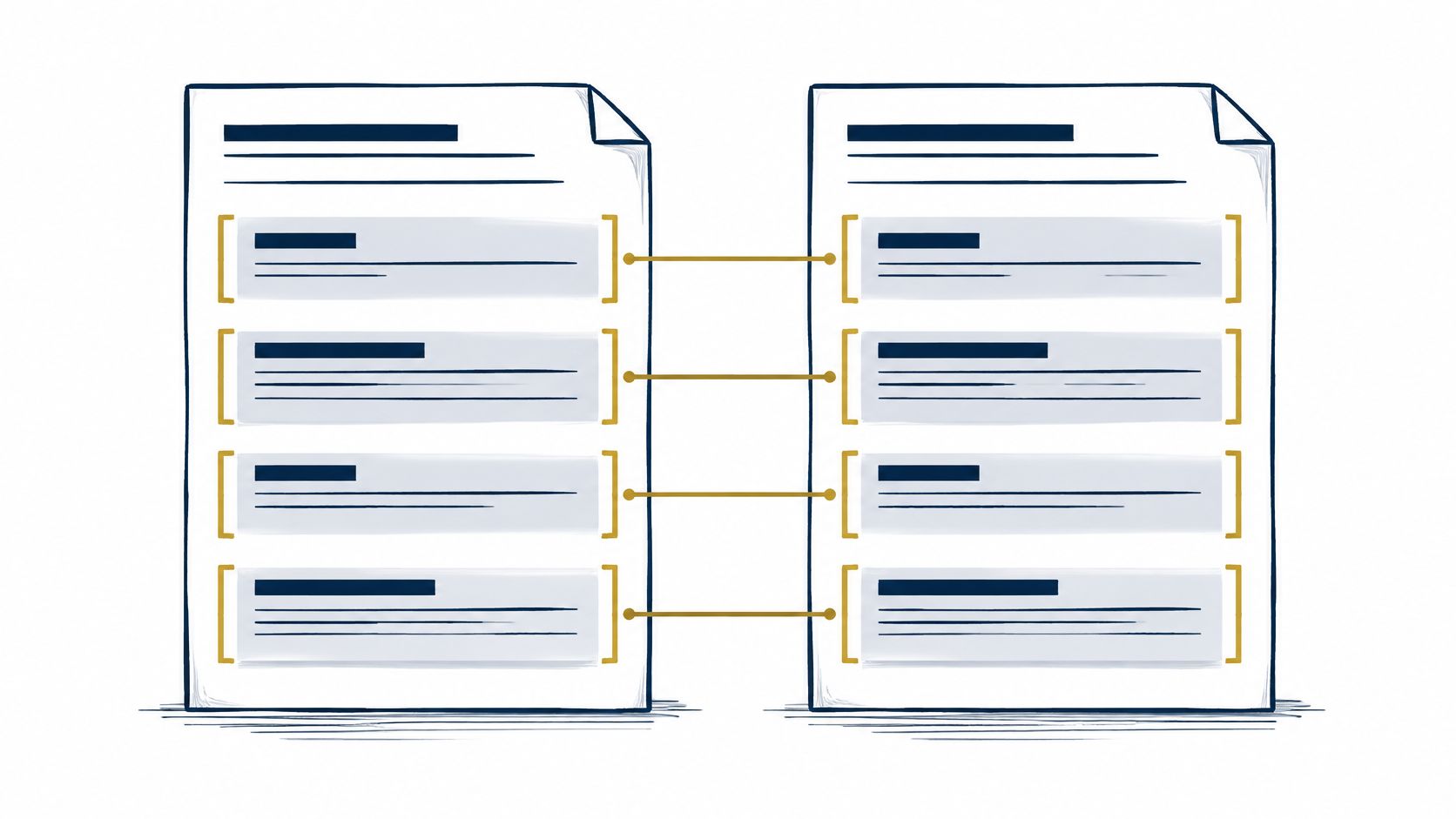
A transaction change can legitimately alter the loan amount. The useful evidence is a written explanation connecting the revised figure to that change, rather than a general assurance that everything looks normal.
Closing Cost Changes and the Limits That Apply
Changed charges need classification before judgment. The CFPB's document-review guidance describes charges that generally cannot increase, a category with a cumulative 10 percent limit, and items without a lender-controlled increase limit.
Closing cost change categories
| Tolerance category | CFPB guidance | What to do |
|---|---|---|
| Charges that cannot increase | Generally cannot increase unless an applicable exception permits it | Request the reason and applicable rule |
| Cumulative 10 percent category | Limit applies to the category collectively | Compare the combined category totals |
| No lender-controlled limit | Includes prepaid interest, property-insurance premiums, initial escrow deposits, and certain non-required services | Ask why the amount changed and whether the service was required |
The items without a set limit are listed in 12 CFR 1026.19(e)(3)(iii).
For the cumulative category, comparing isolated fee increases isn't enough. The buyer needs the lender's classification and the combined estimated and final amounts for the applicable group.
If costs exceed applicable limits without a qualifying exception, the lender complies by refunding the excess to the buyer no later than 60 days after consummation, under 12 CFR 1026.19(f)(2)(v). A lower charge elsewhere shouldn't replace an explanation of the disputed item.
The separate Florida closing costs resource supports broader budgeting.
Situations Where the Comparison Matters Most
An unchanged rate with a higher payment: The buyer should identify whether mortgage insurance or escrow changed instead of assuming the rate lock failed.
A higher fee for a selected provider: The useful question is which tolerance category applies and how the lender calculated the relevant combined charges.
An out-of-area closing: The buyer should obtain written confirmation of disclosure timing, final cash to close, and the closing appointment before coordinating travel and funding.
The same dollar change can be permitted in one category and restricted in another.
For separate local planning, the Destin, Miramar Beach and Sandestin, and Santa Rosa Beach guides provide area and jurisdiction context. None verifies loan documents or a property's rights.
Buyers considering a condominium can organize separate questions about vacation condo insurance and rental rules, without treating disclosure review as property-use approval.
Confirm Each Difference Before You Sign
The final review should leave a clear record of unresolved questions. The CFPB's guidance on late disclosures supports contacting the lender promptly when the document hasn't arrived in time for review.
- Keep the baseline. Save the selected Loan Estimate alongside the latest Closing Disclosure.
- Mark changed lines. Include loan terms, payment components, credits, cash to close, and individual closing charges.
- Record the explanation. Note the lender's reason, applicable category, and any promised correction.
- Confirm the lock. Keep the rate-lock status and expiration confirmation with the comparison.
- Resolve remaining requirements. Ask the lender and closing agent what remains outstanding.
- Read before signing. An affordable total doesn't establish that every underlying charge is correct.
Follow-Up Questions Before You Sign
The questions below keep lender issues separate from property due diligence while you plan your Florida home purchase.
What changes between the Loan Estimate and Closing Disclosure?
Compare the same fields in the same order, starting with the loan terms block: loan amount, interest rate, and monthly principal and interest. Then match projected payments, cash to close, and itemized closing costs; the CFPB's Closing Disclosure explainer maps what each page of the form contains.
Which loan terms should match the selected offer?
Check the loan amount, product, term, rate, payment features, and any points or lender credits against the offer you selected. An unexplained difference needs the lender's answer in writing. The CFPB's Loan Estimate walkthrough shows where each figure sits on the form.
What should buyers do when a fee changes?
Sort the change before reacting: a lender fee, a third-party service charge, and a prepaid item each follow different rules, so an increase in one category says nothing about the others. Ask which rule applies to that line and why it moved, and get the answer in writing.
Does receiving a Closing Disclosure mean every condition is cleared?
No. Receiving the disclosure is one step in a larger closing file; the other loan and settlement documents still need review, and open discrepancies still need clearing. CFPB guidance on closing steps describes what else the appointment involves, and the lender and closing agent can confirm what remains.
Dream Destin Realty offers buyer guides and property due-diligence resources for Emerald Coast purchases. Buyers organizing disclosure questions alongside their purchase timeline can send purchase-process questions through the brokerage's contact page.


