
What Is a Condo Association Responsible For? A Plain Guide
Learn what a condo association is responsible for, with budgets, common elements and insurance explained, plus how to verify each duty in your documents.

On this page
On this page
A condo association operates and funds the shared parts of the building, and the declaration decides any exceptions for parts assigned to owners. Its responsibilities include maintenance, budgeting, reserves, insurance, and required inspections. For buyers, the key distinction is that association responsibility doesn't make the work free: owners fund shared obligations through association charges.
Table of Contents
- The Short Answer and the Main Duties
- Which Duties Belong to the Association and How to Check Them
- How the Budget and Reserves Pay for the Work
- Insurance, Repairs and Access to Your Unit
- Inspections and Structural Safety Duties in Florida
- How Board Decisions and Meetings Are Governed
- Confirm the Duties Before You Commit to a Purchase
The Short Answer and the Main Duties
A condo association manages common elements, the shared parts of the property that owners rely on. Typical examples include roofs, exterior walls, structural components, shared plumbing, elevators, pools, and common mechanical systems.
Its core duties are to maintain, repair, and replace those components; adopt an operating budget; plan for major repairs through reserves; obtain required property insurance; and follow its governing documents. These examples reflect Florida condominium law. Other states establish their own requirements.
Common condo association duties at a glance
| Duty | Usually handled by | Confirm in |
|---|---|---|
| Roofs, exterior walls and structural components | Association as common elements | Declaration and maintenance provisions |
| Shared plumbing, elevators, pools and common mechanical systems | Association as common elements | Declaration and maintenance provisions |
| Balconies, windows, doors and air-conditioning parts serving one unit | Party assigned responsibility in the declaration | Declaration, which may assign limited common elements to owners |
| Operating budget for recurring services | Association | Current annual budget |
| Reserves for major repairs and replacements | Association | Reserve line items and any reserve study |
| Property insurance for property the association must insure | Association | Insurance policy and declaration |
The table is a starting point, not a substitute for the building's records. A balcony may serve a single unit while remaining part of the condominium's common property. That distinction can affect who arranges maintenance and who pays.
Florida's common-element maintenance provisions make the declaration central to allocating these duties. They also require associations after developer turnover to continue developer-identified maintenance until updated protocols come from a licensed engineer, architect, or qualified reserve professional.
Practical rule: A label such as common area doesn't settle responsibility. The building's governing documents must identify the duty and the party assigned to perform it.
Which Duties Belong to the Association and How to Check Them
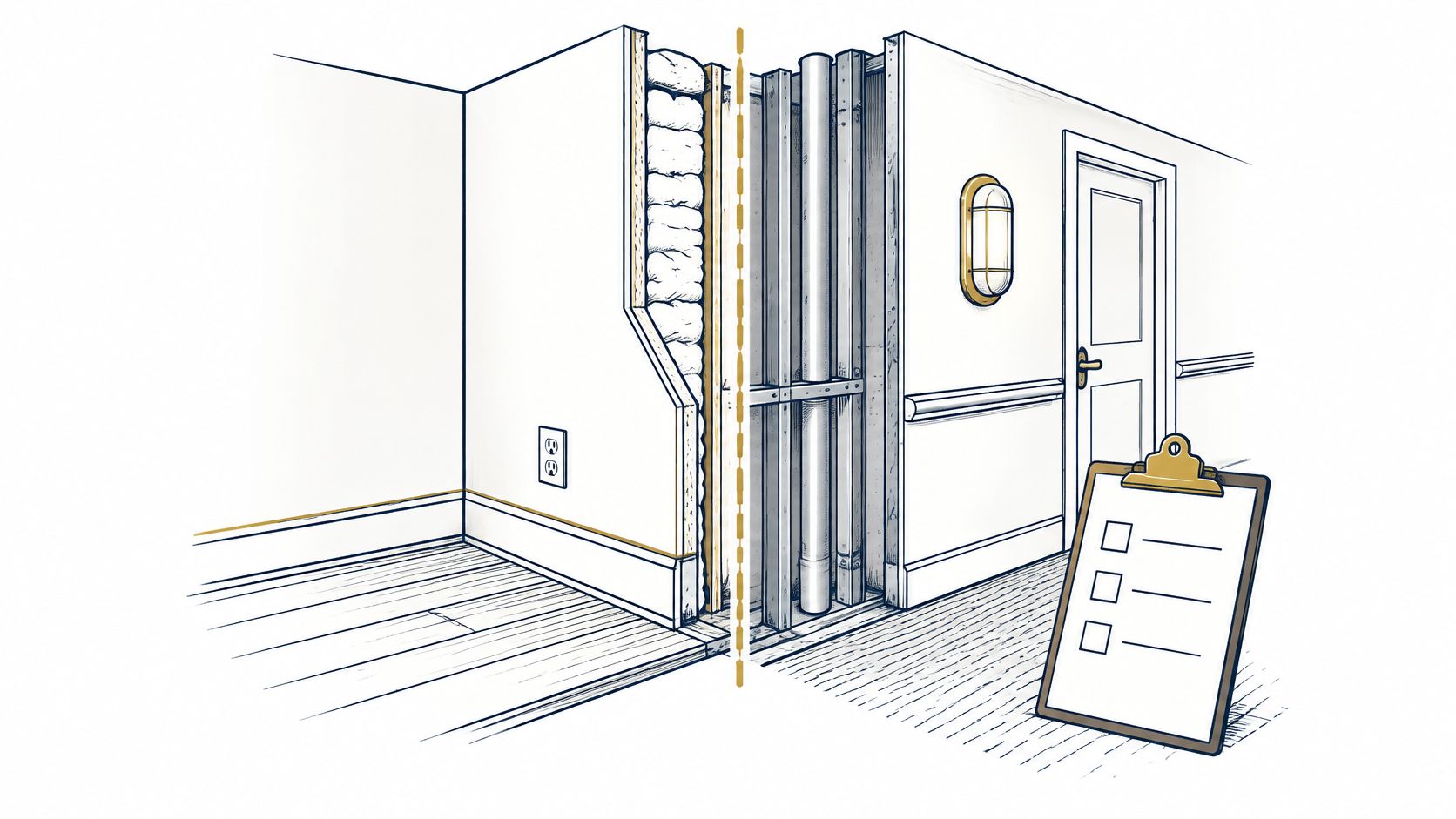
A window that needs replacing can sit on the owner's repair list in one building and on the association's list in the building next door. Florida's default rule places common-element maintenance with the association, while permitting the declaration to assign limited-common-element maintenance to particular owners, as described in section 718.113 of the Florida Statutes. A limited common element is common property reserved for the use of certain units rather than all owners.
Location shows where a component sits; the declaration shows who maintains it. A pipe behind a unit's wall may serve shared systems. An air-conditioning component serving that same unit may carry a different allocation.
Follow the component through the records
- Find its classification. Read the declaration and amendments for unit boundaries, common elements, and limited common elements.
- Locate the maintenance duty. Compare the maintenance provisions with any maintenance matrix. Check whether maintenance, replacement, and payment are assigned to different parties.
- Compare insurance responsibilities. A duty to repair and a duty to insure are separate questions, so review both.
- Check actual repair records. Prior invoices can reveal how similar work was handled, though informal practice cannot override the declaration.
- Review unresolved decisions. Inspection reports and meeting records may identify work that hasn't been completed or funded.
Because each building's documents assign duties differently, windows, doors, water heaters, utility lines, and air-conditioning components all deserve the same component-by-component review.
Match each question to the right document
Documents that settle each condo association duty
| Document | What it settles | What to check inside |
|---|---|---|
| Declaration of condominium and amendments | Common elements, limited common elements, and owner duties | Definitions and maintenance provisions |
| Maintenance matrix or maintenance protocols | Who maintains each component | Components listed for the specific building |
| Annual budget | Operating costs and reserve funding | Reserve line items and planned projects |
| Structural integrity reserve study | Future major repairs for covered buildings | Study date and budget funding |
| Milestone inspection report | Condition findings and repair recommendations | Inspection date, recommendations, and open items |
| Property insurance policy summary | Association coverage and owner insurance questions | Coverage descriptions and deductible terms |
| Meeting notices and minutes | How budgets, contracts, and assessments were approved | Notice dates, agendas, and recorded votes |
Read the budget rows alongside the declaration rows. A duty assigned to the association only gets performed if the association funds it, and a low monthly fee can reflect reserves that have lagged behind the repair list rather than efficient management. When the table sends you to the annual budget and the reserve study, read them against the maintenance duties the declaration creates.
Rental-use review requires a separate check of recorded declarations and amendments, association rules, and local requirements for the exact property. Buyers can use the guide to confirm rental permission before buying. Marketing copy, approximate map boundaries, and MLS rental remarks are research leads; recorded documents decide permission. Dream Destin Realty helps clients review available building records, including association information, inspections, reserves, rental rules and insurance, as part of purchase due diligence.
How the Budget and Reserves Pay for the Work
The monthly fee is a payment amount, not a complete measure of ownership cost. An association can have substantial repair responsibilities without having enough money saved to meet them.
The operating budget is like the monthly grocery bill. Reserves are like the savings account set aside for the roof. The 2026 Florida Statutes, chapter 718, require operating expenses and reserve accounts for capital expenditures and deferred maintenance, naming roof replacement, exterior building painting, and pavement resurfacing; they also address other qualifying items above an inflation-adjusted threshold originally set at $25,000.

Compare the fee with the work ahead
Reserve money generally stays in reserve accounts for authorized reserve purposes unless a majority of all voting interests approves another use. For budgets adopted on or after December 31, 2024, owners in an association that must have a structural integrity reserve study may not vote to use those reserves for other purposes (section 718.112(2)(f)3, 2026 Florida Statutes). That restriction helps distinguish long-term repair funding from money available for ordinary services.
A financial review should connect:
- Current budget: What recurring services and reserve contributions are funded?
- Reserve balances: What money is available for planned work?
- Recent financial statements: Do the balances support the budget's assumptions?
- Planned projects: What work is approaching, and how will it be paid for?
- Special assessments: What additional charges are approved or under discussion?
Say a building needs exterior repairs, but its budget contains little funding for that work. The association may remain responsible for arranging the project while owners face additional charges to pay for it.
A low fee can mean lower current collections rather than lower long-term costs.
The Destin Beach Club buyer guide can help organize building-specific questions. Affordability should be judged from the fee, reserve plan, and project pipeline together, with owner-specific duties checked against the declaration.
Insurance, Repairs and Access to Your Unit
Insurance responsibility and access rights are separate rules. Under Florida's condominium association statute, associations must obtain adequate property insurance and reconstruct, repair, or replace property they must insure when an insurable event damages it, treating that work as a common expense.
The statute also provides an irrevocable right of access during reasonable hours when necessary to maintain, repair, or replace common elements or association-assigned portions of a unit, or to prevent damage to common elements or another unit. That right isn't a blanket statement that the association maintains everything inside the home.
Separate the pipe from the damaged property
A shared pipe may require workers to enter a unit to reach a leak. Access to repair that pipe doesn't automatically make every damaged fixture, finish, or personal item an association obligation.
The policy and declaration should answer these questions:
- Association coverage: What property must the association insure?
- Owner coverage: What property requires the owner's own insurance?
- Interior responsibilities: What work inside a unit does the declaration assign to the association?
The Destin Towers condo buying guide provides another building-specific starting point for purchase questions. Coverage conclusions should come from the actual policies, applicable statutory requirements, and damaged property's classification, with specific policy questions reviewed by a qualified insurance professional.
Inspections and Structural Safety Duties in Florida
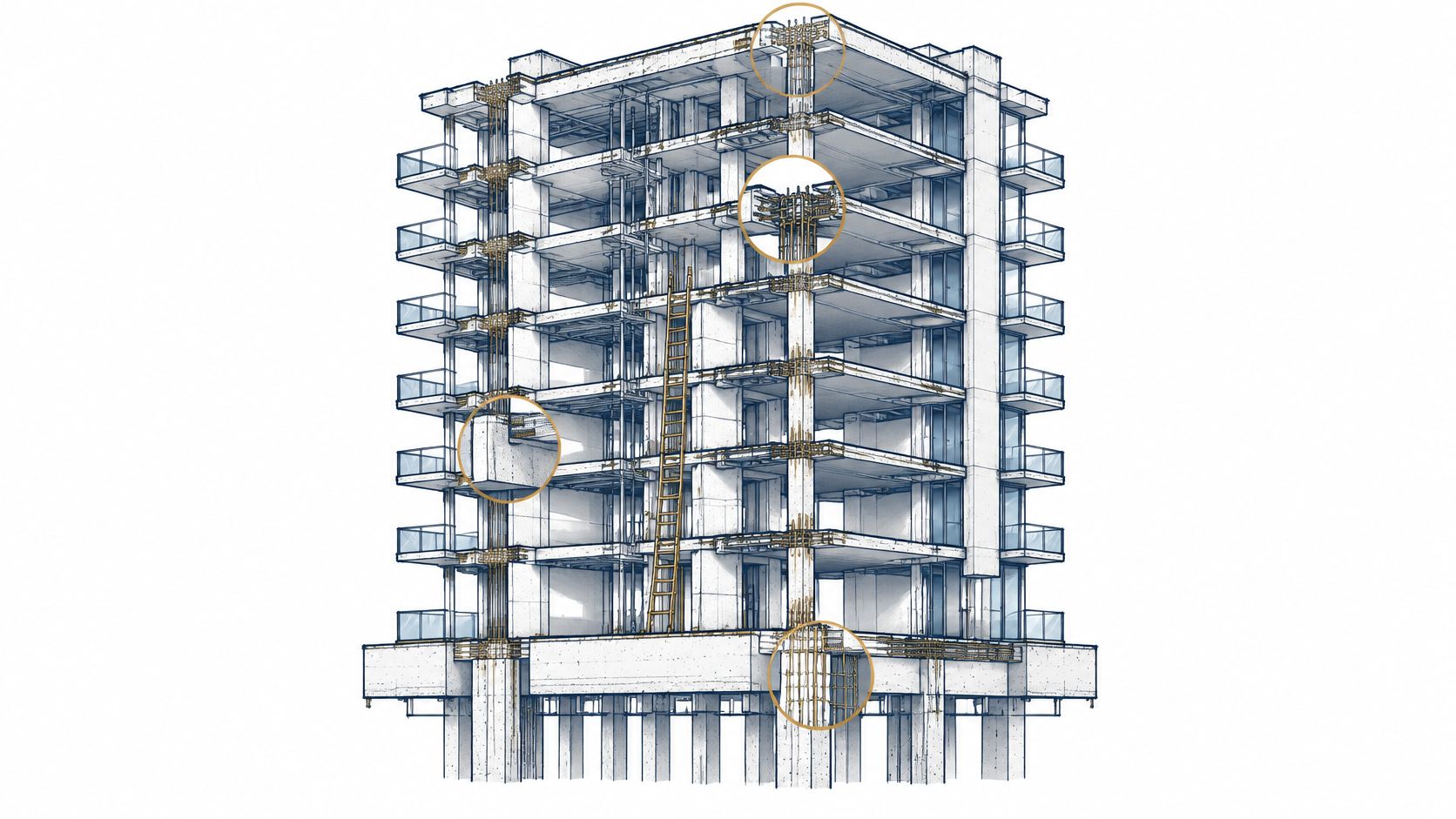
For qualifying Florida condominium buildings, association responsibility includes arranging structural reviews and planning how to fund resulting work. A structural integrity reserve study estimates future repair funding needs; a milestone inspection evaluates building condition. They're related, but they aren't interchangeable.
Under section 718.112(2)(g)1, 2026 Florida Statutes, structural integrity reserve studies are required for association buildings three habitable stories or higher, as determined by the Florida Building Code, repeated at least every 10 years. The study uses visual inspection to evaluate covered common-element reserve needs, which must be reflected in funding plans.
Ask for the actual reports
The Florida Senate's 2025 condominium bill summary identifies milestone-inspection applicability using three habitable stories or higher, as determined by the Florida Building Code. Inspection timing should be confirmed for the particular building through applicable law and the local enforcement authority, rather than assumed from a general age rule.
The association arranges required inspections and pays the share attributable to property it maintains. Its board also coordinates professionals and access, preserves records, handles required disclosures, and plans funding.
Useful buyer questions include:
- Building history: What is the certificate-of-occupancy date?
- Inspection status: Is a milestone inspection required, completed, or outstanding?
- Reserve planning: Is the structural study available and reflected in the budget?
- Unfinished work: What engineer recommendations, violations, projects, or assessments remain open?
A repair recommendation isn't automatically an immediate safety order. The actual report and any enforcement documents establish what was found and what action was directed.
The Indian Lake HOA fees and documents resource can also help frame property-specific document questions without assuming that every building has identical inspection duties.
How Board Decisions and Meetings Are Governed
Meeting records are the association's ledger for spending. They connect a coming repair to the contract that authorized it, the funding discussion behind it, and the assessment that pays for it.
The Florida condominium governance statute generally requires annual-meeting notices with an agenda to be delivered to owners at least 14 days beforehand and posted for 14 continuous days; board-meeting notices generally identify agenda items and must be posted at least 48 continuous hours beforehand, except in an emergency.
Test the record against the decision
- Compare dates. Match the notice and posting information to the meeting date.
- Read the agenda. Check whether it identifies the budget, repair contract, or assessment being considered.
- Find the outcome. Confirm that minutes record the decision and identify any further action.
These checks confirm whether the required process was followed; pricing and workmanship are separate questions. Some decisions carry extra steps: a special assessment approved without a recorded vote, for instance, leaves a gap between the charge and its authority.
Records check: A reference to future repairs in meeting minutes isn't the same as an approved contract or a funded project.
Records should be requested through the association's established channels, with copies kept alongside the purchase documents. The minutes also reveal how the board handles routine costs: flat fees held down by deferred reserve contributions read differently from steady adjustments matched to a funding plan.
An assessment tied to repairs or insurance costs should have a traceable explanation. If the minutes record a balcony-repair levy but the meeting notice never mentioned one, the next step is to request the notice packet and any amended agenda, then compare what owners were told with what the board decided.
Confirm the Duties Before You Commit to a Purchase
The useful answer to what is a condo association responsible for is a written allocation of duties matched to a credible funding plan. A low monthly fee can seem like a sign of a well-run building while indicating underfunded reserves, so responsibility and cost must be understood together from the budget, the reserve plan, and the declaration rather than from the fee alone.
During preliminary comparisons, buyers can identify likely shared costs and document gaps. During property-specific due diligence, those questions get tested against the actual records and the applicable contract timelines. A fee that sits well below comparable buildings deserves a closer look at what the association has committed to fund and what it has deferred.
Turn gaps into specific questions
A short working record can identify the component, the responsible party, the supporting document, any planned work, and the unresolved cost. An unclear window obligation calls for the declaration provision itself rather than another listing description.
Ask for the declaration page that assigns balcony repairs before relying on a listing that calls the building fully maintained. The guide to reserves and records for condo buyers provides a practical starting point for organizing that review.
Dream Destin Realty offers map search and community and condo-building directories for comparing Emerald Coast properties. Visit Dream Destin Realty to explore those resources and organize questions about association duties, reserves, inspections, and insurance for a specific purchase.
Questions about a specific property? Contact Dream Destin Realty.


