
Who Maintains a Condo Balcony: Owner or Association?
Who Maintains a Condo Balcony: Owner or Association? Learn how declarations and Florida law split balcony upkeep, and how to check your building.

On this page
On this page
Under Florida law, the association maintains common elements by default, but the recorded declaration can assign maintenance of a limited common element, including a balcony or balcony part, to the owner entitled to use it. Exclusive use alone doesn't settle responsibility, so the answer requires checking each component rather than treating the balcony as one item.
Table of Contents
- Why Exclusive Use Does Not Decide Repairs
- Which Records Set Unit Boundaries and Shared Parts
- Matching Each Balcony Part to a Responsible Party
- Routine Upkeep Versus a Proposed Balcony Change
- Why an Inspection Does Not Settle Payment
- How to Check Your Building's Rules Step by Step
- Confirm the Balcony Split Before You Buy
- Frequently Asked Questions About Balcony Upkeep
Why Exclusive Use Does Not Decide Repairs
Exclusive use answers who may use the space. Maintenance responsibility answers who must maintain, repair, or replace a component. Those answers can identify different parties under Florida's condominium maintenance statute.
A common element is condominium property outside the units. A limited common element is common property reserved for specified units. Think of a reserved train seat: the passenger gets its use, but that reservation doesn't make the passenger responsible for maintaining the train.
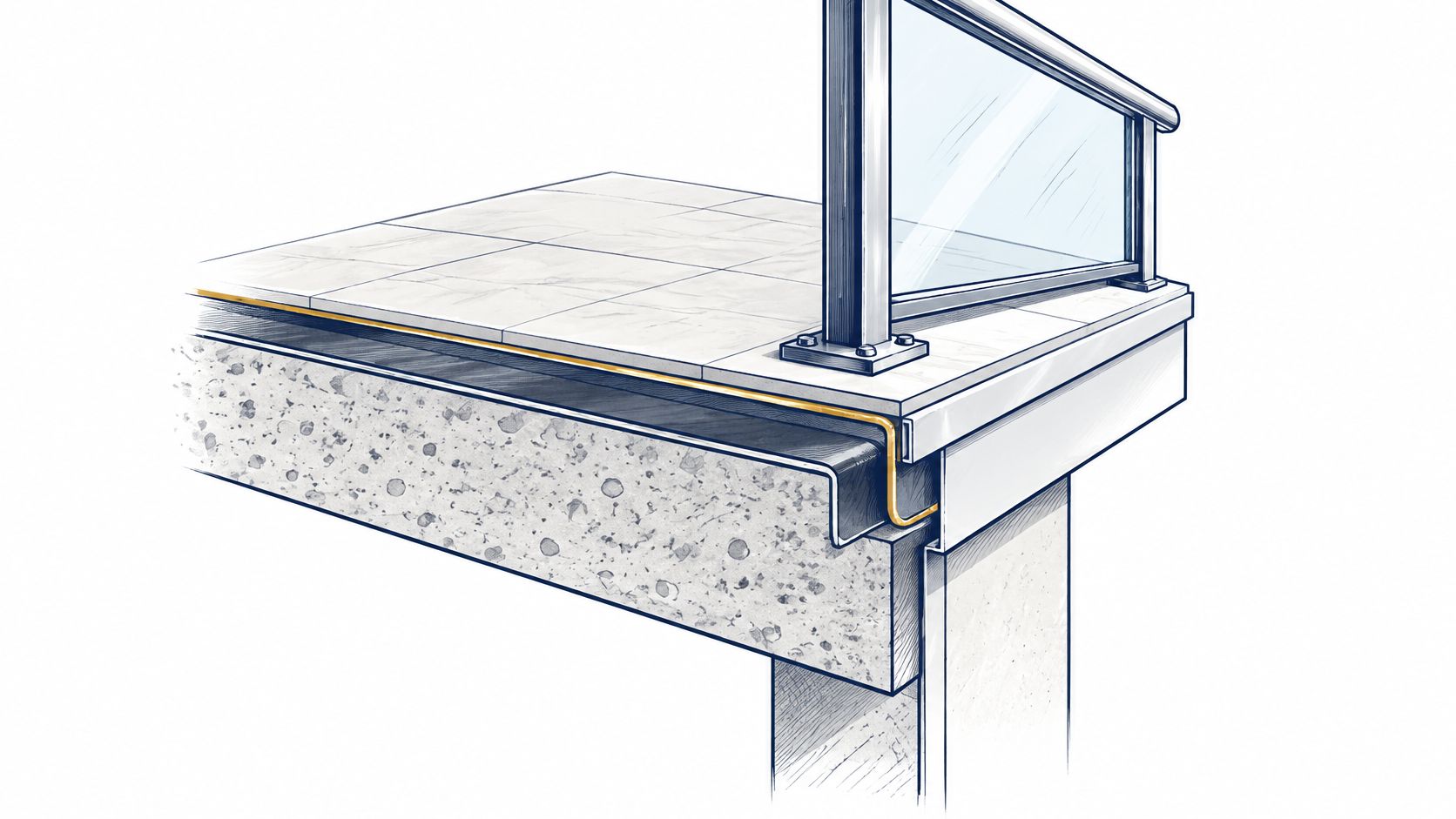
A balcony includes a slab, waterproofing membrane, railing, floor finish, doors, and drainage. Their duties shouldn't be bundled into a verdict based on access alone.
Practical rule: Separate permission to use a space from responsibility for its parts.
The useful questions are who uses the balcony, which provision assigns each component, and who approves changes.
Which Records Set Unit Boundaries and Shared Parts
Unit boundaries work like property lines on a survey: they exist on paper before they exist on the building. The edge of the concrete you can see is not the deciding evidence. Florida's declaration-content statute addresses the declaration and incorporated descriptions identifying units and common elements, so the recorded documents establish the starting point.
- Declaration and amendments: Identify the property's legal divisions and the assignments attached to each division.
- Incorporated survey, graphic descriptions, and plot plans: Locate the boundaries the declaration describes.
- Bylaws and rules: Explain governance and use procedures.
Non-record sources play a different role. Listing photos, marketing copy, MLS maps, verbal statements, and rules can raise useful questions, but none of them establish boundary rights. A website summary works the same way: it can introduce questions without establishing private rights.
To pull the right set, confirm the declaration is recorded, then check the property's county official records for amendments. Record each document's date and the page or section mentioning the balcony. Both searches matter because an amendment can redraw a split the original declaration established.
Readers seeking to understand Destin Towers ownership costs can use that property resource as background while keeping the legal document review separate.
Matching Each Balcony Part to a Responsible Party
Balcony parts and the records that assign them
| Balcony Part | Record to Check | Question to Resolve |
|---|---|---|
| Structural slab and underside | Recorded declaration and maintenance provisions | Which party maintains the structure? |
| Waterproofing membrane | Declaration, engineering reports, and repair notices | Who maintains and pays for the membrane? |
| Floor tile, coating, or paint | Declaration and architectural rules | Who maintains the surface, and does changing it require approval? |
| Railing and guard | Declaration, maintenance provisions, and repair records | How is each railing component classified and assigned? |
| Doors, windows, and screens | Declaration and window or door provisions | Who maintains each door, frame, window, and screen? |
| Drainage fixtures | Declaration and maintenance provisions | Who clears, repairs, or replaces drains? |
| Ceiling below the balcony | Declaration and unit boundary records | Which unit or common component includes this surface? |
| Insurance coverage | Declaration insurance provisions and association and owner policies | Which policy, if any, covers the component and event? |
| Owner-installed improvements | Architectural approvals and alteration records | Was required approval obtained, and who maintains the addition? |
Beside each answer, record the document name and section. Engineering reports identify affected components; they don't replace the declaration's assignment.
Florida's limited-common-element maintenance provisions allow document-based arrangements involving common expenses or costs allocated to benefiting owners. An unclear row should remain unresolved pending interpretation, not become an assumed owner obligation.
The Gulf-front condo buying checklist can help organize related purchase questions.
Routine Upkeep Versus a Proposed Balcony Change
Replacing a cracked tile with matching tile illustrates restoration. Enclosing a balcony or changing its railing design illustrates a proposed alteration. Those descriptions help frame the review, but don't establish permission.
Routine maintenance compared with a proposed alteration
| Question | Routine Maintenance | Proposed Alteration |
|---|---|---|
| What it covers | Keeping an existing component working | Changing form, material, size, or structure |
| Document to start with | Declaration's maintenance allocation | Alteration procedures and architectural rules |
| Approval to confirm | Applicable maintenance authorization process | Required consent or application |
| Common mistake | Assuming shared property means association payment | Assuming a neighbor's change establishes permission |
| Next check | Identify the responsible party | Establish permission and approval sequence |
Florida's maintenance and alteration provisions make maintenance allocation and proposed changes separate review questions. Identify the work, locate the responsible party, and confirm the applicable process before starting.
Local building permits are a separate question outside this guide.
Why an Inspection Does Not Settle Payment
An inspection describes observed conditions and recommended work. Payment requires another evidence trail, including the expense provisions addressed in Florida's common-expense statute.
- Record the condition. Identify the component named in the report.
- Locate its assignment. Match that component to the governing provision.
- Trace the cost path. Establish the applicable expense allocation rather than assuming the inspecting party pays.
A report identifying deterioration isn't, by itself, a payment-responsibility determination.
Compare available engineering reports with repair notices, board minutes, budgets, reserve schedules, invoices, and assessment notices. Note the scope and issue date of each report rather than assuming it covers the entire balcony.
Readers considering buying at Destin Beach Club should keep that background separate from their property's records.
Dream Destin Realty helps clients review available building records, including association information, inspections, reserves, rental rules and insurance, as part of purchase due diligence.
How to Check Your Building's Rules Step by Step
A finished check reads like a single line of evidence. Picture one completed matrix row: "Balcony floor slab, association responsibility, Declaration of Condominium, maintenance exhibit." Every component in your review should end up attached to a named document and a numbered provision, the way a receipt ties each charge to a specific account.

- Identify the property precisely. Copy the building name, unit number, and full legal address from the transaction records so the review covers the right condominium and unit.
- Search the right county. Destin is in Okaloosa County, while Miramar Beach and Santa Rosa Beach are in Walton County, so pull the recorded documents from the clerk of the county where the building sits.
- Confirm the building identity. Match the building against its recorded declaration and amendments, which establish the balcony features and rights that control the answer.
- Fill the matrix with provision references. Write the document name and section number beside each component. Leave gaps visible rather than borrowing a neighboring unit's arrangement, since similar buildings can carry different declarations.
- List what remains unresolved. Note each component without a provision and each missing document, then review that list with the closing agent or a qualified attorney before relying on any allocation.
The Indian Lake condo guide provides additional purchase context.
Confirm the Balcony Split Before You Buy
Clear assignment and consistent records: Keep the supporting provisions and repair history together, with the component answers noted.
Assignment conflicts with practice: Flag the mismatch for written clarification and qualified review; past conduct doesn't establish that the allocation is correct.
Silent or ambiguous documents: Keep the issue unresolved until the governing documents and applicable law have been interpreted, rather than accepting verbal reassurance.
A comparison of Inn at Crystal Beach ownership costs can introduce property-specific budgeting questions, but doesn't settle another condominium's obligations. This guide establishes no particular balcony's ownership, condition, insurance coverage, or repair bill.
Frequently Asked Questions About Balcony Upkeep
Does exclusive use of a balcony mean the owner maintains it?
Not by itself. A balcony reserved for one unit may be a limited common element, meaning shared property set aside for one owner's use, depending on what the declaration provides. Florida's condominium-parcel statute treats that arrangement as a unit appurtenance, while the declaration and applicable law assign the work and the cost.
Which records define unit boundaries and limited common elements?
Start with the recorded declaration and its amendments, including the incorporated survey, graphic descriptions, and plot plans. Those exhibits mark where the unit ends and the common elements begin; separate provisions grant exclusive use and assign maintenance, so read both.
Can one balcony be split between owner and association responsibilities?
Yes, it can be. A balcony is a bundle of parts: floor finish, waterproofing, railing, slab, and the door into the unit. The declaration can assign each part to a different party, so an owner might handle surface care while the association maintains the railing and membrane.
Does an association's inspection establish who pays for a repair?
An inspection records observed conditions, such as cracked concrete or a loose railing. Payment is a separate question resolved by the governing documents and applicable law, including the provisions that divide costs between common expenses and the benefiting owner.
Dream Destin Realty provides live listings and local market information. Buyers can visit Dream Destin Realty to compare properties, then use the contact page to discuss available building records and unresolved balcony questions before deciding.


